

Friday 31 January 2025
The intricate dance of proteins within cells has long been a subject of fascination for scientists. These tiny molecules play a crucial role in virtually every cellular process, from signaling and communication to regulation and maintenance. But how do these proteins move and interact within the cell’s crowded environment? A new study has shed light on this question, revealing some surprising insights into the behavior of proteins.
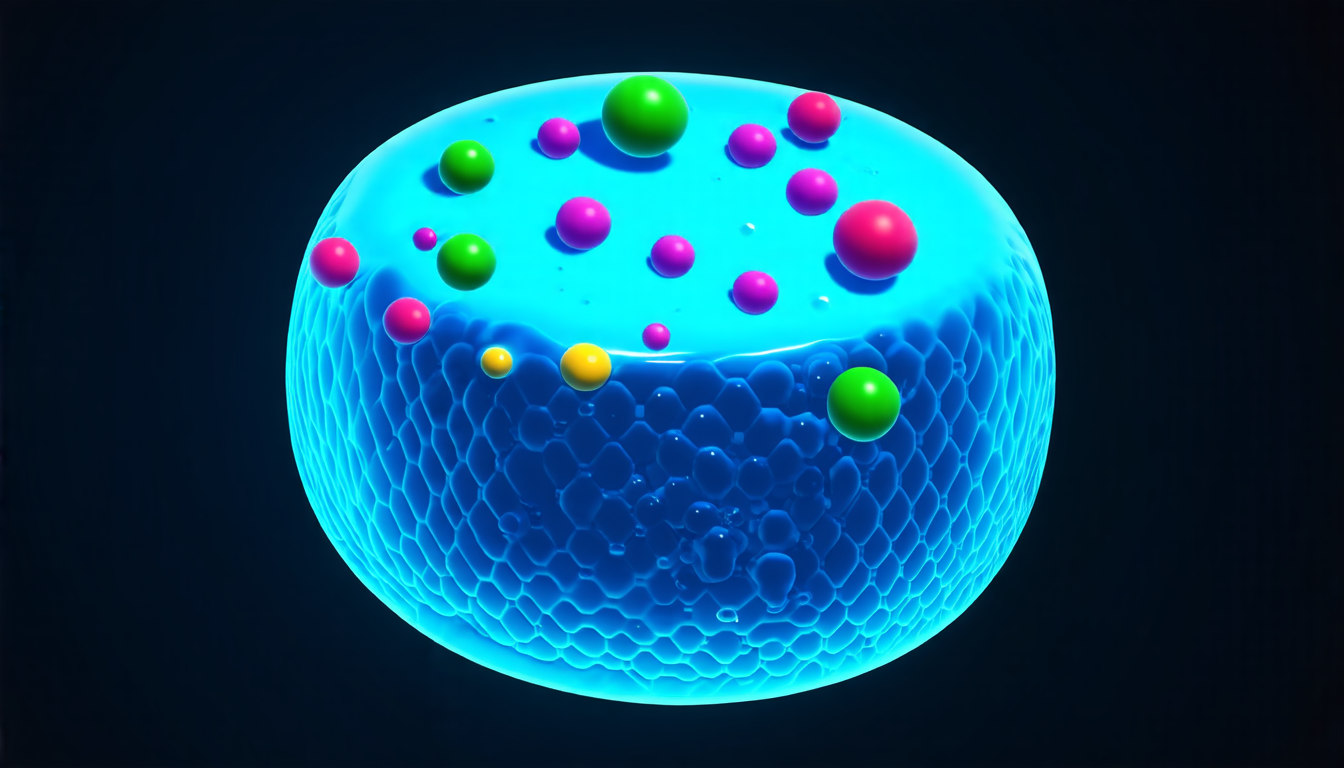
Researchers have long known that proteins can diffuse through the cell membrane and bind to specific receptors or other molecules. However, the dynamics of this process are still not fully understood. To better comprehend these interactions, scientists used a computational model to simulate the behavior of proteins within a three-dimensional sphere representing a cell.
The study found that the length of the protein plays a significant role in its ability to diffuse and bind to receptors. Shorter proteins were more likely to be bound to receptors for longer periods, while longer proteins had a higher chance of being degraded or degrading themselves. This suggests that there is an optimal length for proteins to effectively communicate within the cell.
The researchers also discovered that the timing of protein synthesis can have a significant impact on the overall signaling process. When proteins are synthesized in response to a specific signal, they can either bind to receptors immediately or diffuse through the cell before binding. The study found that the optimal timing of protein synthesis depends on the length of the protein and the type of signal.
Another key finding was the correlation between the number of bound proteins and free proteins at different time lags. This suggests that there is a complex interplay between these two states, with changes in one state influencing the other.
The study also explored the concept of energy efficiency in protein signaling. The researchers found that certain signals can optimize energy usage by adjusting the timing and length of protein synthesis. This has implications for our understanding of how cells regulate energy consumption and allocate resources.
This research provides valuable insights into the intricate world of protein signaling, highlighting the complex interplay between protein length, synthesis timing, and binding dynamics. As scientists continue to unravel the mysteries of cellular communication, this study serves as a reminder of the importance of considering the subtleties of protein behavior in our understanding of cellular processes.
In the future, these findings may have significant implications for fields such as medicine and biotechnology, where a deeper understanding of protein signaling could lead to breakthroughs in disease treatment and diagnosis.
Cite this article: “Protein Signaling Dynamics Revealed”, The Science Archive, 2025.
Protein Dynamics, Cell Signaling, Protein Length, Receptor Binding, Timing Of Synthesis, Energy Efficiency, Cellular Communication, Protein Degradation, Protein Synthesis, Biotechnology.





