

Friday 31 January 2025
Scientists have made significant progress in developing a new method for generating ionizable lipids, molecules that can help deliver gene therapies and other treatments to specific parts of the body. The approach uses artificial intelligence and machine learning techniques to predict the most effective synthesis paths for these complex molecules.
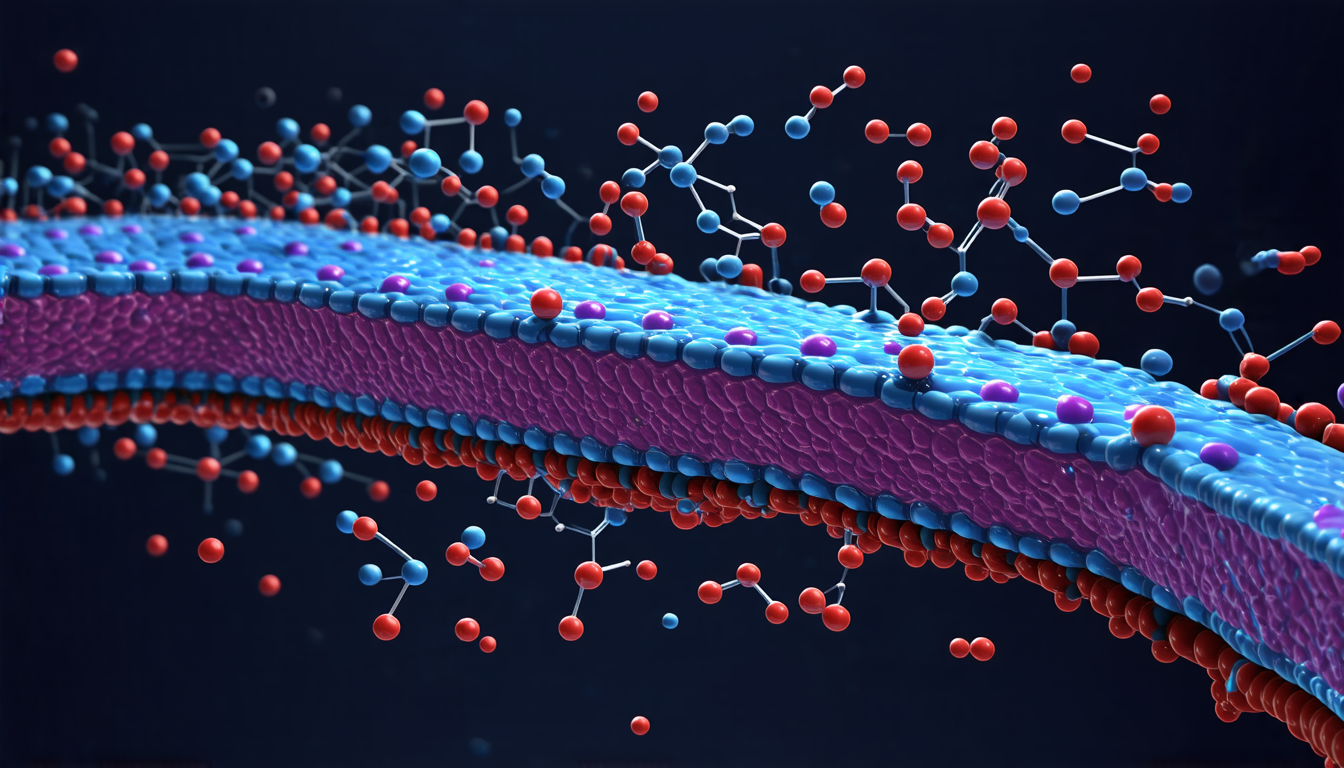
Ionizable lipids are designed to interact with cell membranes and help transport therapeutic agents across them. However, creating these molecules is a challenging task that requires a deep understanding of chemistry and biology. The new method uses a combination of computational models and algorithms to generate potential ionizable lipids and predict their properties.
The process begins by using machine learning algorithms to analyze large databases of known molecules and identify patterns and relationships between them. This information is then used to train a neural network, which can learn to predict the properties of new molecules based on their structure.
Once the neural network has been trained, it can be used to generate potential ionizable lipids by combining different building blocks in various ways. The algorithm uses a technique called Monte Carlo tree search to explore the vast space of possible molecule combinations and identify those that are most likely to produce effective ionizable lipids.
The generated molecules are then evaluated using computational models and algorithms to predict their properties, such as their ability to interact with cell membranes and deliver therapeutic agents. This information is used to refine the synthesis path and ensure that the final product meets the desired specifications.
One of the key advantages of this approach is its ability to generate a large number of potential ionizable lipids in a short amount of time. This allows researchers to quickly identify promising candidates for further study and testing, which can speed up the development of new treatments.
The method has been tested on several examples of ionizable lipids, with promising results. The generated molecules have been shown to have desirable properties, such as high stability and ability to interact with cell membranes.
Overall, this new approach has the potential to revolutionize the field of ionizable lipid design and development. By combining artificial intelligence and machine learning techniques with computational models and algorithms, researchers can generate a large number of potential ionizable lipids in a short amount of time, which can speed up the development of new treatments for diseases.
The generated molecules are then evaluated using computational models and algorithms to predict their properties, such as their ability to interact with cell membranes and deliver therapeutic agents. This information is used to refine the synthesis path and ensure that the final product meets the desired specifications.
Cite this article: “Artificial Intelligence Accelerates Ionizable Lipid Design and Development”, The Science Archive, 2025.
Ionizable Lipids, Artificial Intelligence, Machine Learning, Gene Therapies, Therapeutic Agents, Cell Membranes, Computational Models, Algorithms, Monte Carlo Tree Search, Neural Network.





