

Friday 31 January 2025
Researchers have made significant progress in developing a new approach to understanding corrosion, a major problem that costs billions of dollars annually. By combining classical and quantum computing techniques, they’ve created a powerful tool for predicting how different substances will react when exposed to corrosive environments.
Corrosion is a process that occurs when certain materials, such as metals, react with their environment and break down over time. It’s a major problem in industries like manufacturing, transportation, and construction, where it can lead to costly repairs or even catastrophic failures. Despite its importance, corrosion remains poorly understood, and scientists have struggled to develop effective ways of preventing it.
One reason for this is that corrosion is a complex process that involves the interaction of many different factors, including the chemical properties of the material, the environment in which it’s being used, and the presence of impurities or contaminants. This makes it difficult to predict exactly how a given substance will react when exposed to corrosive conditions.
To tackle this problem, researchers have turned to quantum computing, a new type of computer that uses the principles of quantum mechanics to perform calculations that are far beyond the capabilities of classical computers. In particular, they’ve developed a technique called adaptive variational quantum algorithms, which allows them to simulate complex chemical reactions with unprecedented accuracy.
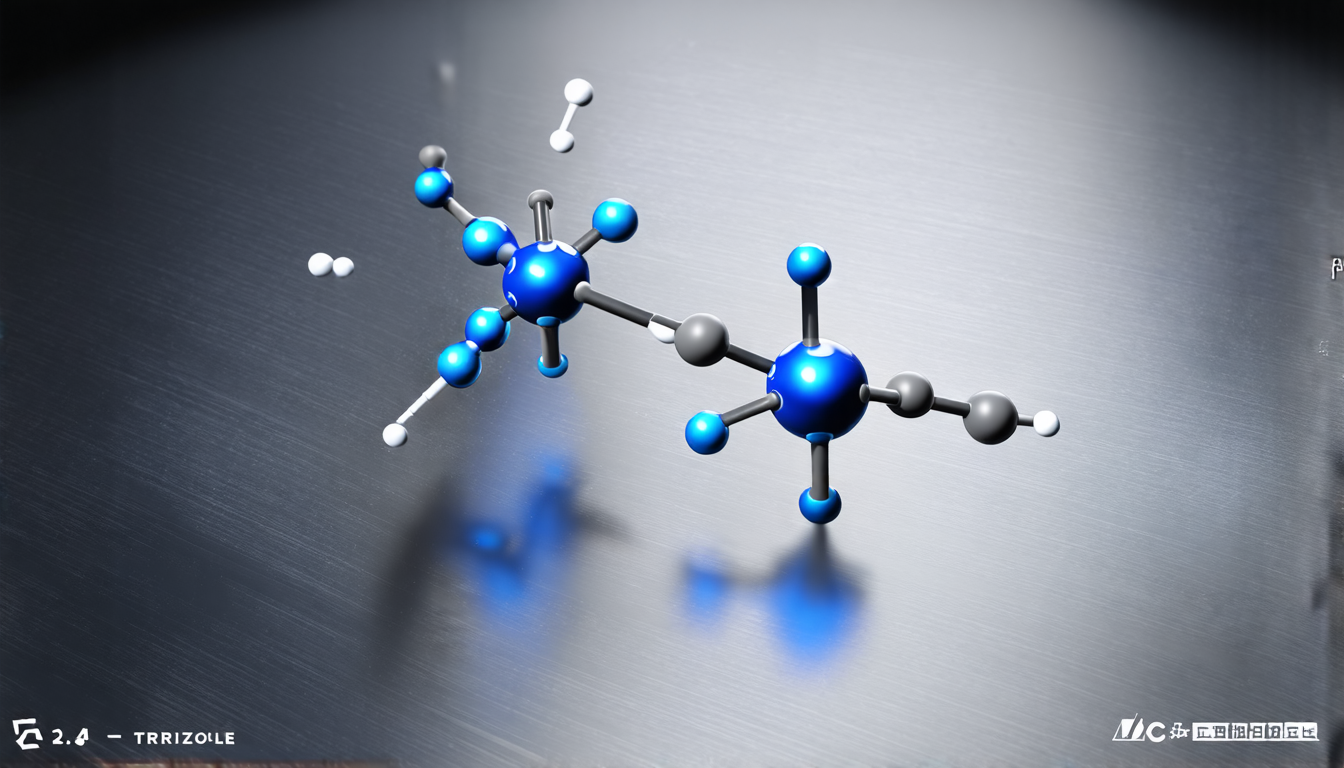
In their study, the researchers used this approach to investigate the behavior of two different substances, 1,2,4-triazole and 1,2,4-triazole-3-thiol, when exposed to corrosive environments. They found that both substances were able to inhibit corrosion, but in different ways.
The first substance, 1,2,4-triazole, was found to form a strong bond with the metal surface, preventing it from reacting with the environment and breaking down over time. This made it an effective inhibitor of corrosion, capable of protecting metals for extended periods of time.
The second substance, 1,2,4-triazole-3-thiol, had a different mechanism of action. It was found to form a complex with the metal surface, which prevented the reaction from occurring in the first place. This made it an even more effective inhibitor of corrosion, capable of preventing damage from occurring at all.
The researchers believe that their findings could have important implications for industries like manufacturing and construction, where corrosion is a major problem.
Cite this article: “Quantum Computing Breakthroughs in Corrosion Prevention”, The Science Archive, 2025.
Corrosion, Quantum Computing, Classical Computing, 1,2,4-Triazole, Inhibitor, Metal Surface, Chemical Reactions, Adaptive Variational Algorithms, Simulation, Materials Science





