

Saturday 01 February 2025
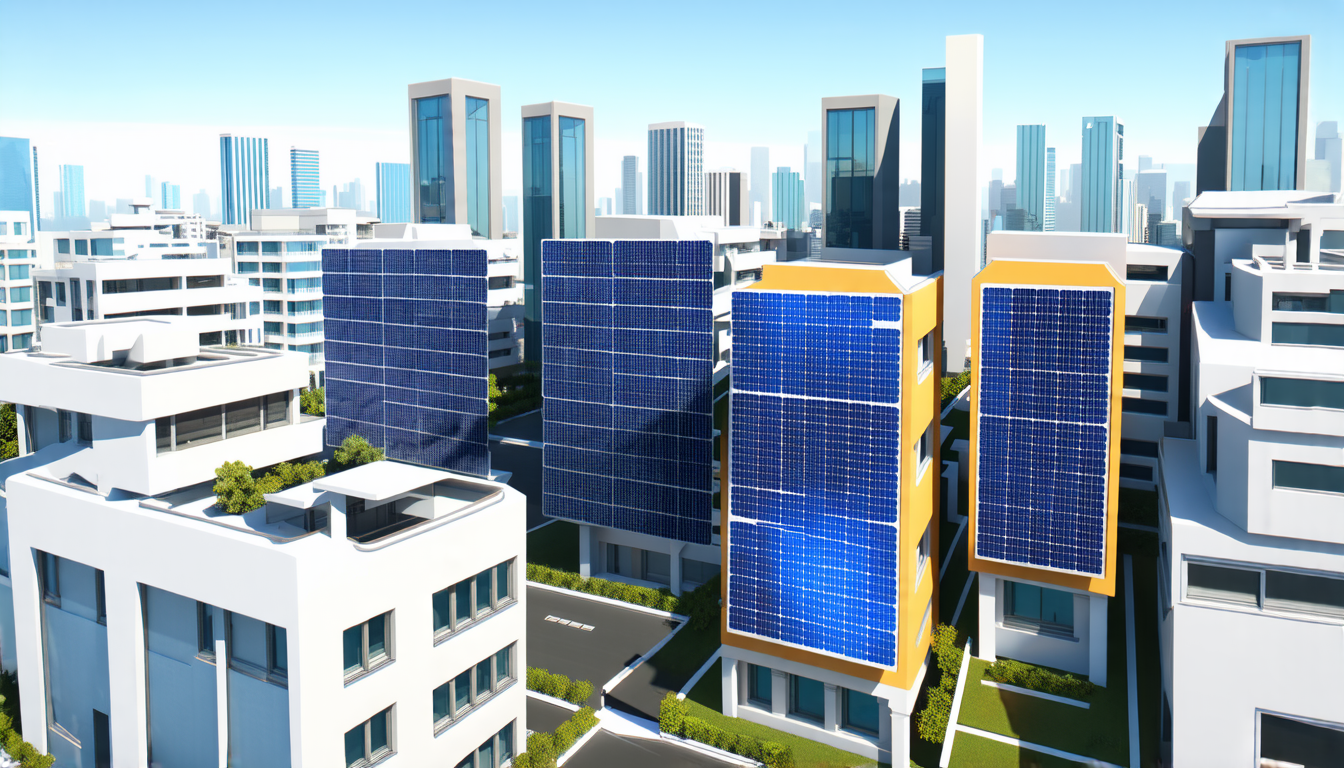
As cities grapple with the challenges of climate change, energy efficiency, and urban planning, a team of researchers has developed a powerful new tool to optimize building-integrated photovoltaics (BIPV) systems. By harnessing the power of machine learning and computer vision, this innovative approach enables architects, engineers, and policymakers to design more efficient, sustainable, and resilient cities.
The BIPV system is a game-changer for urban energy management. By integrating solar panels into building facades, roofs, and walls, cities can generate clean energy while reducing their reliance on fossil fuels. However, designing effective BIPV systems requires a deep understanding of complex factors such as sunlight patterns, building geometry, and urban microclimates.
To address this challenge, the researchers developed a software package called pybdshadow, which uses machine learning algorithms to simulate and analyze BIPV performance in real-world scenarios. By feeding data on building footprints, solar radiation, and weather patterns into the system, architects and engineers can optimize BIPV designs for maximum energy output.
The team’s approach is built around a novel shadow modeling framework that accounts for the intricate dance of sunlight and urban geometry. This allows pybdshadow to accurately predict how shadows will fall on buildings throughout the day, taking into account factors such as building height, orientation, and proximity to other structures.
One of the key advantages of pybdshadow is its ability to handle complex urban environments with ease. By incorporating data from sources like OpenStreetMap and NASA’s Solar Radiation Data, the system can accurately simulate BIPV performance in cities around the world.
The implications are far-reaching. With pybdshadow, cities can design more sustainable energy systems that reduce their carbon footprint while improving air quality and public health. The tool also has the potential to unlock new economic opportunities by enabling developers to create value-added services around BIPV installations, such as energy storage and grid management.
As urban planners and policymakers grapple with the challenges of climate change, pybdshadow offers a powerful new tool for building a more sustainable future. By harnessing the power of machine learning and computer vision, this innovative approach can help cities become cleaner, greener, and more resilient – one BIPV system at a time.
Cite this article: “Optimizing Building-Integrated Photovoltaics with Machine Learning and Computer Vision”, The Science Archive, 2025.
Building-Integrated Photovoltaics, Machine Learning, Computer Vision, Urban Planning, Climate Change, Energy Efficiency, Sustainability, Resilience, Renewable Energy, Bipv Systems





