

Saturday 01 February 2025
Scientists have long been fascinated by the prospect of transferring knowledge and skills from one system to another. In the field of control systems, this concept is particularly crucial as it enables the adaptation of controllers designed for a specific system to new or unknown environments.
A team of researchers has made significant strides in tackling this challenge by developing an innovative approach that utilizes neural networks to simulate the behavior of complex systems and transfer knowledge between them. The method, known as neural simulation relations, involves training neural networks to learn the dynamics of both the source and target systems. This allows the network to generate a mapping between the two systems, enabling the transfer of controllers designed for the source system to the target system.
The team’s approach is particularly noteworthy as it does not require any prior knowledge of the target system or its mathematical model. Instead, the neural networks learn the dynamics of both systems through data-driven methods, making it possible to adapt controllers to new environments in a more efficient and scalable manner.
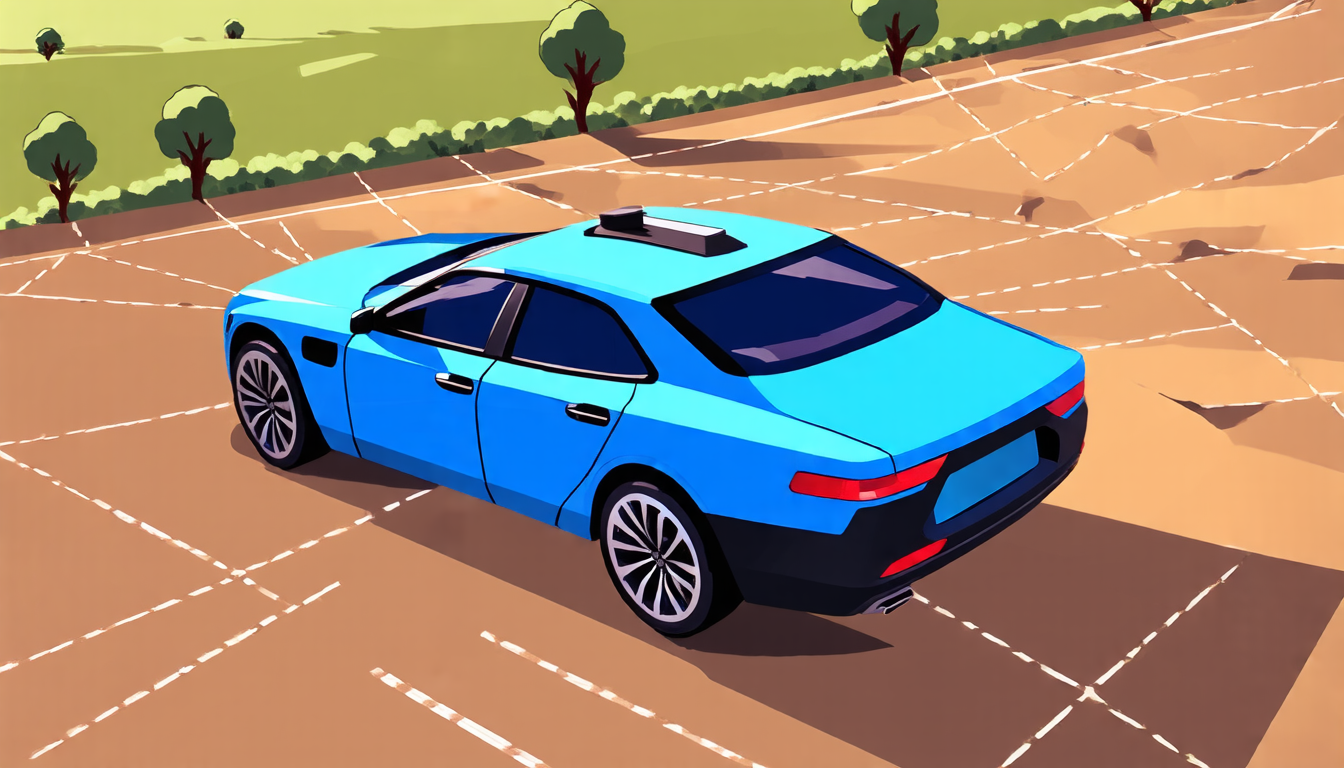
One of the primary applications of this technology is in the realm of autonomous systems, where the ability to transfer controllers between different environments can be lifesaving. For instance, consider a self-driving car that needs to navigate from a well-mapped urban area to a rural terrain with limited infrastructure. The neural simulation relations method would enable the car’s controller to adapt to the new environment in real-time, ensuring safe and efficient navigation.
The researchers have demonstrated the efficacy of their approach through two case studies: a vehicle control system and a double pendulum system. In both cases, the neural networks were able to learn the dynamics of the systems and generate accurate simulations, enabling the transfer of controllers between them.
The potential implications of this technology are vast and far-reaching. By enabling the seamless transfer of controllers between different environments, scientists can develop more robust and adaptable autonomous systems that can navigate complex and dynamic scenarios with ease. This could have significant applications in fields such as robotics, aerospace engineering, and healthcare, where the ability to adapt to new situations is crucial.
In summary, the researchers’ innovative approach to neural simulation relations has opened up new possibilities for transferring knowledge and skills between control systems. By leveraging the power of neural networks, scientists can develop more efficient and scalable solutions that enable autonomous systems to adapt to new environments in real-time.
Cite this article: “Neural Simulation Relations: A New Frontier in Control System Adaptation”, The Science Archive, 2025.
Neural Networks, Control Systems, Knowledge Transfer, Simulation Relations, Autonomous Systems, Neural Simulation, Data-Driven Methods, Controller Adaptation, Robotics, Aerospace Engineering





