

Saturday 01 February 2025
Scientists have long been fascinated by the mysteries of the universe, and recent advances in technology have allowed them to explore these mysteries like never before. One area that has seen significant progress is the study of dark matter, a type of matter that makes up about 27% of the universe but has yet to be directly observed.
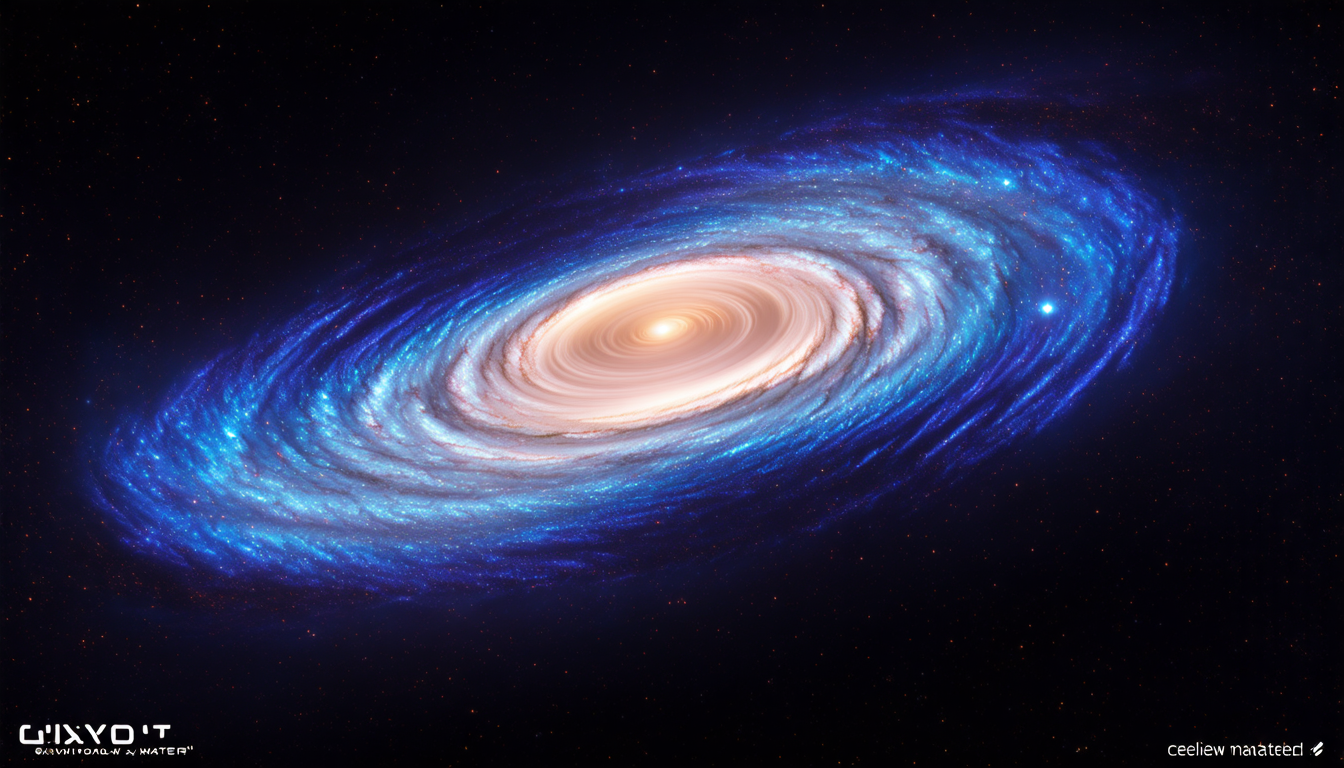
Researchers have used complex computer simulations to model the behavior of dark matter and its impact on the formation of galaxies. These simulations have revealed some surprising insights into the nature of dark matter, including the fact that it may play a more significant role in shaping the structure of the universe than previously thought.
One of the key findings is that dark matter may be responsible for the formation of galaxy clusters, which are massive collections of galaxies that are held together by gravity. This is significant because it suggests that dark matter could have played a crucial role in the early universe, helping to create the conditions necessary for life to emerge.
Another area where scientists are seeing significant progress is in their ability to detect dark matter directly. Researchers have developed new technologies that allow them to detect tiny signals from dark matter particles as they interact with normal matter. This has opened up new avenues of research into the properties of dark matter and its potential impact on our understanding of the universe.
One of the most promising areas of research is in the field of gravitational lensing, which involves studying how light bends around massive objects like galaxy clusters. By analyzing these distortions, scientists can map out the distribution of mass within these clusters, providing a way to indirectly detect dark matter.
In addition to its role in shaping the structure of the universe, dark matter may also hold the key to understanding some of the most pressing questions in modern astrophysics. For example, it could help explain why galaxies rotate at different rates than expected, or why stars are born with such varying levels of mass and energy.
Overall, the study of dark matter is an exciting and rapidly evolving field that holds great promise for advancing our understanding of the universe. As scientists continue to explore this mysterious substance, they may uncover new insights into its role in shaping the cosmos and potentially even find evidence of extraterrestrial life.
Cite this article: “Unveiling the Secrets of Dark Matter”, The Science Archive, 2025.
Dark Matter, Universe, Galaxies, Galaxy Clusters, Gravity, Gravitational Lensing, Mass, Astrophysics, Stars, Extraterrestrial Life





