

Sunday 02 February 2025
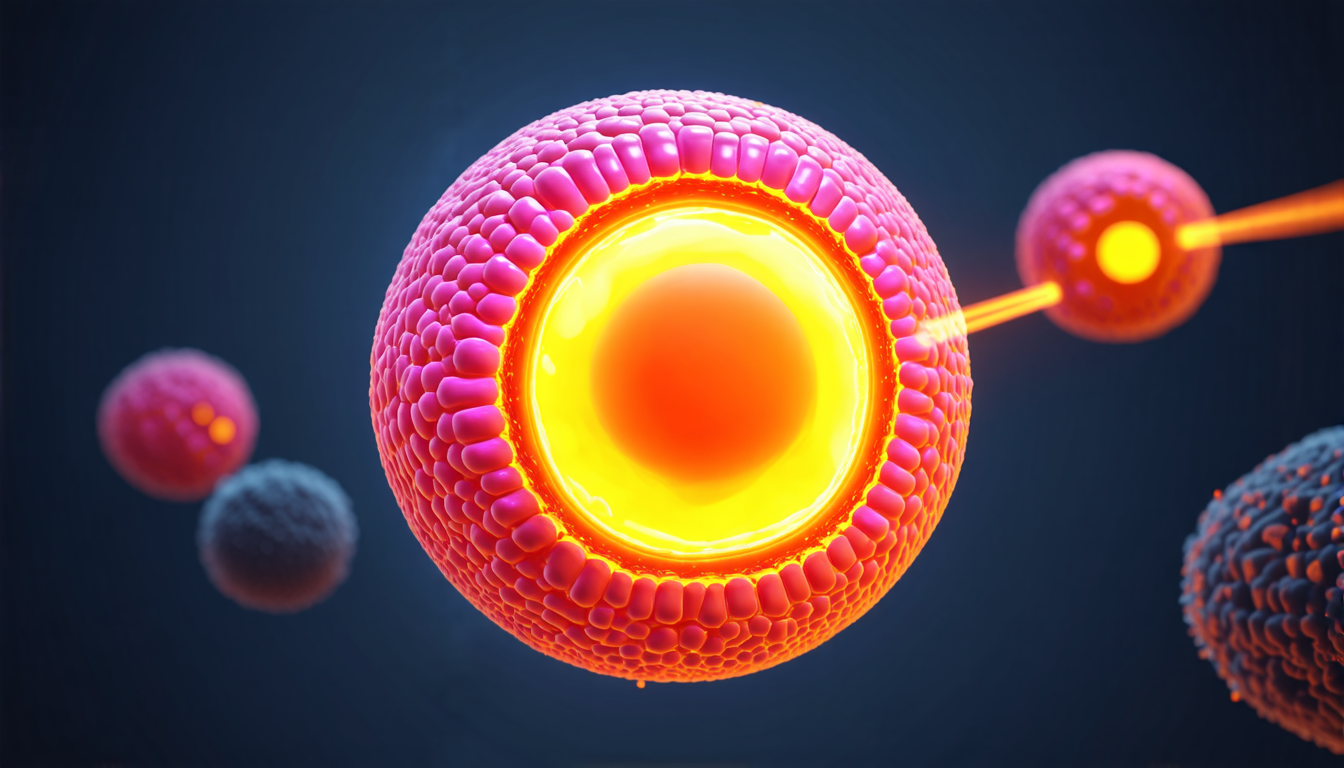
A team of scientists has made a significant breakthrough in the development of ultrafast scintillators, which are materials that emit light when excited by radiation. The new material, known as CsPbBr3 nanocrystals, has the potential to revolutionize medical imaging and other applications where fast detection is crucial.
Scintillators have been used for decades in medical imaging techniques such as positron emission tomography (PET) scans. However, traditional scintillators are limited by their slow response times, which can make it difficult to capture detailed images of rapidly moving objects or processes.
The new CsPbBr3 nanocrystals, on the other hand, have been shown to emit light in as little as 10 picoseconds – that’s thousands of times faster than traditional scintillators. This means they could be used to create high-resolution, real-time images of complex biological systems or dynamic processes.
The researchers achieved this remarkable speed by using a unique combination of materials and processing techniques. They first synthesized the nanocrystals using a special solvent system, which allowed them to control the size and shape of the particles. They then embedded the nanocrystals in a polymer matrix, which helped to stabilize their structure and enhance their optical properties.
The team also developed a novel method for detecting the light emitted by the scintillators, which involved using a technique called time-correlated single-photon counting (TCSPC). This allowed them to measure the timing of individual photons with high precision, which is essential for capturing fast events.
In addition to their ultrafast response times, the CsPbBr3 nanocrystals also showed excellent optical properties, including high luminescence yields and efficient energy transfer. These characteristics make them well-suited for use in a wide range of applications, from medical imaging to materials science and beyond.
The researchers believe that their new scintillators have the potential to transform our understanding of complex biological systems and dynamic processes. They plan to continue refining their technology and exploring its many potential applications.
Cite this article: “Faster than Ever: Ultrafast Scintillators Unlock New Possibilities in Medical Imaging and Beyond”, The Science Archive, 2025.
Scintillators, Nanocrystals, Cspbbr3, Medical Imaging, Pet Scans, Positron Emission Tomography, Ultrafast Detection, Time-Correlated Single-Photon Counting, Tcspc, Biomedical Applications





