

Sunday 02 February 2025
Neural networks, those complex webs of interconnected nodes that mimic the workings of our own brains, have long been a staple of artificial intelligence research. But what happens when these networks are made to learn and adapt in real-time? This is where plasticity comes in – the ability of neurons to reorganize themselves based on experience.
Now, scientists have taken this concept to the next level by developing a new system that combines analog neural networks with programmable plasticity. The result is a machine that can not only learn from its environment but also adapt and change itself over time.
The system in question is called BrainScaleS-2, and it’s a type of neuromorphic hardware designed to mimic the workings of our own brains. It consists of thousands of tiny neurons, each connected to multiple other neurons through synapses – the same way that our brain cells communicate with one another.
But what sets BrainScaleS-2 apart from previous attempts at creating artificial intelligence is its ability to learn and adapt in real-time. This is thanks to a type of plasticity called Hebbian learning, which allows neurons to strengthen or weaken their connections based on how often they fire together.
To demonstrate the power of this system, researchers used it to simulate a simple neural network that could recognize patterns in visual data. They then trained the network using a technique called spike-timing-dependent plasticity (STDP), which adjusts the strength of synapses based on the timing of their firings.
The results were impressive: the network was able to learn and adapt quickly, even when faced with new and complex data. And what’s more, it did so in a way that was eerily similar to how our own brains process information.
But BrainScaleS-2 is not just limited to pattern recognition. Its programmable plasticity also allows researchers to create neural networks that can learn and adapt in response to specific tasks or environments. This could have far-reaching implications for fields such as robotics, medicine, and even space exploration.
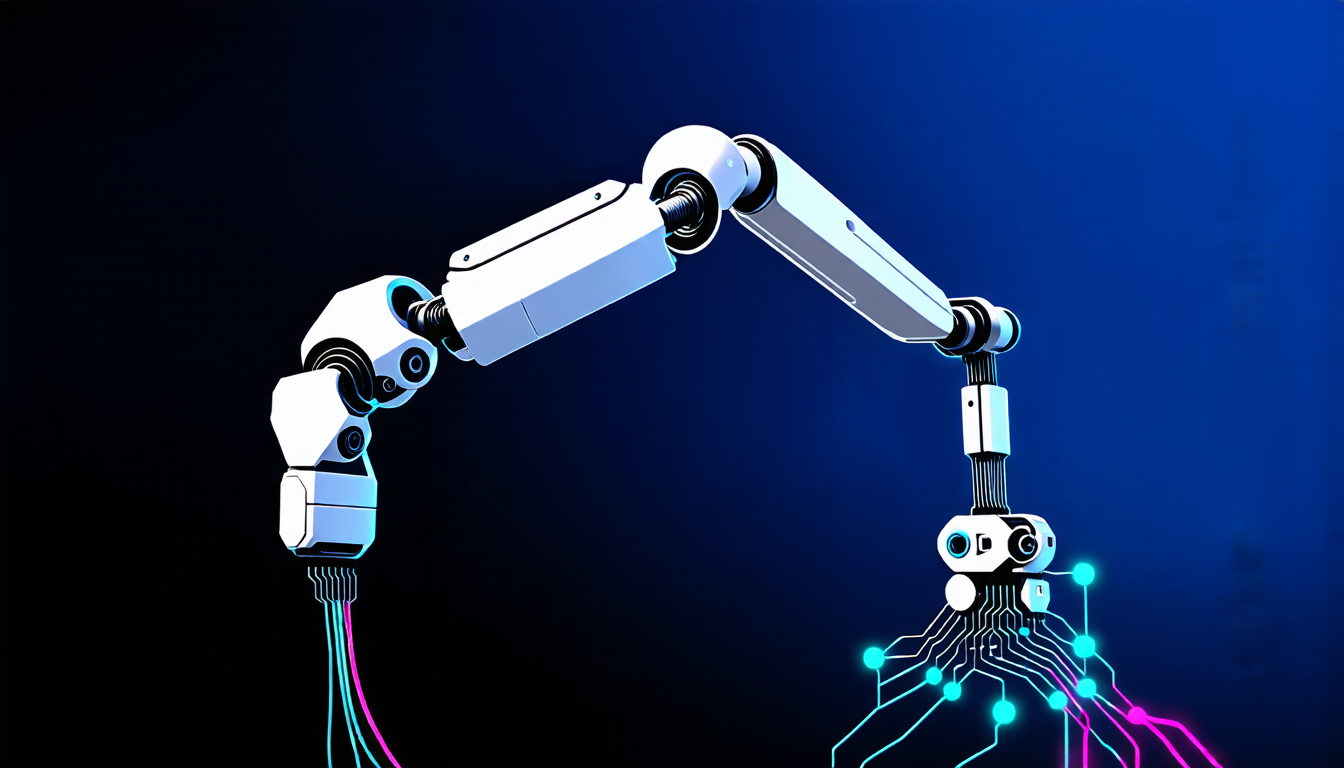
For example, imagine a robot that can learn from its interactions with the world around it, adapting its movements and behaviors over time to better navigate complex terrain. Or picture a medical device that can adjust its treatment protocols based on real-time feedback from a patient’s brain activity.
The possibilities are endless, and researchers are already exploring ways to apply BrainScaleS-2 technology to these and other areas.
Cite this article: “Brain-Mimicking Hardware Achieves Real-Time Learning and Adaptation”, The Science Archive, 2025.
Neural Networks, Artificial Intelligence, Plasticity, Neuromorphic Hardware, Brainscales-2, Hebbian Learning, Spike-Timing-Dependent Plasticity, Pattern Recognition, Robotics, Medicine





