

Sunday 02 February 2025
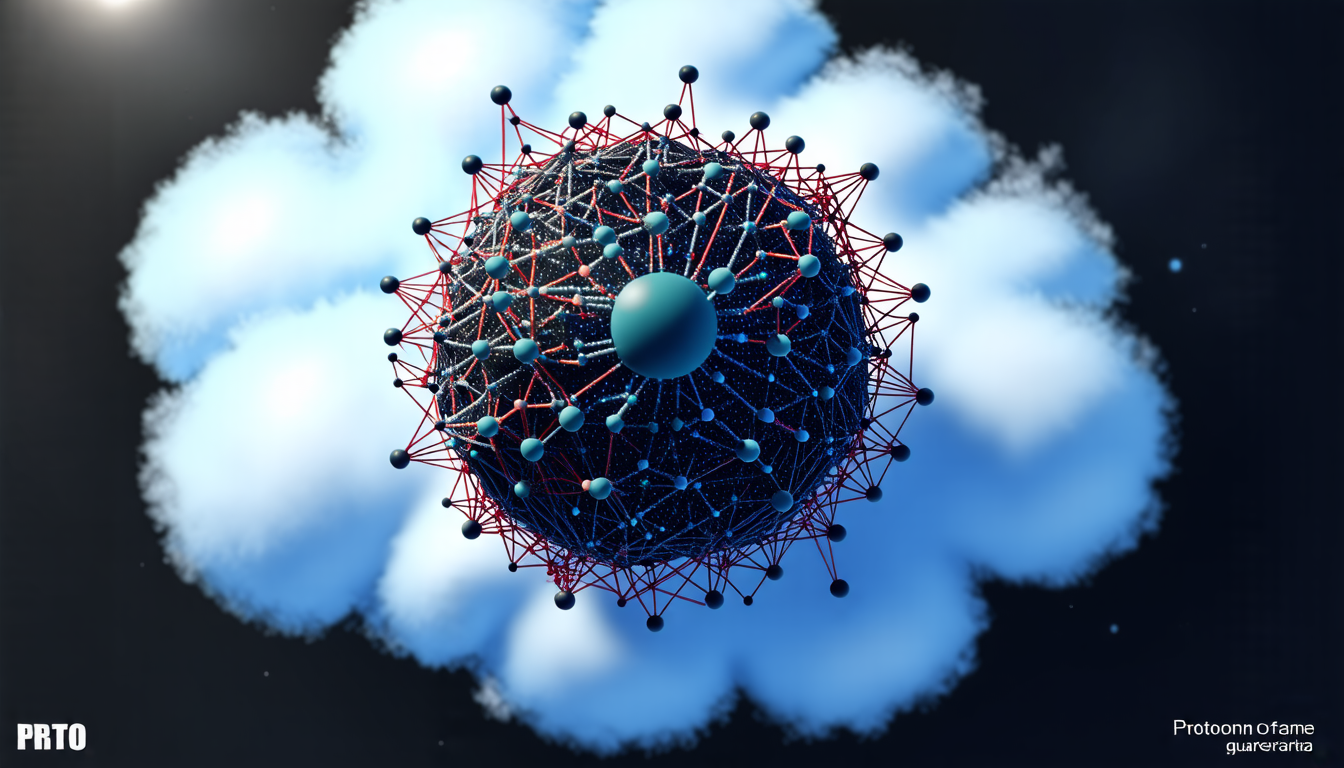
Scientists have long been fascinated by the internal structure of protons and neutrons, the building blocks of atomic nuclei. To better understand these particles, researchers have developed a range of experiments that can probe their internal workings. One such experiment is called Double Deeply Virtual Compton Scattering (DDVCS), which involves firing high-energy electrons at a proton target to create a cascade of subatomic particles.
The DDVCS process allows scientists to study the properties of protons and neutrons in greater detail than ever before. By analyzing the patterns of particle emissions, researchers can gain insights into the internal structure of these particles, including their spatial distribution of quarks and gluons. This knowledge is essential for understanding many fundamental processes in physics, from the strong nuclear force that holds nuclei together to the behavior of matter at extremely high energies.
In a recent study, scientists used computer simulations to explore the sensitivity of DDVCS observables to Generalized Parton Distributions (GPDs), which describe the spatial distribution of quarks and gluons within protons and neutrons. GPDs are crucial for understanding many aspects of nuclear physics, including the structure of nuclei and the behavior of quarks and gluons.
The researchers used two different models – VGG and GK19 – to simulate the DDVCS process and study its sensitivity to GPDs. They found that certain observables, such as Beam Spin Asymmetry (ALU) and Target Spin Asymmetry (AUL), are highly sensitive to GPDs and could potentially be used to constrain model predictions.
The study also explored the feasibility of measuring these observables at two different facilities: Jefferson Lab’s CLAS12 detector and the upcoming Electron Ion Collider (EIC). The researchers found that ALU, AUL, and Beam Charge Asymmetry (ACUU) could be measured within 100 days of beam time at CLAS12, while at EIC, these observables could be studied over a wider range of energies and momenta.
The results of this study have important implications for our understanding of the internal structure of protons and neutrons. By studying GPDs using DDVCS, scientists can gain insights into the behavior of quarks and gluons at the quantum level, which is essential for advancing our knowledge of nuclear physics and its applications.
In addition to their fundamental importance, these results also have practical implications for future experiments.
Cite this article: “Probing the Internal Structure of Protons and Neutrons with DDVCS”, The Science Archive, 2025.
Protons, Neutrons, Gpds, Ddvcs, Quarks, Gluons, Nuclear Physics, Particle Emissions, High-Energy Electrons, Clas12 Detector





