

Sunday 02 February 2025
Scientists have long been fascinated by the mysterious transition between a conductor and an insulator, known as the metal-insulator transition (MIT). In a recent study, researchers from Japan have shed new light on this phenomenon by examining the behavior of a specific class of materials called Heusler alloys.
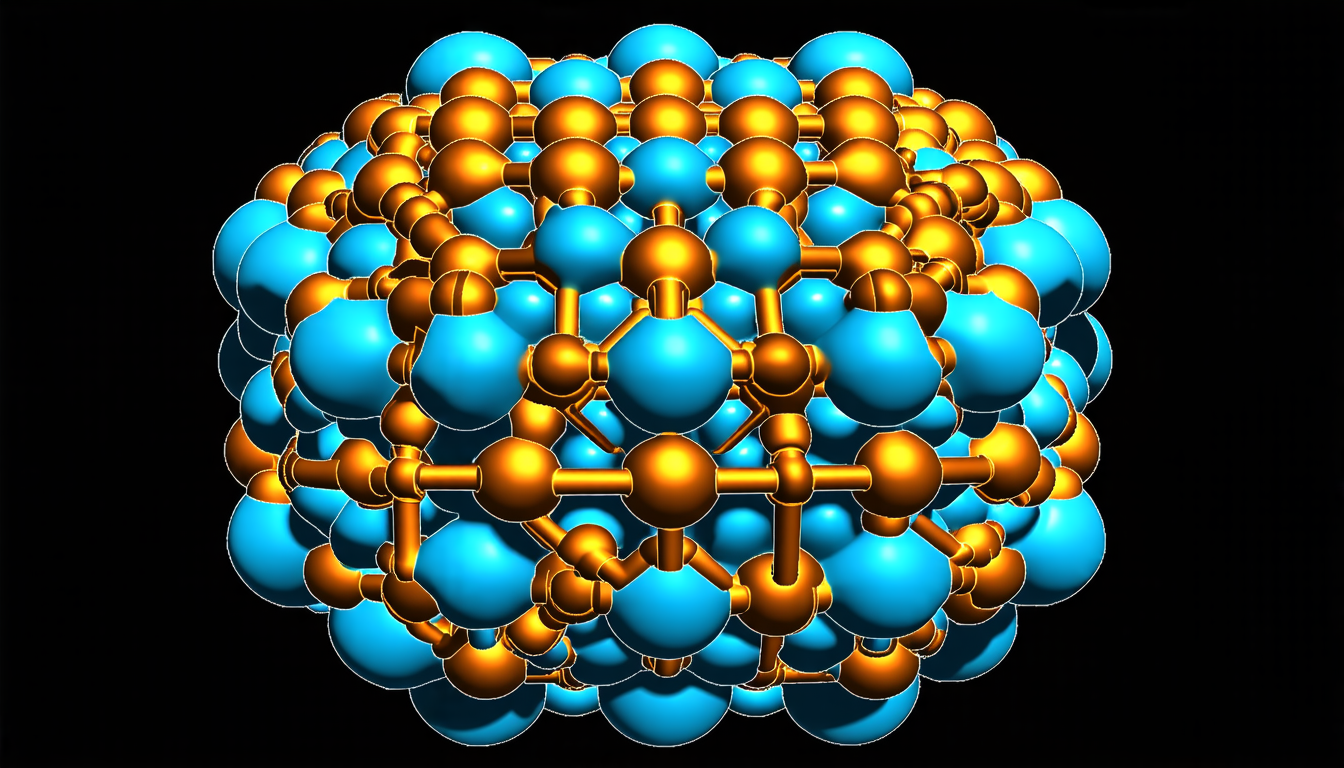
Heusler alloys are a type of compound that contains three different metals: iron, vanadium, and aluminum. By carefully controlling the ratio of these metals, scientists can create a wide range of properties in the alloy, from being an excellent conductor to being a good insulator.
The researchers focused on a specific Heusler alloy called Fe2VAl, which is known for its unusual electrical conductivity. When they measured the resistance of this alloy at different temperatures, they found that it exhibited a peculiar behavior – as the temperature increased, the resistance decreased, but only up to a certain point. At higher temperatures, the resistance began to increase again.
This behavior is characteristic of a MIT, where the material transitions from being an insulator to being a conductor and back again. But what’s unique about Fe2VAl is that it exhibits this transition at room temperature, making it an ideal material for studying the phenomenon.
To understand why this happens, the researchers turned to computer simulations. They used powerful computers to model the behavior of electrons in the alloy, taking into account factors such as the arrangement of atoms and the strength of chemical bonds.
Their simulations revealed that the MIT in Fe2VAl is caused by a subtle interplay between two different types of electrons: those that are free to move about and carry electrical current, and those that are trapped in localized states. At low temperatures, the electrons are mostly trapped, resulting in high resistance. As the temperature increases, more and more electrons become free to move, causing the resistance to decrease.
But as the temperature continues to rise, something strange happens – the free electrons start to get stuck again, causing the resistance to increase once more. This is because the alloy’s crystal structure changes at high temperatures, allowing the trapped electrons to reappear.
The researchers’ findings have important implications for the development of new materials with unique properties. By understanding how Heusler alloys like Fe2VAl behave under different conditions, scientists can design new compounds that exhibit similar MITs, potentially leading to breakthroughs in fields such as electronics and energy storage.
In addition, the study highlights the importance of computer simulations in understanding complex phenomena like the metal-insulator transition.
Cite this article: “Unveiling the Secrets of Heusler Alloys Metal-Insulator Transition”, The Science Archive, 2025.
Heusler Alloys, Metal-Insulator Transition, Mit, Fe2Val, Electrical Conductivity, Computer Simulations, Electrons, Localized States, Crystal Structure, Materials Science.





