

Tuesday 25 February 2025
Scientists have made a significant discovery in the field of materials science, revealing new insights into the behavior of particles at the nanoscale. Researchers used advanced microscopy techniques to observe and study the motion of individual particles as they interacted with their surroundings.
The study focused on the movement of microparticles, which are tiny particles that are only a few micrometers in size. These particles are crucial in many everyday applications, from paint and cosmetics to pharmaceuticals and medical devices. However, despite their importance, scientists still have limited understanding of how they move and interact with each other.
To better understand this phenomenon, the researchers used a technique called atomic force microscopy (AFM) to observe the motion of individual microparticles. AFM is a powerful tool that allows scientists to visualize and manipulate particles at the nanoscale. The team used AFM to study the behavior of microparticles on different surfaces, including smooth glass and rough silicon.
The results were fascinating. The researchers found that the particles behaved differently depending on the surface they were on. On smooth glass, the particles slid easily across the surface, while on rough silicon, they rolled and rotated as they moved. This difference in behavior was attributed to the strength of the interactions between the particles and the surfaces.
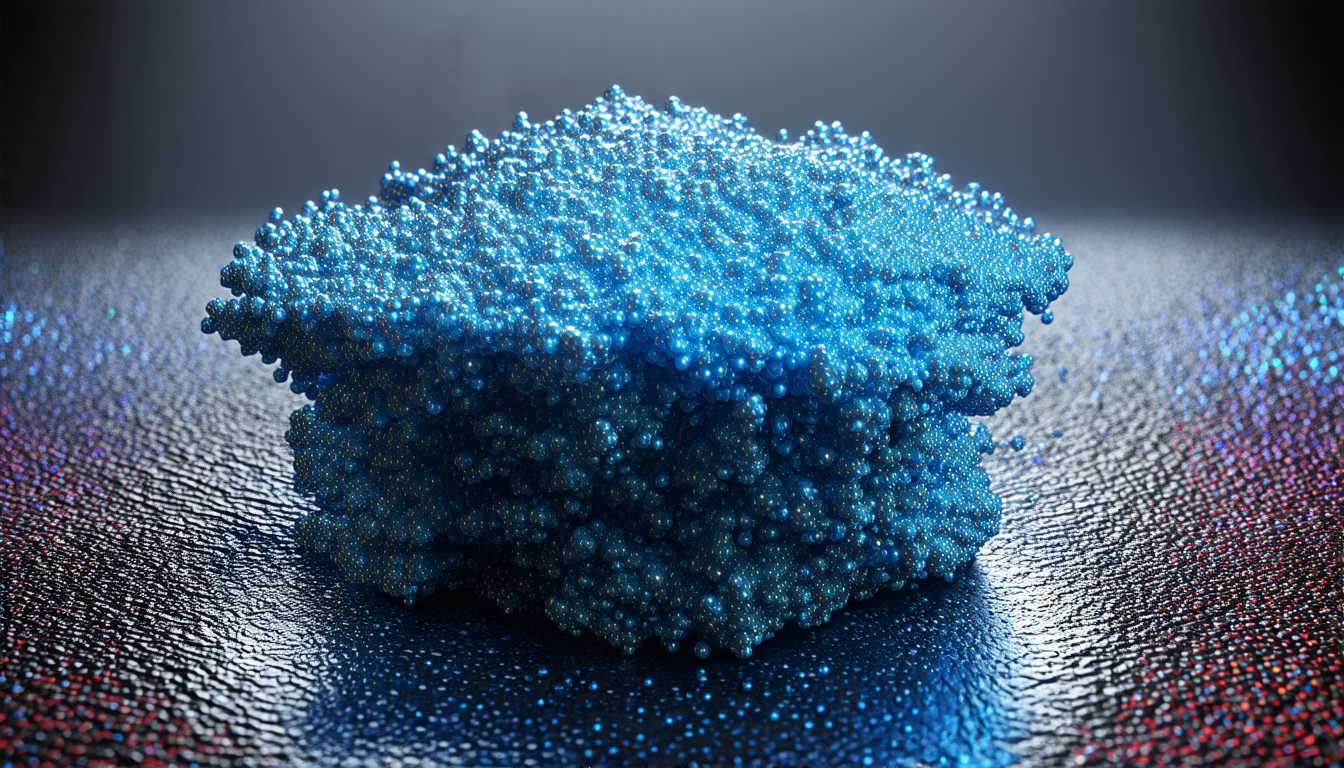
The study also revealed a surprising phenomenon: when the particles interacted with each other, they formed clusters that were surprisingly stable. These clusters were found to be resistant to external forces, such as vibrations or temperature changes, which is unusual for particles of this size.
These findings have important implications for our understanding of materials at the nanoscale. By studying the behavior of individual particles, scientists can gain insights into how they interact with each other and their surroundings, which can lead to the development of new materials and technologies.
The study also highlights the importance of interdisciplinary research, as it brought together experts from fields such as physics, chemistry, and engineering to tackle a complex problem. The collaboration led to innovative solutions and techniques that will benefit future research in this area.
Overall, this discovery is an important step forward in our understanding of materials at the nanoscale, and it has the potential to lead to breakthroughs in various fields.
Cite this article: “Unveiling the Nanoscale Behavior of Microparticles”, The Science Archive, 2025.
Materials Science, Nanoscale, Particles, Motion, Microscopy, Atomic Force, Surfaces, Interactions, Clusters, Interdisciplinary Research.





