

Sunday 23 February 2025
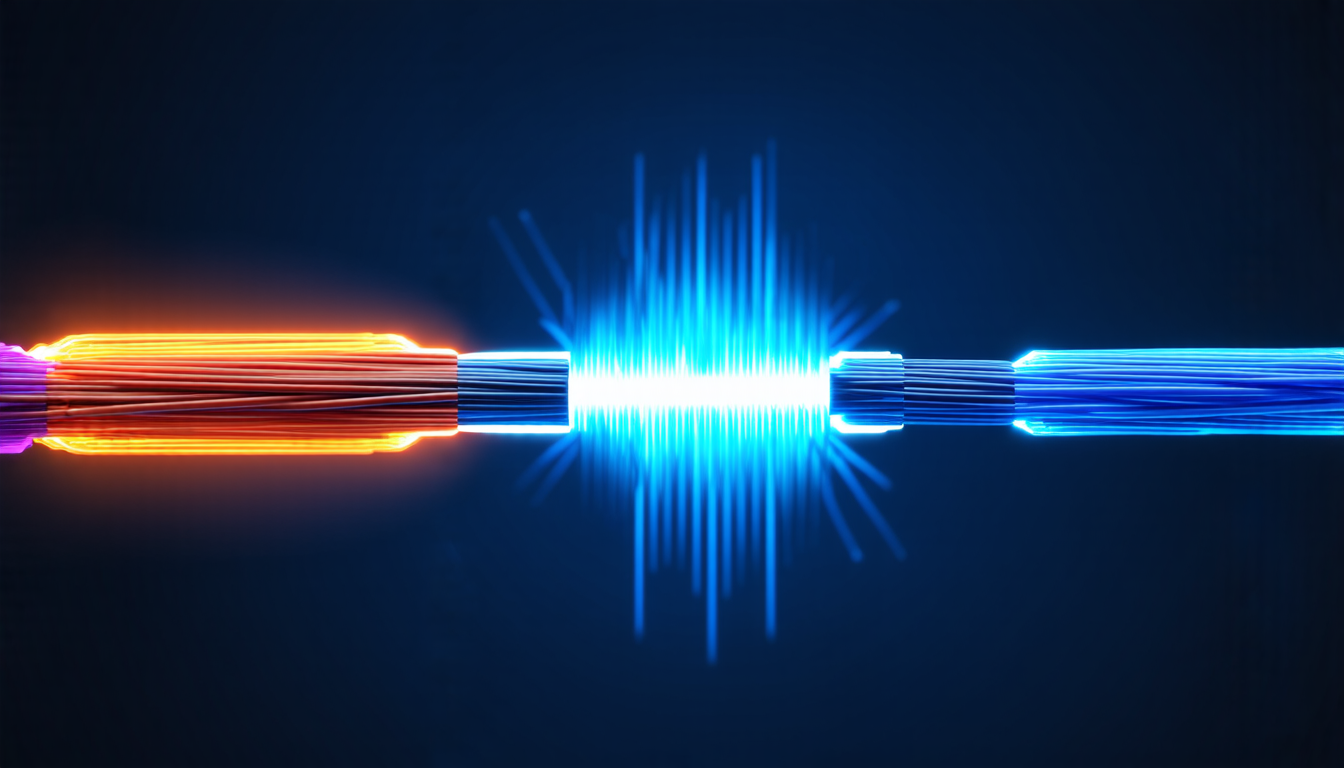
Scientists have long been fascinated by the behavior of light pulses in optical fibers, which are crucial for transmitting data over vast distances without loss or distortion. One peculiar phenomenon that has garnered significant attention is the dissipative soliton, a type of light pulse that can propagate through fibers with minimal loss and distortion.
Researchers have now shed new light on the properties of these solitons, revealing intriguing insights into their behavior and potential applications. By studying the dynamics of dissipative solitons in optical fibers, scientists have discovered that they exhibit unique characteristics, such as increased stability and robustness, which make them ideal for high-speed data transmission.
To better understand these solitons, researchers employed a thermodynamic approach to analyze their behavior. This unconventional method allowed them to uncover the underlying mechanisms driving their stability and resilience. The study revealed that dissipative solitons are capable of adapting to changes in their environment, enabling them to maintain their shape and intensity even when faced with external perturbations.
One of the key findings is the existence of a critical threshold beyond which dissipative solitons become unstable and break down into chaotic patterns. This threshold marks a significant departure from classical soliton behavior, where stability is typically achieved through precise tuning of parameters.
The researchers also discovered that dissipative solitons can be manipulated to exhibit different types of behavior, including periodic oscillations and amplitude modulation. These properties could potentially be exploited for advanced data transmission techniques, such as wavelength division multiplexing or optical time-division multiplexing.
The study’s findings have significant implications for the development of high-speed optical communication systems. By harnessing the unique properties of dissipative solitons, scientists may be able to create more efficient and reliable transmission methods, paving the way for faster data transfer rates and reduced energy consumption.
Furthermore, the thermodynamic approach employed in this study could have broader applications across various fields, including physics, chemistry, and biology. The ability to analyze complex systems using thermodynamic principles has far-reaching potential, offering new avenues for understanding and controlling complex phenomena.
In summary, researchers have made significant strides in understanding the behavior of dissipative solitons, uncovering their unique properties and potential applications. By leveraging these findings, scientists may be able to develop more efficient and reliable communication systems, with broader implications for various fields of study.
Cite this article: “Unlocking the Secrets of Dissipative Solitons in Optical Fibers”, The Science Archive, 2025.
Optical Fibers, Dissipative Solitons, Light Pulses, Data Transmission, High-Speed Communication, Stability, Robustness, Thermodynamics, Chaos Theory, Wavelength Division Multiplexing.





