
Sunday 23 February 2025
Scientists have made a significant breakthrough in understanding how to train molecular simulations, which will revolutionize our ability to study complex biological systems and develop new materials.
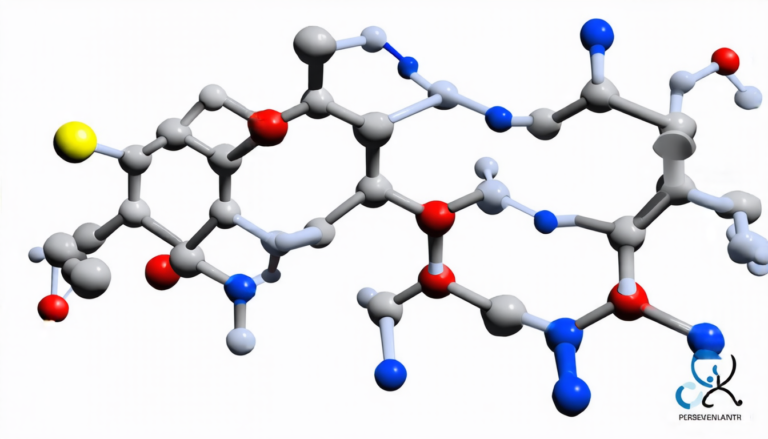
Molecular dynamics simulations are used to model the behavior of molecules at an atomic level, allowing researchers to understand how they interact with each other and their environment. This information is crucial for developing new treatments for diseases, designing new materials, and understanding the behavior of complex biological systems.
However, training these simulations has always been a challenge. Until now, scientists have had to rely on manual tuning of parameters, which can be time-consuming and prone to errors. The new approach uses a technique called reversible molecular simulation, which allows researchers to calculate gradients of observables with respect to parameters through molecular dynamics trajectories.
The key innovation is the ability to explicitly calculate gradients using a reverse-time simulation with effectively constant memory cost and a computation count similar to the forward simulation. This means that scientists can now train simulations much more efficiently than before, without sacrificing accuracy.
The technique has been tested on two different systems: all-atom water and gas diffusion models, and diamond from scratch. In both cases, the results show significant improvements in training times compared to previous methods.
One of the most exciting applications of this new approach is its potential to accelerate the development of new materials. By allowing researchers to quickly test and optimize different material properties, it could revolutionize fields such as nanotechnology and biomaterials.
The technique also has implications for our understanding of biological systems. By simulating complex biological processes more accurately and efficiently, scientists may be able to gain new insights into disease mechanisms and develop more effective treatments.
Overall, this breakthrough has the potential to transform the field of molecular dynamics simulations, enabling researchers to explore new areas of science and medicine with unprecedented speed and accuracy.
Cite this article: “Revolutionizing Molecular Simulations: A Breakthrough in Training Techniques”, The Science Archive, 2025.
Molecular Dynamics, Simulations, Training, Molecular Simulation, Reversible Simulation, Gradients, Observables, Parameters, Biomaterials, Nanotechnology