

Thursday 23 January 2025
Scientists have long been fascinated by the way materials respond to stress and strain, particularly in the context of piezoelectricity – the ability of certain materials to generate an electric charge when subjected to mechanical forces. Now, a new study has shed light on the energy decay rate in piezoelectric cylinders, providing valuable insights for engineers designing devices that rely on this phenomenon.
Piezoelectric materials are used in a wide range of applications, from sensors and actuators to medical devices and energy harvesting systems. When subjected to mechanical stress, these materials generate an electric charge that can be harnessed or controlled. However, as the stress is transferred through the material, the energy generated by the piezoelectric effect begins to decay.
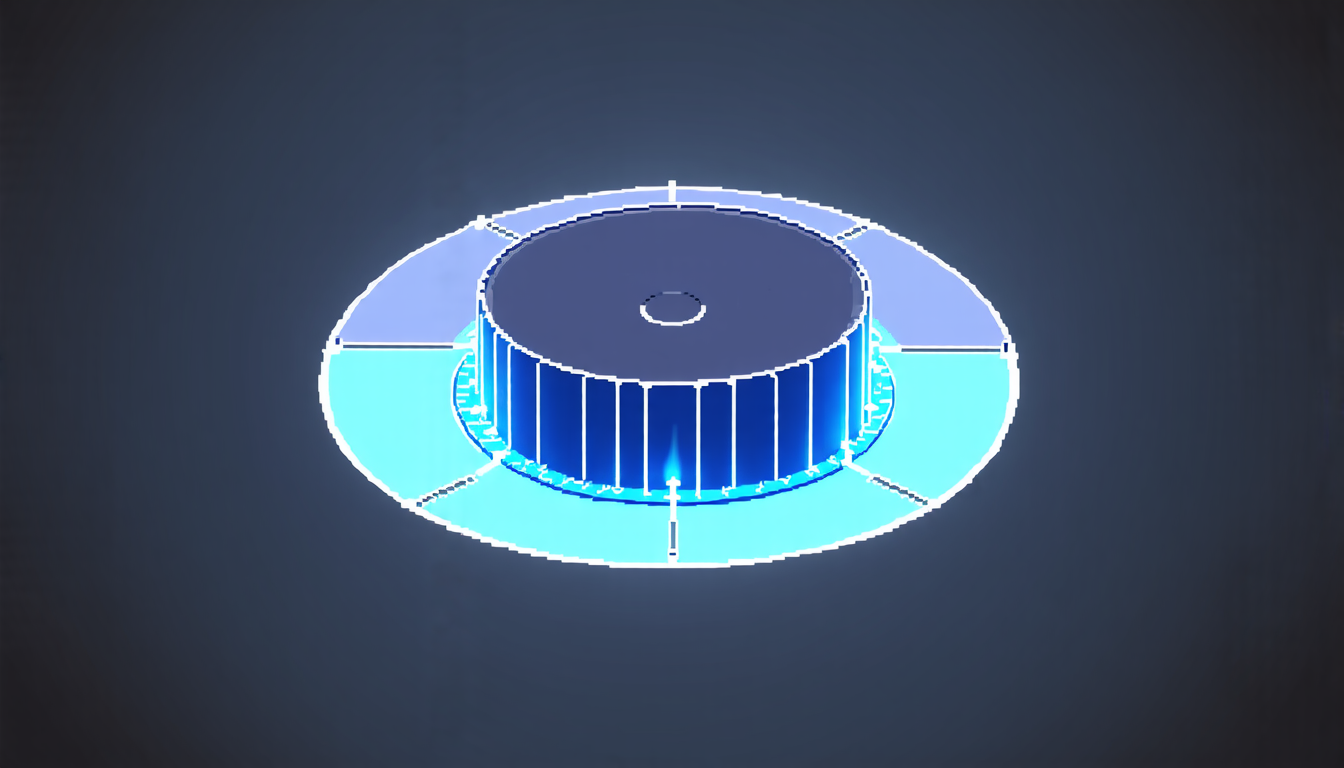
Researchers have long sought to understand the rate at which this energy decays, particularly in complex geometries such as cylinders and cones. A new study has made significant strides in this area, providing a lower bound for the energy decay rate in piezoelectric cylinders with circular cross-sections.
The researchers used a combination of mathematical techniques and physical principles to derive an inequality that relates the energy decay rate to the radius of the cylinder. This inequality provides a strict upper bound on the energy decay rate, allowing engineers to estimate the performance of their devices more accurately.
One of the key findings is that the energy decay rate decreases as the radius of the cylinder increases. This means that larger cylinders are less prone to energy loss over distance, making them more suitable for applications where energy efficiency is crucial.
The study’s authors also explored the implications of their findings for a range of real-world devices, including sensors and actuators. By better understanding the energy decay rate in piezoelectric materials, engineers can design more efficient systems that are capable of generating and controlling electric charges with greater precision.
In addition to its practical applications, this study highlights the importance of mathematical modeling in understanding complex physical phenomena. By combining theoretical insights with experimental data, researchers can gain a deeper understanding of how materials respond to stress and strain, ultimately leading to breakthroughs in fields such as materials science and engineering.
The discovery of a lower bound for the energy decay rate in piezoelectric cylinders represents an important step forward in our understanding of these materials. As research continues to push the boundaries of what is possible with piezoelectrics, this study provides a valuable foundation for future investigations into the properties and behavior of these fascinating materials.
Cite this article: “Understanding Energy Decay in Piezoelectric Cylinders”, The Science Archive, 2025.
Piezoelectricity, Energy Decay Rate, Cylinder Geometry, Mathematical Modeling, Materials Science, Engineering, Sensors, Actuators, Energy Harvesting, Mechanical Stress.
Reference: Khanh Chau Le, “A lower bound for the energy decay rate in piezoelectricity” (2025).





