
Thursday 23 January 2025
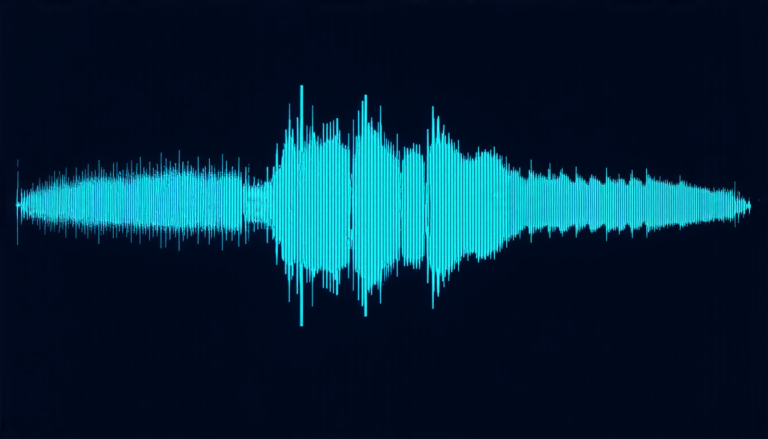
Noise is a fundamental aspect of the digital world, but it’s often overlooked until it causes problems. In the realm of wireless communication, noise can manifest as random fluctuations in signal strength, making it difficult for devices to accurately transmit and receive information. To better understand and mitigate this issue, researchers have been studying the properties of noise in sampled I/Q data.
One crucial property of noise is its Peak-to-Average Power Ratio (PAPR), which measures how much a signal deviates from its average power level. A high PAPR can indicate that the signal is being distorted by non-linear effects, such as amplifier clipping or quantization errors. In an ideal world, PAPR would be constant and uniform across all frequencies, but in reality, it’s often variable and dependent on factors like sampling rate and bandwidth.
A recent study delved deeper into the statistical properties of PAPR in sampled I/Q data, providing a comprehensive analysis of its distribution and behavior. The researchers derived an exact formula for the mean PAPR of white Gaussian noise (WGN), which is commonly encountered in digital signal processing applications. This formula can be used to identify when WGN is present in a signal, and it offers a valuable tool for characterizing and mitigating the effects of noise.
The study also explored how deviations from ideal conditions, such as I/Q imbalance or correlated sampling, can impact PAPR measurements. By analyzing these deviations, researchers can better understand the limitations of their measurement equipment and develop strategies to improve signal quality.
One practical application of this research is in the field of spectrum occupancy analysis. When monitoring radio frequency (RF) signals, it’s essential to distinguish between thermal noise and intentional transmissions. The new formula for mean PAPR offers a simple and accurate method for identifying WGN in RF data, which can help researchers and engineers make more informed decisions about signal processing and transmission.
In addition to its theoretical significance, this research has practical implications for the development of wireless communication systems. By better understanding the properties of noise and how it affects PAPR, engineers can design more efficient and reliable transmitters and receivers that minimize distortion and errors.
Ultimately, this study demonstrates the importance of considering the subtle intricacies of noise in digital signal processing. By acknowledging and addressing these complexities, researchers and engineers can create more robust and reliable systems that better serve our increasingly connected world.
Cite this article: “Uncovering the Secrets of Noise in Wireless Communication”, The Science Archive, 2025.
Noise, Papr, Wireless Communication, Signal Processing, I/Q Data, Sampling Rate, Bandwidth, White Gaussian Noise, Rf Signals, Spectrum Occupancy Analysis