

Thursday 23 January 2025
The world of statistical analysis is full of complex problems that require innovative solutions. In a recent study, researchers have tackled one such problem – the Bayesian sequential soft classification problem for a Brownian motion’s drift.
The problem involves determining the optimal stopping time in a situation where there are two possible outcomes: yes or no. The twist is that the decision-maker has access to incomplete information about the true outcome and must make a decision based on this limited information.
In the past, researchers have studied similar problems using various techniques such as sequential analysis and Bayesian methods. However, these approaches have limitations, particularly when dealing with complex situations involving multiple outcomes.
The new study takes a different approach by introducing the concept of soft classification, which allows for more nuanced decisions that take into account the uncertainty associated with each outcome. The researchers used mathematical models to analyze the problem and develop an optimal stopping strategy that balances the trade-off between accuracy and uncertainty.
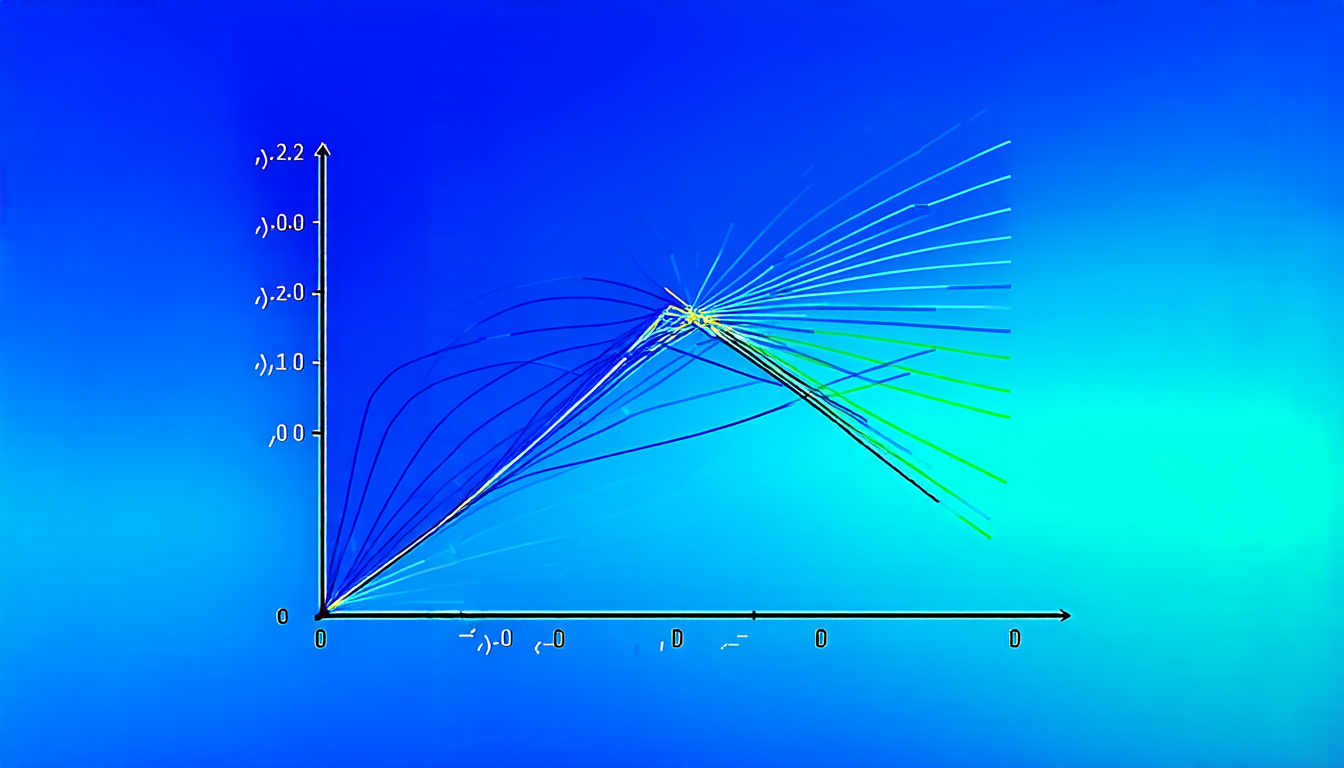
One of the key findings is that the solution depends on the information ratio, which measures the strength of the signal relative to the noise. When the information ratio is high, the decision-maker can rely more heavily on the available data to make a decision. Conversely, when the information ratio is low, the decision-maker must be more cautious and consider alternative scenarios.
The researchers also found that the solution exhibits interesting properties, such as non-trivial behavior in the information ratio. This means that small changes in the information ratio can have significant effects on the optimal stopping time.
The study has implications for a wide range of fields, including finance, medicine, and engineering. For instance, it could be used to develop more sophisticated algorithms for trading stocks or detecting diseases.
Overall, the research provides new insights into the complex problem of Bayesian sequential soft classification and highlights the importance of considering uncertainty in decision-making processes.
Cite this article: “Solving the Bayesian Sequential Soft Classification Problem”, The Science Archive, 2025.
Brownian Motion, Bayesian Statistics, Soft Classification, Sequential Analysis, Optimal Stopping Time, Uncertainty, Information Ratio, Signal Processing, Noise Reduction, Decision Theory





