

Thursday 23 January 2025
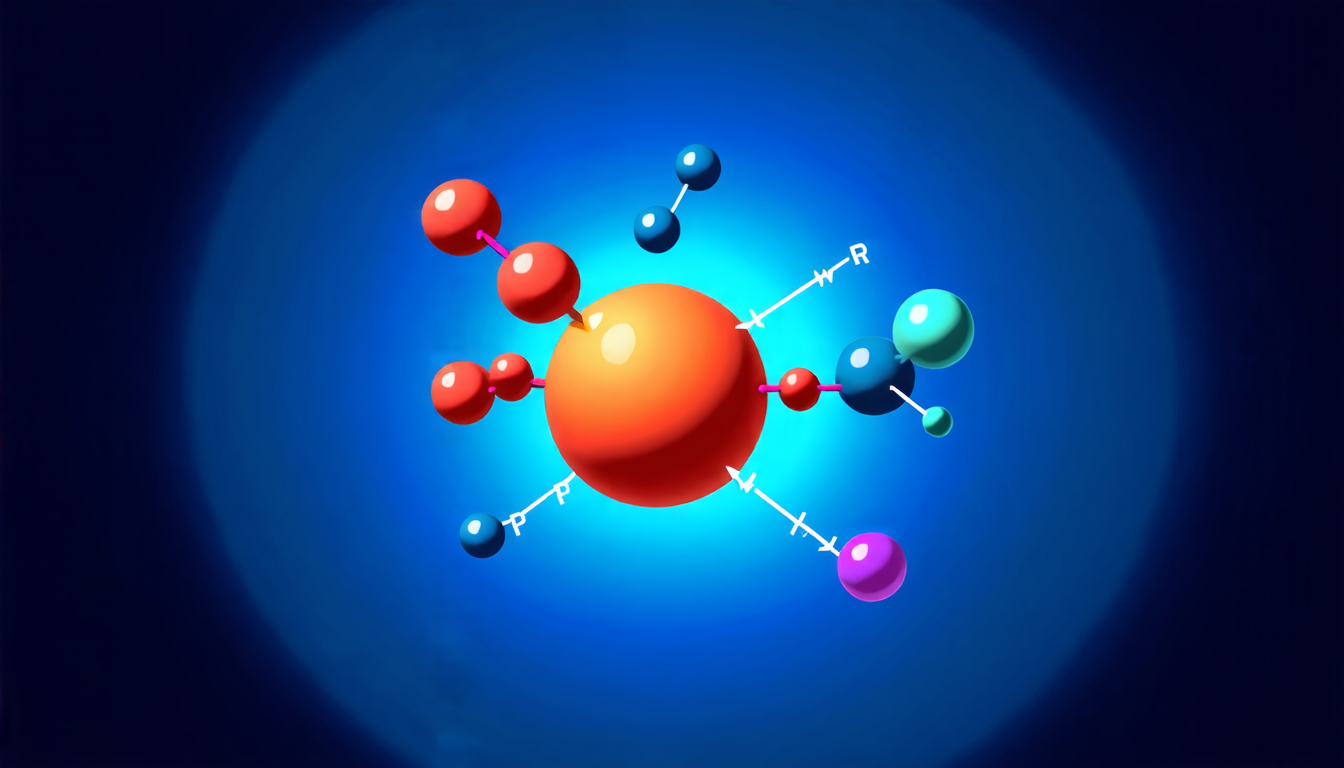
The search for a deeper understanding of the building blocks of matter has been an ongoing quest in physics for centuries. In recent years, scientists have made significant progress in unraveling the mysteries of quarks and gluons, the fundamental particles that make up protons and neutrons.
One of the most promising approaches is light-front holography, a theoretical framework that combines elements of quantum mechanics and general relativity to describe the behavior of these particles. By using this method, researchers have been able to predict the properties of quarks and gluons with unprecedented accuracy.
One area where light-front holography has made a significant impact is in our understanding of mesons, which are composed of one quark and one antiquark. Mesons are an important component of the strong nuclear force, which holds protons and neutrons together inside atomic nuclei.
In a recent study, scientists used light-front holography to calculate the properties of mesons such as their mass, spin, and electromagnetic structure. By comparing these predictions with experimental data, researchers were able to confirm that light-front holography is an accurate description of meson behavior.
One of the key benefits of light-front holography is its ability to provide a unified description of quarks and gluons at all energies. In traditional approaches, these particles are treated as separate entities, but in light-front holography, they are seen as different manifestations of a single underlying reality.
This approach has far-reaching implications for our understanding of the strong nuclear force and the behavior of quarks and gluons. By providing a deeper understanding of these particles, scientists may be able to develop new technologies that take advantage of their unique properties.
In addition to its applications in particle physics, light-front holography has also been used to study the structure of hadrons, which are composite particles made up of quarks and gluons. By analyzing the properties of hadrons, researchers have been able to gain insights into the strong nuclear force and the behavior of quarks and gluons.
The study of mesons is just one example of the many ways in which light-front holography is helping scientists to better understand the fundamental nature of matter. As this approach continues to evolve, it may lead to new breakthroughs in our understanding of the universe and the development of innovative technologies that benefit society.
Cite this article: “Unraveling the Mysteries of Quarks and Gluons: The Power of Light-Front Holography”, The Science Archive, 2025.
Quarks, Gluons, Light-Front Holography, Particle Physics, Mesons, Strong Nuclear Force, Quantum Mechanics, General Relativity, Hadrons, Matter





