

Thursday 23 January 2025
A team of researchers has made significant strides in developing a more efficient system for caching data on hierarchical networks. The new approach, which involves coded placement and retrieval of files, could lead to faster transmission rates and reduced memory requirements.
Traditionally, caching systems have relied on simple strategies such as storing frequently accessed files in local caches or using pre-fetching techniques to anticipate user demand. However, these methods can become overwhelmed by the sheer volume of data being transmitted over high-speed networks.
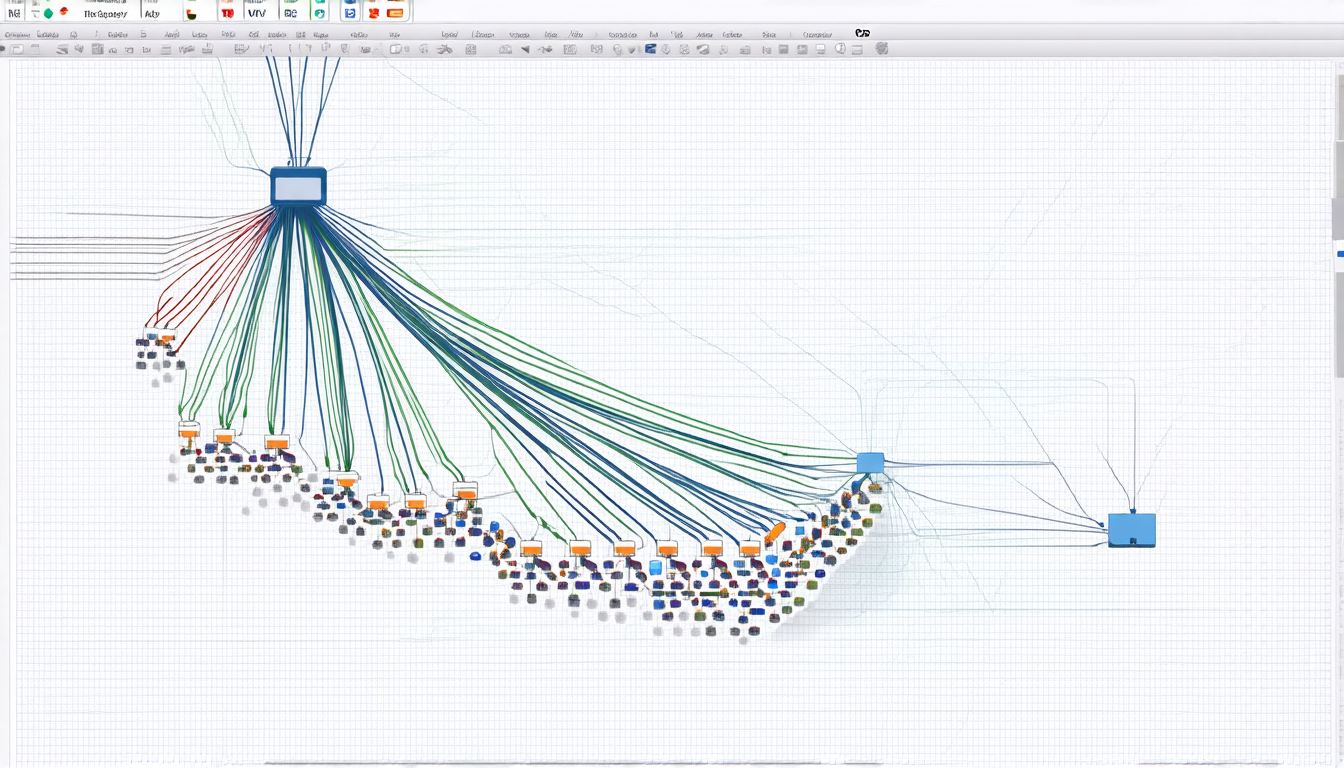
The researchers’ solution involves dividing the network into two layers: a higher layer comprising mirrors and a lower layer consisting of users. Each mirror is responsible for caching files that are likely to be requested by multiple users, while each user has its own cache containing files that are less popular but still frequently accessed.
To optimize storage capacity, the team developed a coded placement scheme where files are split into smaller sub-files and distributed across the mirrors and users in a way that minimizes the amount of memory required. This approach not only reduces storage needs but also enables faster transmission rates by allowing multiple users to access the same file fragments simultaneously.
The researchers tested their system on a hierarchical network with three mirrors and six users, finding that it outperformed existing caching schemes in terms of both transmission rate and memory requirements. In particular, the coded placement scheme reduced the composite rate – a measure of the total amount of data transmitted over the network – by up to 40% compared to traditional methods.
The team’s findings have significant implications for the development of future high-speed networks, which will need to handle vast amounts of data and provide fast and efficient access to users. By leveraging coded placement and hierarchical caching, these networks could achieve faster transmission rates and reduced memory requirements, ultimately leading to better user experiences.
One potential application of this technology is in the field of online video streaming, where high-speed networks are crucial for delivering smooth and uninterrupted playback. By optimizing caching strategies, providers could reduce latency and improve the overall viewing experience for users.
The researchers’ work also has implications for the development of next-generation wireless networks, which will need to support growing demands for data transmission while minimizing energy consumption and memory requirements.
In addition to its practical applications, this research highlights the importance of theoretical advances in understanding how data is transmitted and stored on complex networks. By developing more efficient caching strategies, researchers can help pave the way for faster, more reliable, and more efficient communication systems that support our increasingly connected world.
Cite this article: “Efficient Caching Strategies for Hierarchical Networks”, The Science Archive, 2025.
Coded Placement, Hierarchical Caching, Transmission Rate, Memory Requirements, Data Storage, Network Optimization, File Splitting, Sub-File Distribution, High-Speed Networks, Online Video Streaming.





