

Wednesday 22 January 2025
The online world is filled with misinformation, and it’s becoming increasingly difficult to distinguish fact from fiction. In this digital age, fake news has become a major concern, with malicious actors spreading false information to manipulate public opinion and sway political decisions.
Researchers have been working on developing algorithms that can detect these disinformation campaigns, but the problem remains complex due to the sheer volume of online content and the sophistication of these attacks. Recently, a team of scientists has made a significant breakthrough in this area by proposing a new approach to detecting coordinated fake news campaigns using network-informed prompt engineering and retrieval-augmented generation (RAG).
The key innovation lies in the way the algorithm analyzes social media data. Instead of relying solely on machine learning models, the system uses a combination of natural language processing and graph theory to identify patterns in online behavior that indicate coordinated disinformation efforts.
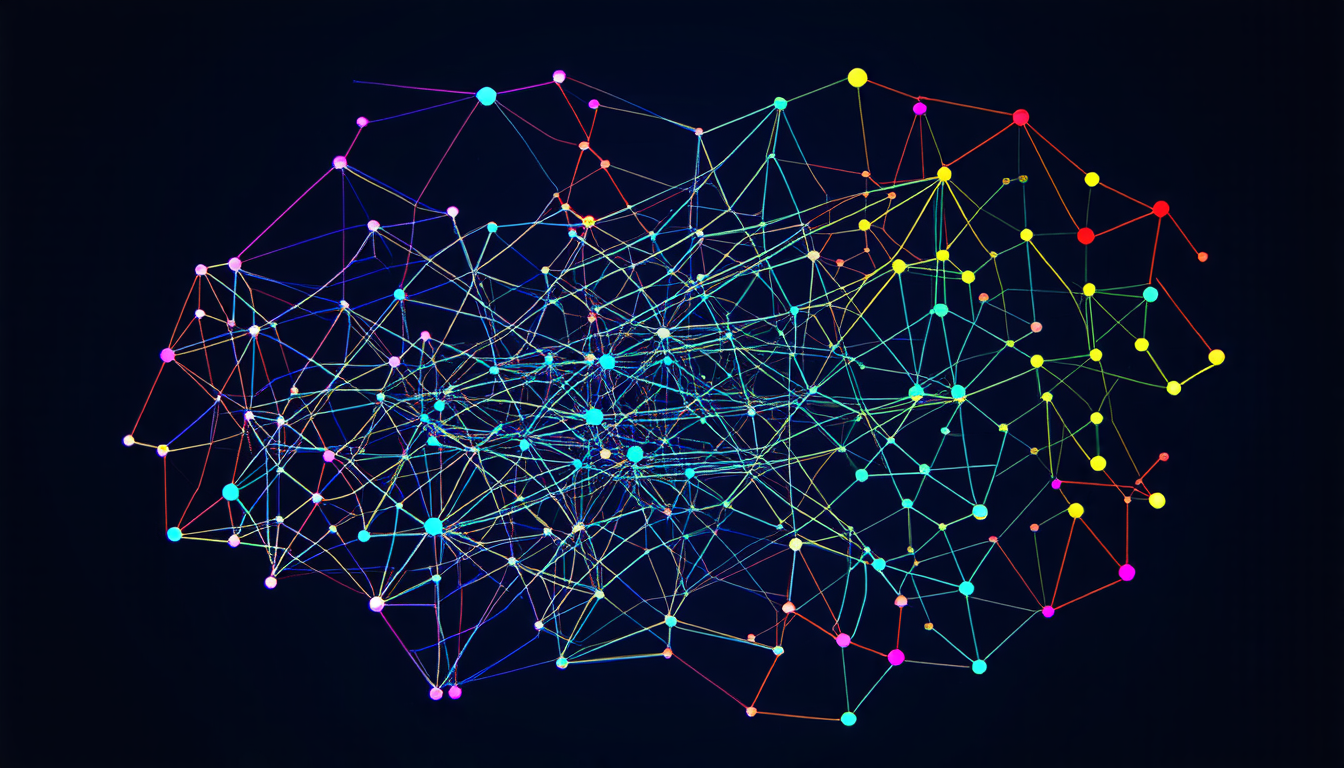
In their study, the researchers developed a framework that leverages the structural properties of social networks to detect fake news campaigns. They created a dataset containing tweets from the 2016 US presidential election, along with information about the propagation trees associated with each tweet.
The algorithm then used this data to train a large language model (LLM) to identify patterns in the language and behavior of users who are likely involved in coordinated disinformation efforts. The LLM was also trained on a set of labeled examples that highlighted the characteristics of fake news campaigns, such as sensationalism, misleading claims, and partisan language.
To evaluate the effectiveness of their approach, the researchers tested the framework against several baseline models, including traditional graph-based methods. The results showed that their algorithm significantly outperformed these baselines in detecting coordinated fake news campaigns, even under conditions of extreme class imbalance where real news far outnumbered fake news.
The researchers also demonstrated the versatility of their approach by adapting it to different types of prompting techniques, such as zero-shot, few-shot, and chain-of-thought prompting. These variations allowed the algorithm to flexibly adjust its analysis based on the specific characteristics of each tweet and the context in which it was shared.
Overall, this study represents a significant step forward in the battle against disinformation online. By leveraging network-informed prompt engineering and retrieval-augmented generation, researchers can develop more effective algorithms for detecting coordinated fake news campaigns and mitigating their impact on public opinion.
In the future, these techniques may be applied to other areas of research, such as identifying suspicious financial transactions or detecting early warning signs of cyber attacks.
Cite this article: “Detecting Coordinated Fake News Campaigns with Network-Informed Prompt Engineering and Retrieval-Augmented Generation”, The Science Archive, 2025.
Disinformation, Fake News, Algorithm, Social Media, Network-Informed Prompt Engineering, Retrieval-Augmented Generation, Natural Language Processing, Graph Theory, Machine Learning, Coordinated Campaigns





