

Thursday 23 January 2025
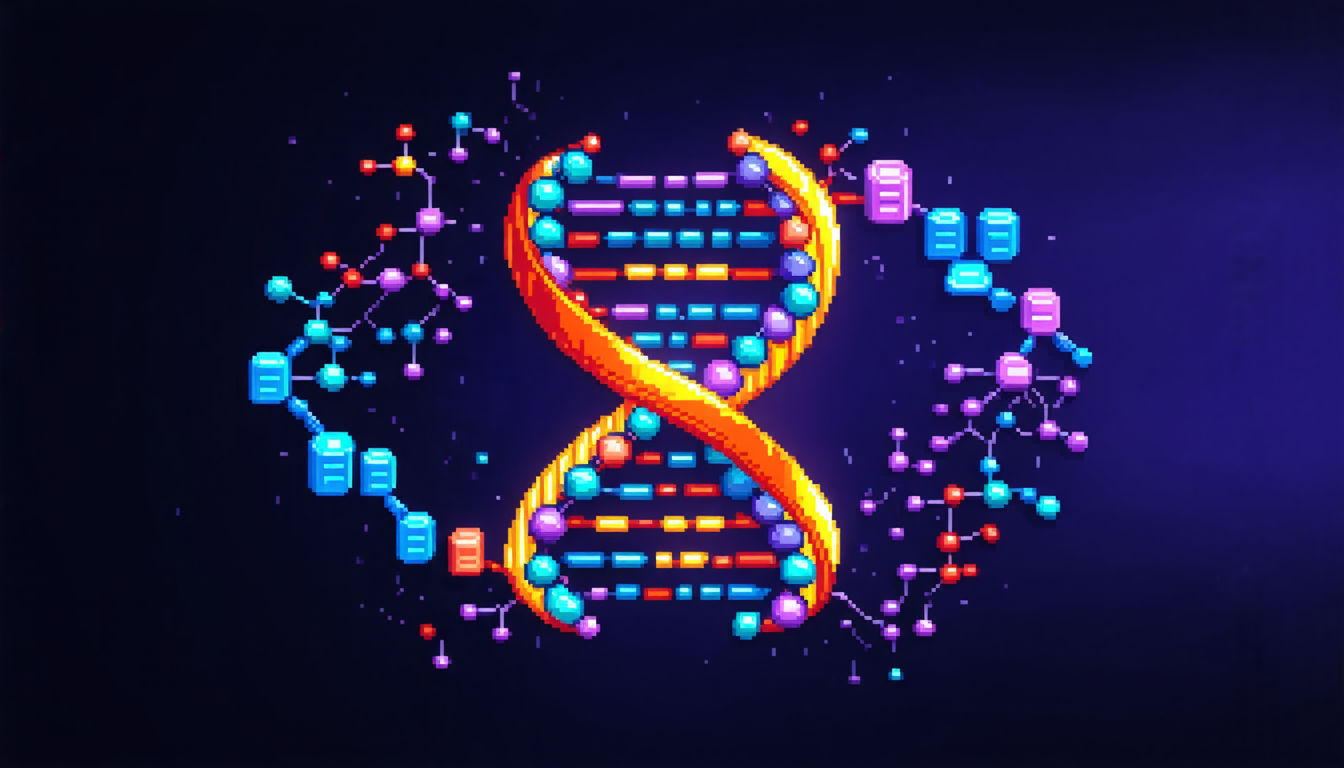
DNA storage, a technology that allows us to store vast amounts of data using the building blocks of life, has been gaining momentum in recent years. However, one major challenge facing this field is ensuring efficient and reliable access to stored information.
A team of researchers has made a significant breakthrough in addressing this issue by developing a new method for encoding and decoding data in DNA sequences. The approach involves creating specialized codes that allow for rapid retrieval of specific pieces of information from vast libraries of genetic material.
The key innovation lies in the way the codes are constructed, which enables efficient random access to stored data. In traditional DNA storage systems, researchers have relied on algorithms that require searching through an entire library of sequences to find a specific piece of information. This process can be time-consuming and energy-intensive, making it impractical for large-scale data storage.
The new method, on the other hand, allows for direct access to stored data using a combination of combinatorial coding theory and machine learning algorithms. By encoding data in a way that takes into account the inherent properties of DNA sequences, researchers can create codes that are both efficient and reliable.
One of the major advantages of this approach is its scalability. As the amount of data being stored continues to grow, traditional methods may struggle to keep up with the demands of rapid access and retrieval. The new method, however, shows great promise in addressing these challenges, making it a vital component in the development of large-scale DNA storage systems.
The implications of this breakthrough are far-reaching, with potential applications in fields such as medicine, finance, and data centers. As our reliance on digital information continues to grow, the need for efficient and reliable data storage solutions becomes increasingly pressing. The development of this new method marks a significant step forward in addressing these challenges, paving the way for a future where DNA storage plays a critical role in our daily lives.
The research team’s findings were published in a recent article, detailing their approach to encoding and decoding data in DNA sequences. While still in its early stages, this breakthrough holds great promise for the future of DNA storage and the many applications that depend on it.
Cite this article: “Efficient DNA Storage Made Possible with New Encoding Method”, The Science Archive, 2025.
Dna Storage, Data Retrieval, Combinatorial Coding Theory, Machine Learning Algorithms, Scalable Data Storage, Genetic Material, Random Access, Digital Information, Data Centers, Bioinformatics





