

Thursday 23 January 2025
The intricate dance of group theory and graph theory has long fascinated mathematicians, and a recent study delves deeper into the relationship between these two disciplines. Researchers have been exploring the properties of power graphs, which are derived from finite groups, and have made significant discoveries about their connectivity.
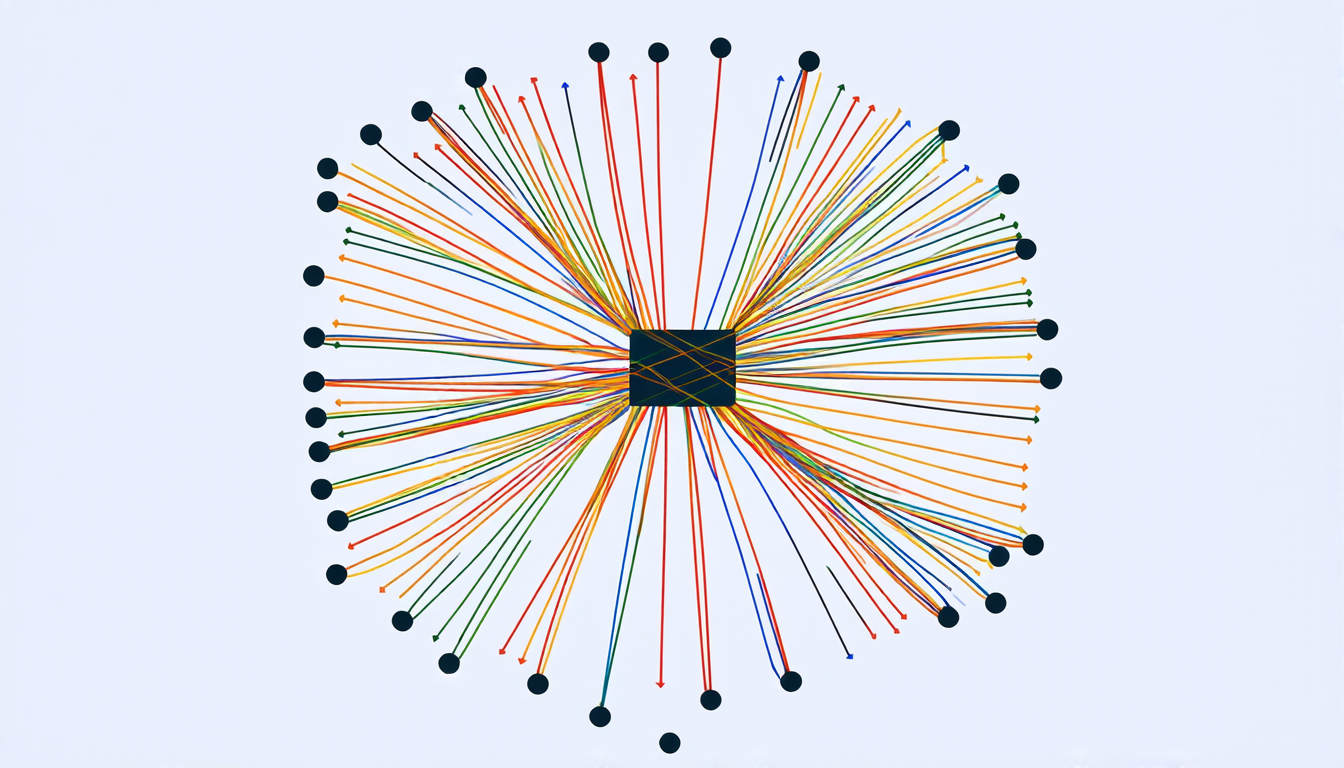
A power graph is a mathematical object that represents the relationships between elements in a group. It’s like a social network, where each node represents an element and the edges connect elements that can be transformed into one another through group operations. The study of power graphs has led to important advances in our understanding of group theory, but it also raises new questions about the structure of these graphs.
One key aspect of power graphs is their connectivity, which refers to how easily they can be broken down into smaller subgraphs. In other words, if you start with a power graph and remove certain nodes or edges, will it still remain connected? This property has important implications for computer science and coding theory.
The researchers found that the connectivity of power graphs is closely tied to the properties of the underlying group. For example, they discovered that certain types of groups have power graphs that are more likely to be disconnected, while others have graphs that are much more robust.
This study has significant implications for a range of fields, from cryptography to network design. By better understanding the properties of power graphs, mathematicians can develop new algorithms and protocols that take advantage of these properties.
The researchers used a variety of mathematical techniques to analyze the power graphs, including graph theory and linear algebra. They also developed new tools and methods to study the connectivity of these graphs.
One of the most interesting aspects of this research is its potential applications in computer science. Power graphs can be used to model complex systems, such as social networks or communication networks, and understanding their connectivity can help us design more efficient algorithms for analyzing these systems.
The study also has implications for cryptography, where power graphs are used to develop secure encryption protocols. By better understanding the properties of these graphs, researchers can develop new encryption methods that are even more secure.
In addition, the research has potential applications in coding theory, where power graphs are used to design error-correcting codes. Understanding the connectivity of these graphs can help us develop new codes that are more efficient and effective.
Overall, this study demonstrates the power of mathematical analysis to uncover deep insights into complex systems.
Cite this article: “Unpacking the Properties of Power Graphs in Group Theory”, The Science Archive, 2025.
Group Theory, Graph Theory, Power Graphs, Finite Groups, Connectivity, Computer Science, Cryptography, Coding Theory, Linear Algebra, Mathematical Analysis





