

Thursday 23 January 2025
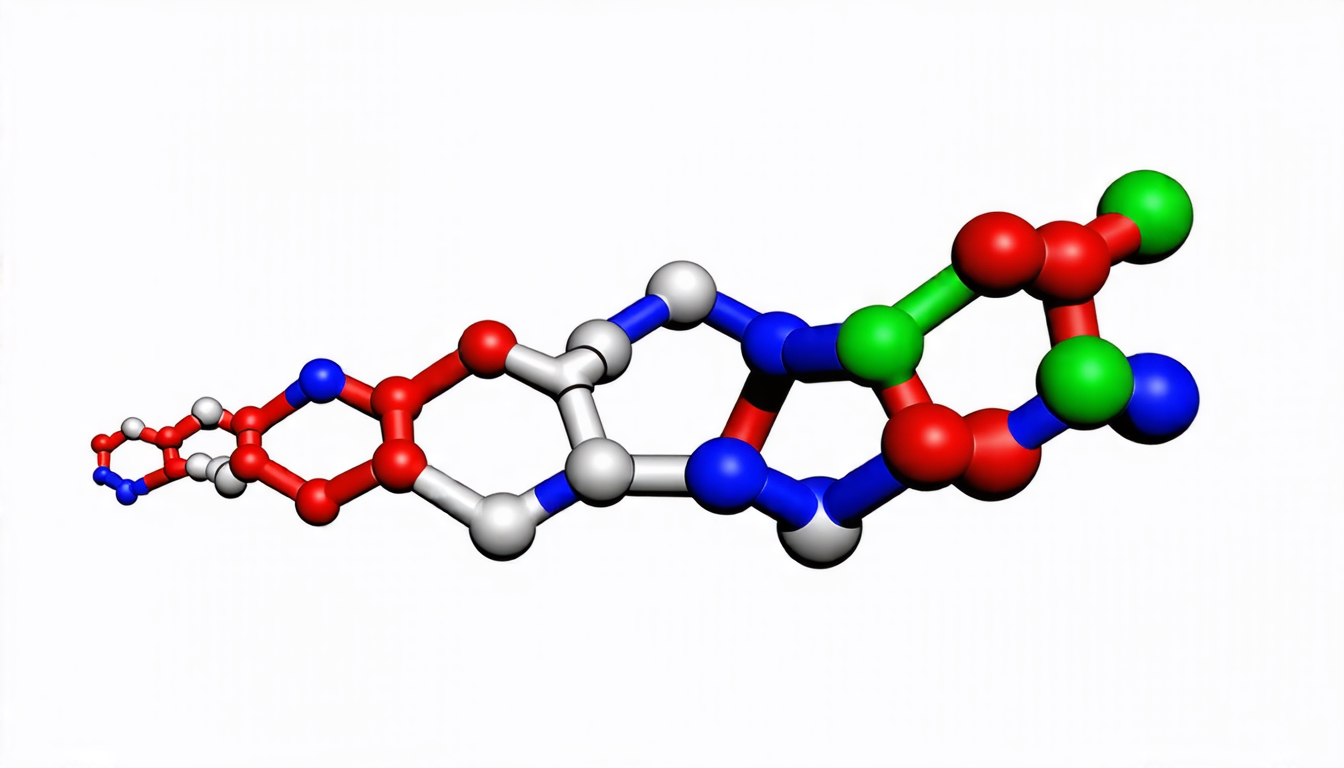
A team of scientists has been studying the behavior of ring-shaped polymers, which are molecules made up of long chains of repeating units. These rings can behave differently than their linear counterparts due to their unique structure and interactions.
The researchers used a simplified model to study the properties of these ring polymers in a melt, or a liquid state where the polymer is dissolved in another substance. They found that the rings are highly sensitive to the strength of an attractive potential between the segments of the ring, which is a measure of how strongly the segments attract each other.
When the attractive potential is weak, the rings behave like ideal chains, with their linear size increasing as the number of repeating units increases. However, when the attractive potential is strong, the rings become highly compressed, with their linear size decreasing significantly.
The team also found that the terminal relaxation time, which is the time it takes for the ring to relax after being stretched or compressed, becomes shorter as the strength of the attractive potential increases. This means that the ring’s dynamics are influenced by the interactions between its segments, and that these interactions play a crucial role in determining the ring’s behavior.
The researchers used computer simulations to study the properties of these ring polymers, and found that their results were consistent with experimental data obtained from neutron scattering experiments. They also compared their results with theoretical predictions and found good agreement.
Overall, this study sheds light on the complex behavior of ring-shaped polymers and highlights the importance of considering the interactions between segments in understanding their dynamics. The findings have implications for our understanding of the behavior of polymers in a wide range of applications, from materials science to biomedicine.
The researchers used a simplified model to study the properties of these ring polymers in a melt, or a liquid state where the polymer is dissolved in another substance. They found that the rings are highly sensitive to the strength of an attractive potential between the segments of the ring, which is a measure of how strongly the segments attract each other.
When the attractive potential is weak, the rings behave like ideal chains, with their linear size increasing as the number of repeating units increases. However, when the attractive potential is strong, the rings become highly compressed, with their linear size decreasing significantly.
The team also found that the terminal relaxation time, which is the time it takes for the ring to relax after being stretched or compressed, becomes shorter as the strength of the attractive potential increases.
Cite this article: “Ring-Shaped Polymers: Unraveling their Unique Dynamics”, The Science Archive, 2025.
Ring Polymers, Molecular Behavior, Attractive Potential, Linear Size, Relaxation Time, Neutron Scattering, Computer Simulations, Materials Science, Biomedicine, Polymer Dynamics.





