

Saturday 22 March 2025
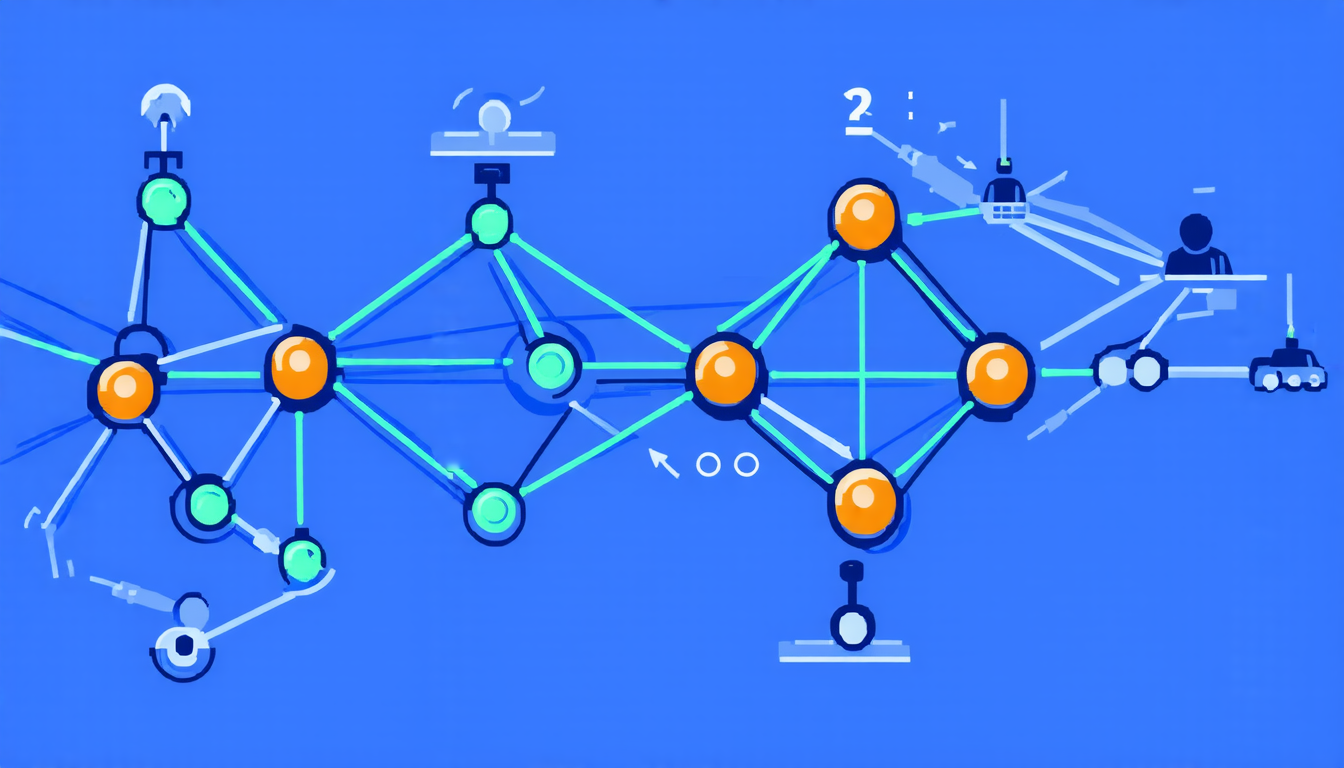
A recent study has shed new light on the phenomenon of stochastic resonance, a complex process that occurs when noise and periodic signals interact in chaotic systems. The research, published in a scientific journal, delves into the behavior of networks of bistable oscillators, shedding light on how they respond to failing units and external driving forces.
Stochastic resonance is a fascinating topic, as it can lead to unexpected and counterintuitive behaviors in complex systems. In the context of this study, researchers explored how a network of oscillators with non-resonant potential landscapes affects the phenomenon. By introducing failing units into the system, they found that the number of non-resonant oscillators has a nonlinear relationship with their dissimilarity from the rest of the network.
The investigation also examined the role of network topology and coupling strength in maintaining stochastic resonance. The results showed that complex topologies with low clustering coefficients and average path lengths are more resilient to failing units, while regular networks are more susceptible to the breakdown of SR. This suggests that the structure of the network plays a crucial role in its ability to adapt to changing conditions.
One of the most intriguing findings was the effect of increasing the coupling intensity on stochastic resonance. Counterintuitively, stronger couplings actually reduce the resilience of the system, making it more prone to failure when failing units are introduced. This highlights the importance of considering the interplay between network structure and dynamics in understanding complex systems.
The study’s findings have implications for a wide range of fields, from physics and biology to engineering and computer science. In biological systems, stochastic resonance has been linked to phenomena such as neural synchrony and phase transitions in populations. In engineering, it can inform the design of robust and adaptive systems that can respond effectively to changing conditions.
The research also raises questions about the potential applications of stochastic resonance in machine learning and artificial intelligence. By understanding how complex systems adapt to noise and external driving forces, researchers may be able to develop more resilient and efficient algorithms for tasks such as pattern recognition and decision-making.
Overall, this study provides valuable insights into the behavior of complex systems and the importance of considering network structure and dynamics in understanding stochastic resonance. As researchers continue to explore this phenomenon, they may uncover new and innovative ways to harness its power for a wide range of applications.
Cite this article: “Unlocking the Secrets of Stochastic Resonance in Complex Systems”, The Science Archive, 2025.
Complex Systems, Stochastic Resonance, Chaotic Systems, Noise, Periodic Signals, Bistable Oscillators, Network Topology, Coupling Strength, Resilience, Machine Learning





