

Saturday 31 May 2025
As scientists continue their quest to uncover the secrets of dark matter, a new generation of experiments is being developed to tackle this elusive mystery. The CRESST (Cryogenic Rare Event Search with Superconducting Thermometers) experiment, based in Germany, has announced plans to upgrade its detectors and push the boundaries of what we know about dark matter.
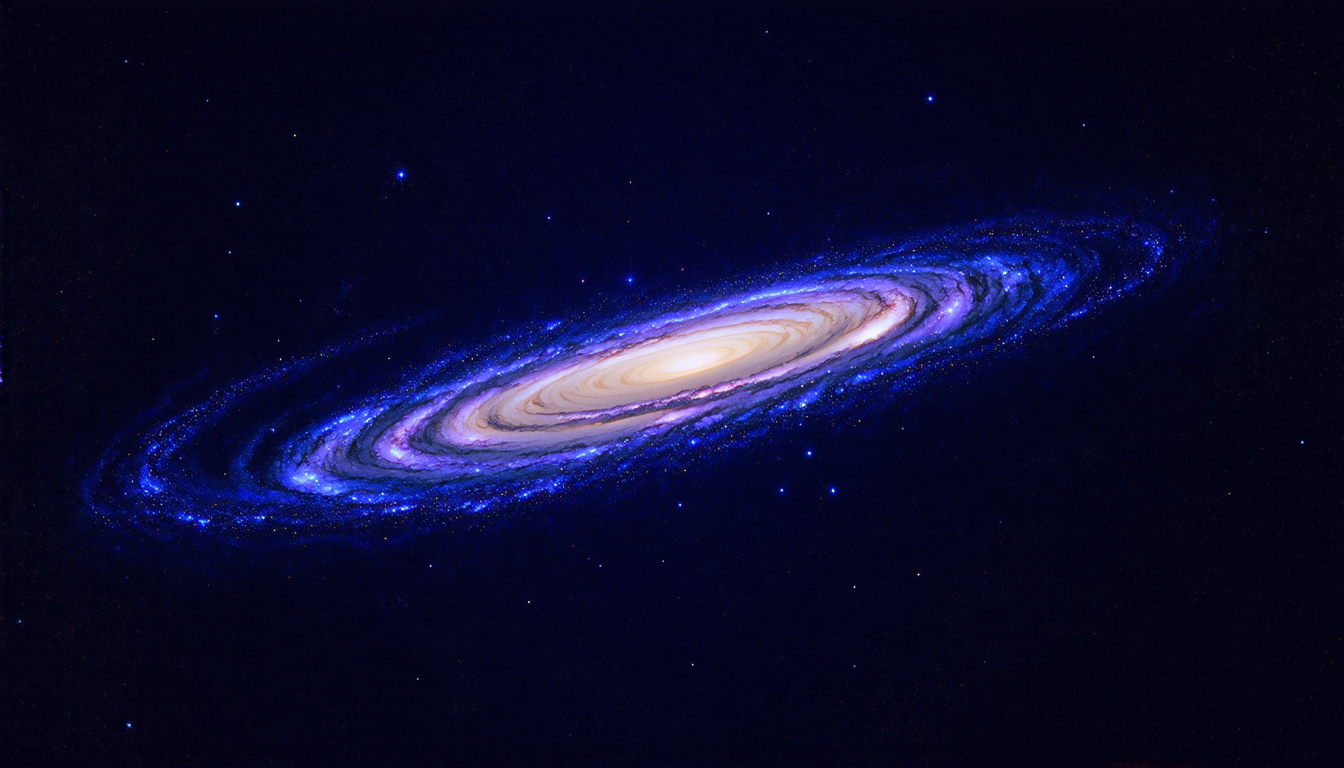
The hunt for dark matter began decades ago, when scientists first noticed that galaxies were moving at a speed that didn’t match their visible mass. Since then, numerous experiments have attempted to detect this invisible substance, but so far, none has succeeded. The latest proposal from CRESST aims to change that by using a new type of detector that can pick up the faint signals left behind by dark matter particles.
The key innovation is the use of superconducting thermometers, which are highly sensitive to changes in temperature. By cooling the detectors to just above absolute zero, scientists can create conditions where even the slightest heat signature from dark matter interactions becomes detectable. This allows them to focus on a previously unexplored range of masses for dark matter particles.
The upgrade will also see the installation of new materials and designs, designed to reduce background noise and improve the detectors’ sensitivity. The team is confident that this combination of cutting-edge technology and clever design will enable them to detect dark matter for the first time.
But why is it so important to find dark matter? For one, it’s a crucial piece of the puzzle when it comes to understanding how the universe came to be. Dark matter makes up roughly 27% of the universe’s mass-energy budget, and its presence has a profound impact on the formation and evolution of galaxies.
Furthermore, detecting dark matter could have significant implications for our understanding of particle physics. The Standard Model of particle physics describes the behavior of known particles, but it can’t account for dark matter’s existence. Discovering dark matter would require the development of new theories or the discovery of as-yet unknown particles that interact with normal matter.
The CRESST experiment is just one part of a larger effort to detect dark matter. Other scientists are working on similar projects, using a range of different detectors and techniques to try and catch a glimpse of this elusive substance. While it’s impossible to predict exactly when or if dark matter will be detected, the prospect of finally solving this long-standing mystery is an exciting one.
Cite this article: “Unraveling the Mysteries of Dark Matter: CRESSTs Cutting-Edge Experiment Aims to Detect Elusive Substance”, The Science Archive, 2025.
Dark Matter, Cresst, Germany, Experiment, Detectors, Superconducting Thermometers, Temperature, Absolute Zero, Particle Physics, Standard Model





