

Sunday 01 June 2025
For decades, scientists have been trying to develop a way to analyze and control complex physical systems without relying on computers that can’t fully understand them. This challenge has stumped researchers in fields ranging from engineering to physics, but a new approach may finally offer a solution.
The problem arises when dealing with systems that are too complex for traditional computer simulations or experiments to accurately model. These systems, often found in areas like networked control systems or signal processing, require a deep understanding of their behavior and properties. However, the complexity of these systems makes it difficult to develop reliable and efficient algorithms for analysis and control.
Enter computable analysis, a field that combines theoretical computer science with mathematical analysis. By using this approach, researchers can rigorously analyze complex physical systems and develop precise algorithms for controlling them. The key is to represent the system’s behavior as a continuous function, which allows for a more nuanced understanding of its properties.
One major advantage of computable analysis is its ability to handle infinite sequences of numbers, something that traditional computers struggle with. This capability makes it an ideal tool for analyzing systems that involve infinite-dimensional spaces or functions.
In recent years, researchers have made significant progress in developing the mathematical framework for computable analysis. They have also applied this approach to various fields, including signal processing and control theory. The results are promising, with new algorithms and techniques being developed to tackle complex problems.
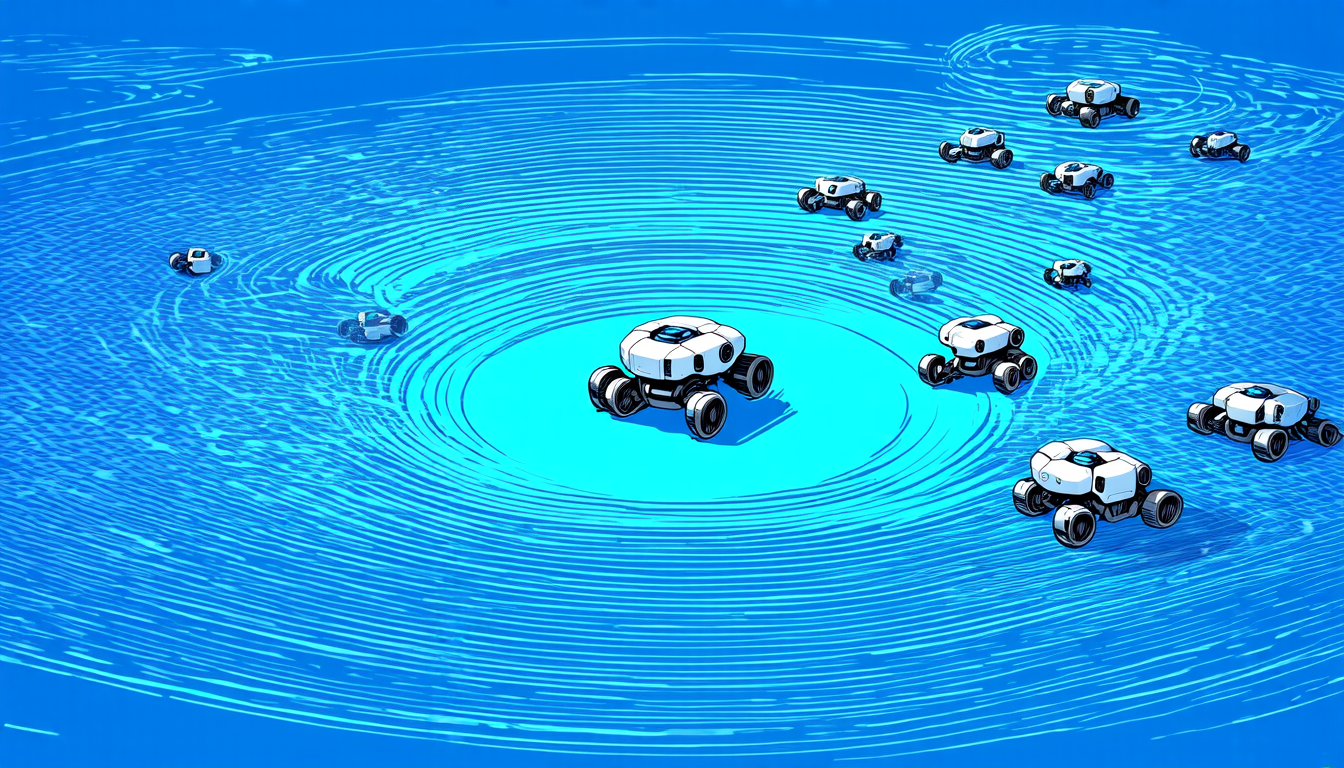
For example, scientists have used computable analysis to develop more efficient methods for analyzing and controlling networked control systems. These systems, found in applications like robotic swarms or autonomous vehicles, require precise coordination between individual components. Computable analysis allows researchers to model the behavior of these systems and develop algorithms that can efficiently control them.
Another area where computable analysis is making a difference is in signal processing. By using this approach, scientists can develop more accurate methods for filtering and analyzing signals, which is crucial in fields like audio processing or medical imaging.
While computable analysis is still an emerging field, its potential applications are vast. As researchers continue to develop new techniques and algorithms, we can expect to see significant advancements in various areas of science and engineering. The ability to accurately analyze and control complex physical systems will have far-reaching implications, from improving the efficiency of industrial processes to advancing our understanding of the natural world.
In the future, we may see computable analysis being used to tackle some of humanity’s most pressing challenges, such as developing more efficient renewable energy sources or creating more precise medical treatments.
Cite this article: “Cracking the Code: A New Approach to Analyzing and Controlling Complex Physical Systems”, The Science Archive, 2025.
Computable Analysis, Complex Systems, Physical Systems, Computer Simulations, Mathematical Analysis, Control Theory, Signal Processing, Networked Control Systems, Autonomous Vehicles, Robotic Swarms





