

Wednesday 30 July 2025
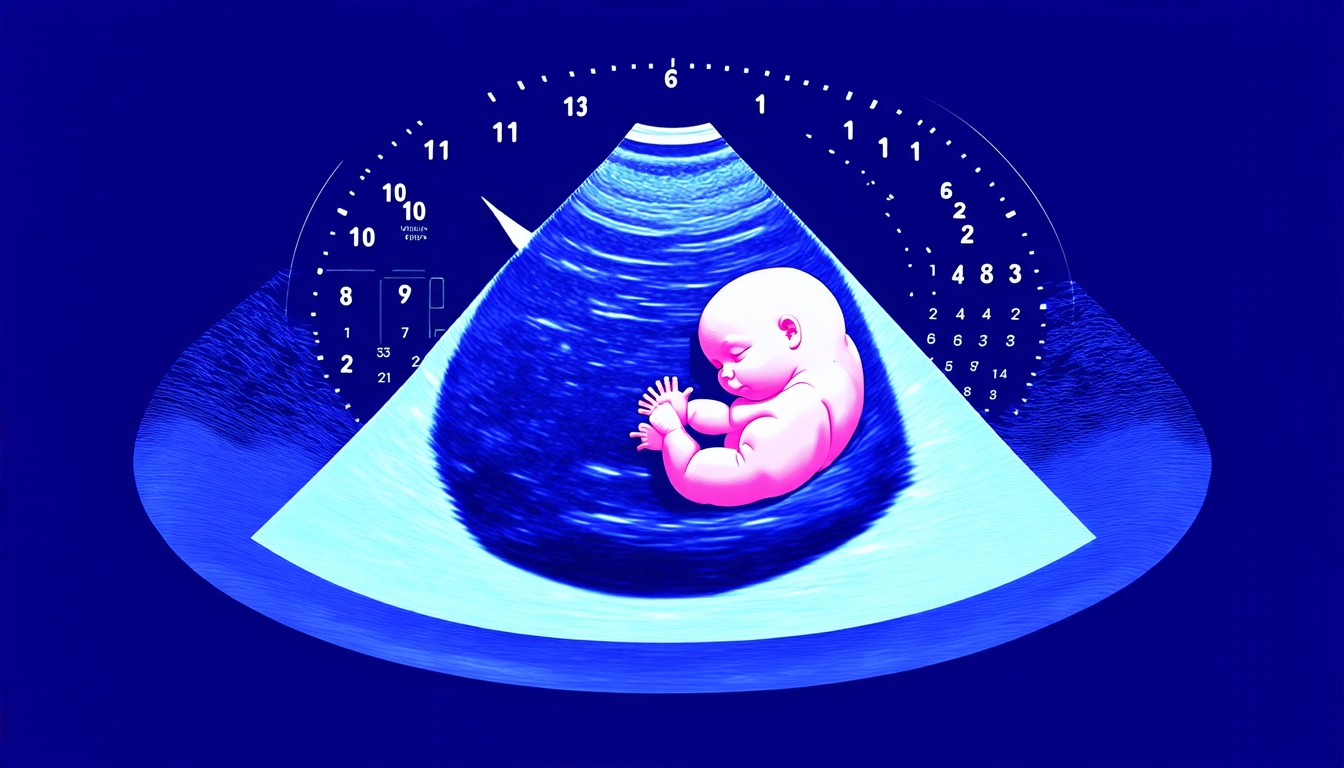
Scientists have made a significant breakthrough in developing an innovative framework for accurately estimating fetal gestational age using ultrasound images. This new approach combines radiomic features, which are derived from medical imaging data, with deep learning representations to produce more precise results.
The researchers used two large datasets of fetal head ultrasound images to train their model. They then tested the accuracy of their system by comparing it to established methods and found that it outperformed them in estimating gestational age. This is particularly important for pregnant women as accurate estimation of gestational age can help identify potential health risks and inform decisions about prenatal care.
The key innovation here is the integration of radiomic features, which are derived from medical imaging data, with deep learning representations. Radiomics has been used in other areas of medicine to extract valuable information from images, such as tumour size and shape. By applying this technique to fetal ultrasound images, researchers were able to identify specific patterns that are indicative of gestational age.
The model was trained using a convolutional neural network (CNN), which is a type of deep learning algorithm that is well-suited for image analysis. The CNN was able to learn the relationships between the radiomic features and the corresponding gestational ages, allowing it to make accurate predictions.
One of the advantages of this new framework is its ability to handle variability in ultrasound images. Ultrasound images can be affected by a range of factors, such as the quality of the equipment used and the skill level of the person taking the image. However, the researchers found that their model was able to adapt to these variations and still produce accurate results.
This breakthrough has significant implications for the field of obstetrics and gynecology. Accurate estimation of gestational age is crucial for providing optimal prenatal care and identifying potential health risks. This new framework could potentially be used in clinical settings to improve the accuracy of gestational age estimates, leading to better outcomes for pregnant women and their babies.
Furthermore, this research has broader implications for the field of medical imaging. The integration of radiomic features with deep learning representations is a novel approach that could be applied to other areas of medicine, such as tumour diagnosis and monitoring. This could potentially lead to new diagnostic tools and treatments for a range of diseases.
Overall, this study demonstrates the power of combining traditional medical imaging techniques with cutting-edge artificial intelligence methods.
Cite this article: “Accurate Fetal Gestational Age Estimation Using Ultrasound Images and Deep Learning”, The Science Archive, 2025.
Fetal Gestational Age Estimation, Ultrasound Images, Radiomic Features, Deep Learning Representations, Convolutional Neural Network, Medical Imaging, Prenatal Care, Obstetrics And Gynecology, Artificial Intelligence, Image Analysis





