

Saturday 27 September 2025
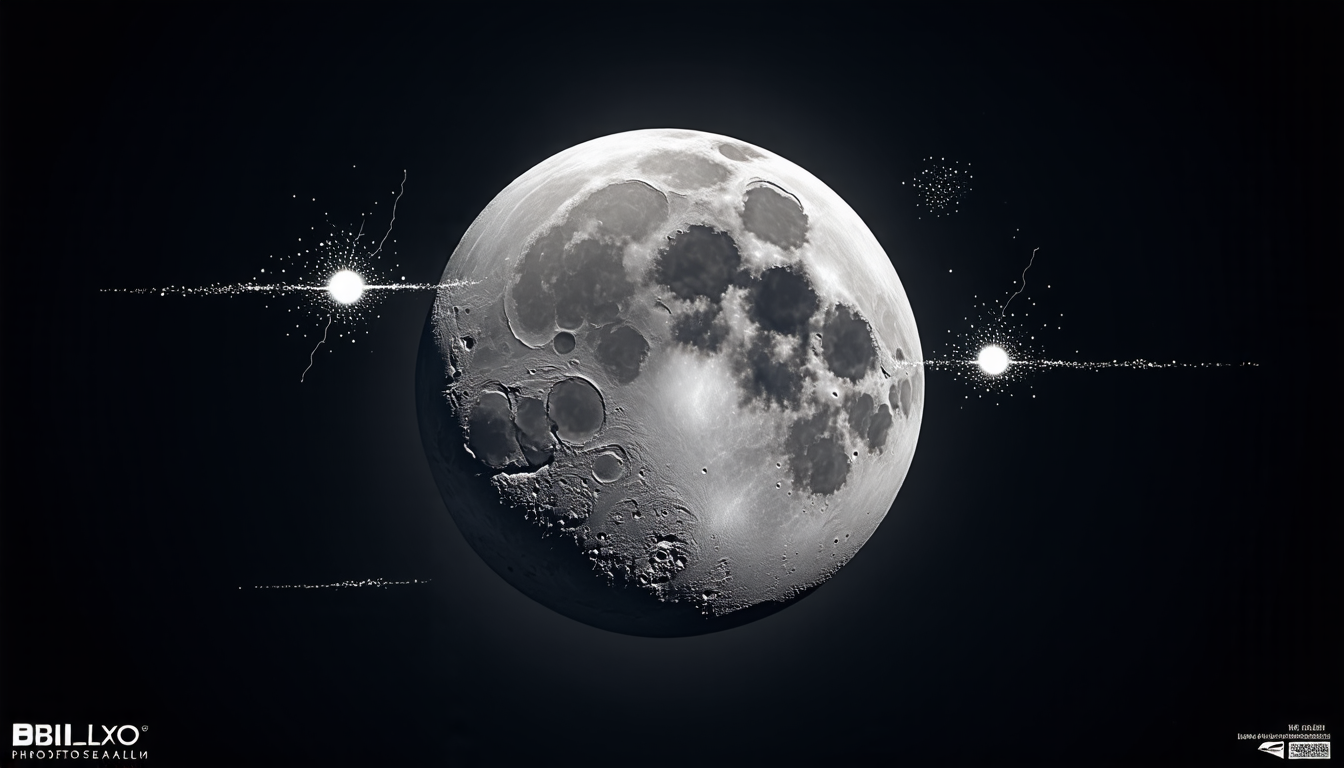
The Moon’s surface is a fascinating and dynamic place, home to a thin layer of gases that can be affected by the solar wind. Scientists have long been interested in understanding how this interaction influences the lunar exosphere, and a new study has shed light on a previously unknown mechanism.
Researchers used data from NASA’s GOES-R Series Extreme Ultraviolet Sensor (EUVS) and the Total and Spectral Solar Irradiance Sensor-1 (TSIS-1) aboard the International Space Station to investigate the relationship between solar EUV radiation and sodium release from the lunar surface. They found that the intensity of EUV radiation above 8.8 eV drives the release of sodium, with wavelengths in the range of 256-304 Å contributing most significantly.
This discovery is significant because it challenges our current understanding of how the lunar exosphere behaves. Previous models suggested a linear relationship between solar radiation and sodium release, but this new study shows that the reality is more complex. The non-linear response means that small changes in EUV radiation can have a big impact on sodium levels in the exosphere.
The researchers also found that the correlation between EUV radiation and sodium release varies depending on the altitude at which the measurements are taken. At lower altitudes, the relationship is stronger, while at higher altitudes it is weaker. This suggests that there may be different mechanisms at play at different heights above the surface.
One of the most interesting implications of this study is its potential to help us better understand how the lunar exosphere changes over time. The Moon’s atmosphere is thought to have been much thicker in the distant past, and understanding how it has evolved could provide valuable insights into the history of our solar system.
The new findings also highlight the importance of continued research into the lunar exosphere. By studying this dynamic environment, scientists can gain a better understanding of the complex interactions between the Moon’s surface and the solar wind, as well as the ways in which these interactions shape the composition and behavior of the exosphere.
Ultimately, this study demonstrates the importance of exploring our closest celestial neighbor and the many mysteries that it still holds. The lunar exosphere may seem like a small and relatively unimportant part of the Moon’s overall ecosystem, but its study can provide valuable insights into the workings of our solar system as a whole.
Cite this article: “Lunar Exosphere Dynamics Revealed”, The Science Archive, 2025.
Lunar Exosphere, Sodium Release, Euv Radiation, Solar Wind, Nasa, Goes-R Series, International Space Station, Tsis-1, Extreme Ultraviolet Sensor, Total And Spectral Solar Irradiance Sensor





