

Monday 24 November 2025
Robotics has taken a significant step forward in recent years, with researchers developing new ways for machines to move and interact with their environment. One area that has seen particular progress is in the field of legible motion planning, where robots are designed to move in a way that makes it clear what they are trying to achieve.
Traditional methods for programming robot movements have often focused on efficiency, with the goal being to complete tasks as quickly and accurately as possible. However, this approach can sometimes lead to motions that are difficult for humans to understand or predict. For example, a robot might move in a way that is ambiguous about what it is trying to pick up or interact with.
To address this issue, researchers have been working on developing new algorithms that prioritize legibility over efficiency. These approaches involve using machine learning techniques to generate movements that are clear and easy to follow for humans.
One such algorithm has recently been developed by a team of scientists from Sorbonne University in Paris. Their approach, known as the Legibility Modulator, uses a combination of information potential fields and diffusion models to generate robot motions that are both efficient and legible.
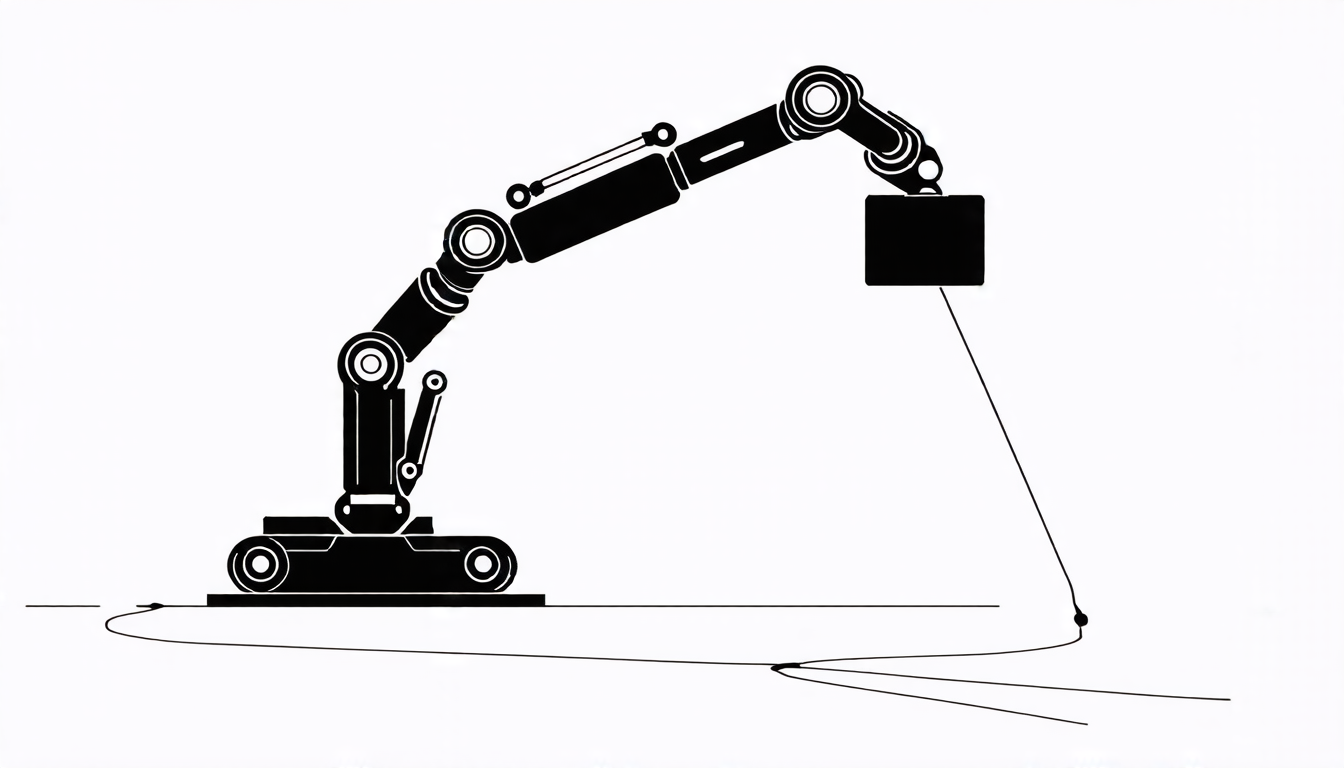
The researchers used a computer simulation to test their algorithm against other methods, using a reaching task as an example. In this scenario, a robot is tasked with moving its arm to pick up a block from one location and place it in another. The goal is to achieve this while making the motion clear and easy to understand for humans.
The results showed that the Legibility Modulator was able to produce motions that were not only efficient but also highly legible. In fact, the algorithm was able to generate movements that were significantly clearer than those produced by other methods.
This breakthrough has significant implications for the future of robotics and human-robot interaction. By designing robots that can move in a way that is clear and easy to understand, we can improve the safety and efficiency of tasks such as assembly, maintenance, and even search and rescue operations.
The researchers are already exploring ways to apply their algorithm to real-world scenarios, including using it to program robot movements for tasks such as object manipulation and navigation. They hope that their work will pave the way for a new generation of robots that can interact with humans in a more intuitive and natural way.
In addition to its potential applications in robotics, the Legibility Modulator also has implications for other areas such as autonomous vehicles and drone swarms.
Cite this article: “Robotics Takes a Step Forward with Legible Motion Planning Algorithm”, The Science Archive, 2025.
Robotics, Legibility Modulator, Machine Learning, Diffusion Models, Information Potential Fields, Robot Motion Planning, Human-Robot Interaction, Autonomous Systems, Drone Swarms, Autonomous Vehicles





