

Monday 01 December 2025
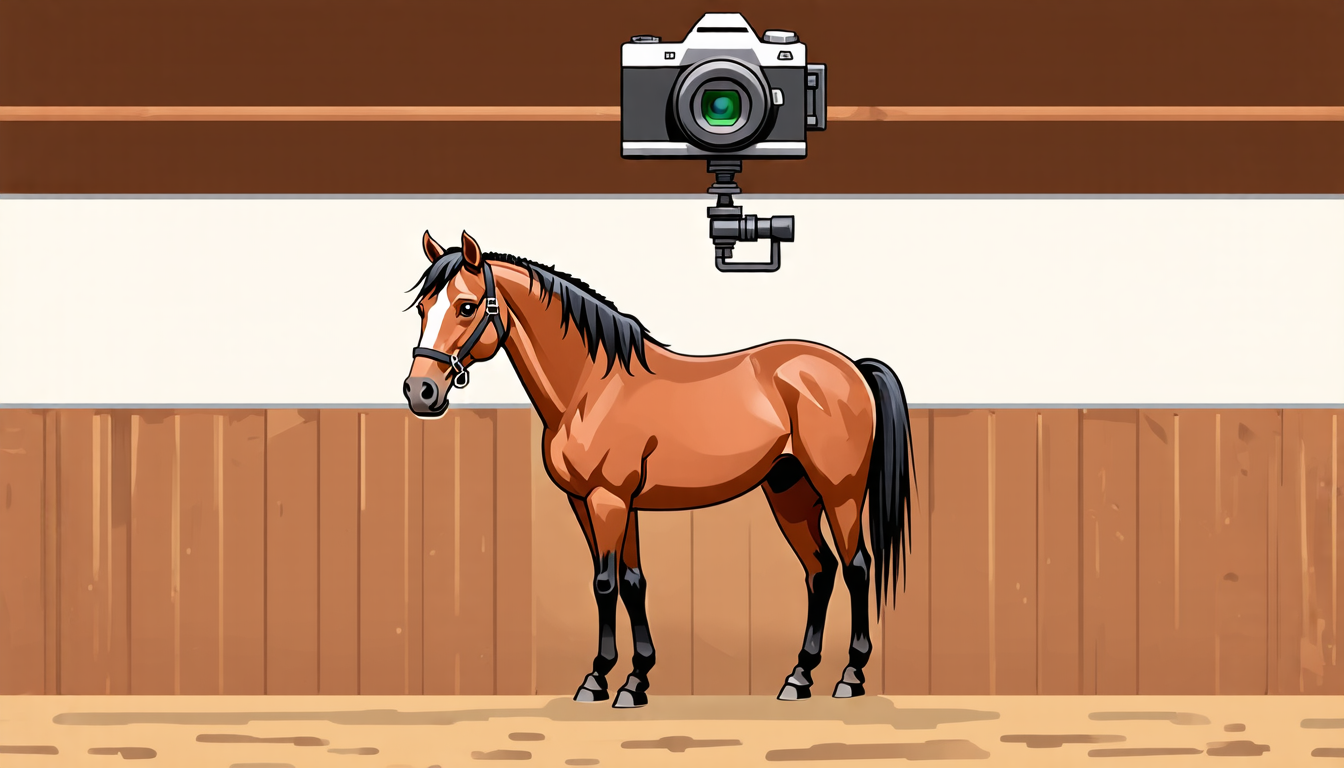
The humble horse stable, a place where equine elegance meets daily drudgery. But what if we could automate the monitoring of these stalls, ensuring the health and well-being of our four-legged friends? Enter: computer vision.
Researchers have developed a system that uses object detection and tracking algorithms to monitor horses and people within stables. The setup involves cameras positioned to cover each stall, which feed into a YOLOv11 model for object detection. This neural network is trained on a custom dataset of images containing both horses and people, with the assistance of CLIP and GroundingDINO.
The system’s core component is an event detection module, which analyzes bounding box trajectories to identify when horses or people enter or exit a stall. The authors claim that their approach can accurately detect horse-related events 97% of the time, but struggle with recognizing human presence, likely due to the limited number of labeled human images in the training dataset.
To improve accuracy, the researchers used a combination of manual labeling and automatic annotation using CLIP and GroundingDINO. This not only reduced the workload for humans but also helped to create a more diverse and representative dataset. The resulting model can detect both horses and people with high precision, making it suitable for real-time monitoring applications.
The implications of this work extend beyond the stable. Imagine being able to track the behavior of animals in various environments, from zoos to wildlife reserves. This technology could also be applied to other industries, such as agriculture or veterinary medicine, where accurate monitoring is crucial.
However, there are still challenges to overcome before this system can be widely adopted. For one, the limited number of labeled human images means that the model may not generalize well to new situations or environments. Additionally, the setup requires a significant amount of hardware infrastructure, including cameras and computing power.
Despite these limitations, the potential benefits of automated stable monitoring are clear. By reducing the workload for stable staff and improving the accuracy of monitoring, this technology could lead to better care and more efficient management of equine facilities. As the field of computer vision continues to evolve, we can expect to see even more innovative applications of this technology in the future.
Cite this article: “Automated Stable Monitoring with Computer Vision”, The Science Archive, 2025.
Horse Stable, Computer Vision, Object Detection, Tracking Algorithms, Yolov11, Neural Network, Event Detection Module, Bounding Box Trajectories, Animal Monitoring, Automated Monitoring





