

Wednesday 22 January 2025
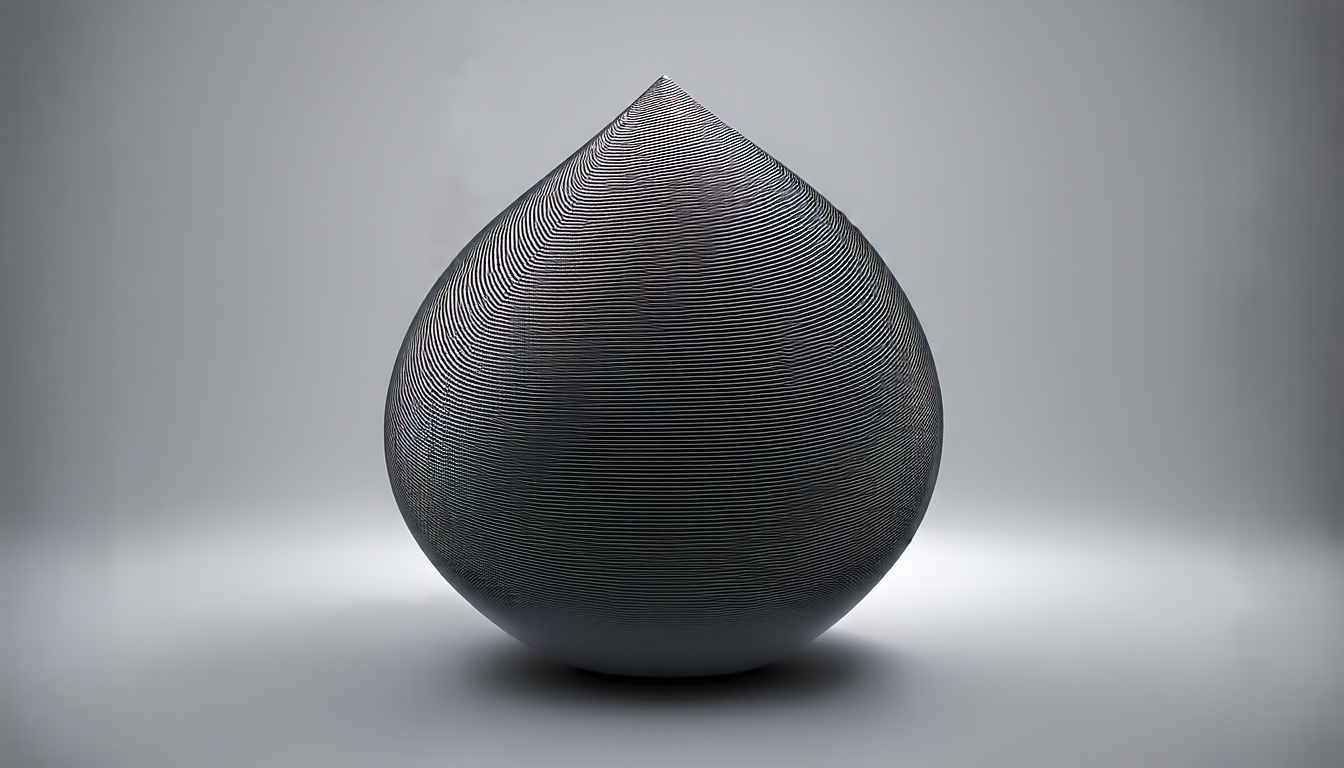
Scientists have long been fascinated by the study of polynomial surfaces, which are curves and shapes that can be defined using only polynomials – mathematical equations that involve variables raised to positive integer powers. Recently, a team of researchers has made significant progress in understanding the properties of polynomial surfaces of revolution, which are created when a curve is rotated around an axis.
One of the key findings of this research is that the polynomiality of a surface of revolution is closely tied to the properties of a related plane curve called the profile curve. The researchers discovered that if the profile curve can be parametrized using only polynomials, then so too can the surface of revolution. This means that the surface can be defined using simple mathematical equations, making it easier to study and work with.
The research also showed that not all surfaces of revolution have polynomial parametrizations. In particular, cylinders of revolution – which are created when a curve is rotated around an axis while remaining parallel to itself – cannot be parametrized using polynomials. However, the researchers were able to find examples of other types of surfaces of revolution that do have polynomial parametrizations.
The study also explored the existence and computation of real polynomial parametrizations for surfaces of revolution. Real polynomial parametrizations are important because they can be used to describe physical systems in a more accurate and efficient way. The researchers found that some surfaces of revolution, such as hyperbolic paraboloids, have real polynomial parametrizations, while others, such as cylinders of revolution, do not.
The team’s findings have significant implications for a wide range of fields, including computer science, engineering, and physics. For example, the ability to accurately model and simulate complex physical systems using polynomial surfaces could lead to breakthroughs in fields like robotics, biomechanics, and materials science.
In addition, the research has shed light on the properties of quadrics – geometric shapes that are defined by quadratic equations. The team found that not all quadrics have polynomial parametrizations, but they were able to identify specific types of quadrics that do.
Overall, this research is an important step forward in our understanding of polynomial surfaces and their applications. It highlights the power of mathematical techniques in solving complex problems and has significant implications for a wide range of fields.
Cite this article: “New Insights into Polynomial Surfaces of Revolution”, The Science Archive, 2025.
Polynomial Surfaces, Surface Of Revolution, Profile Curve, Parametrization, Polynomial Equations, Quadrics, Computer Science, Engineering, Physics, Geometric Shapes





