

Thursday 23 January 2025
The quest for efficient wireless communication has led researchers to explore innovative solutions that can mitigate coverage holes, where signal strength is weak or non-existent. A team of scientists has made a significant breakthrough in this area by developing a novel approach that leverages the concept of Laplace transforms and stochastic geometry.
Coverage holes occur due to various factors such as physical barriers, interference, and fading. To address this issue, researchers have traditionally relied on techniques like beamforming and multi-antenna systems. However, these methods often require complex hardware and software configurations, which can be impractical for widespread adoption.
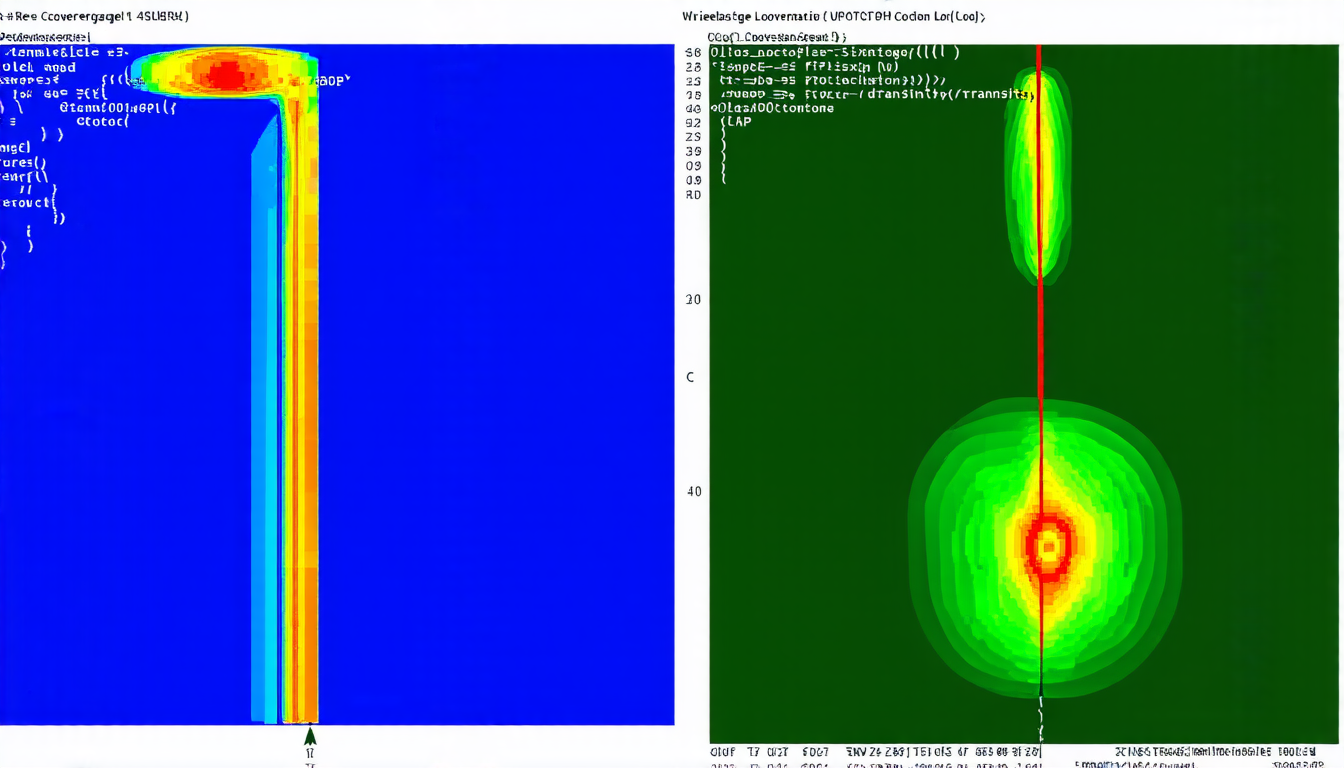
The new approach, described in a recent study, focuses on exploiting the properties of Laplace transforms to analyze and mitigate coverage holes. This method involves using stochastic geometry to model the distribution of wireless nodes and then applying the Laplace transform to extract valuable insights about signal strength and coverage patterns.
One of the key advantages of this approach is its ability to accurately predict coverage holes and identify optimal locations for additional transmitters or relays. By doing so, it can significantly improve network performance and reduce the number of dropped calls or data packets.
The researchers have also developed a novel mathematical framework that enables them to analyze the effects of different parameters on coverage hole mitigation. This framework is based on a combination of stochastic geometry and Laplace transforms, which allows for a more detailed understanding of signal propagation and interference patterns.
In addition to its practical applications, this research has important implications for our understanding of wireless communication systems. By revealing the intricate relationships between node distribution, signal strength, and coverage patterns, it can help engineers design more efficient and reliable networks.
The study’s findings have been validated through extensive simulations and experiments, which demonstrate the effectiveness of the proposed approach in mitigating coverage holes. The researchers believe that their work has the potential to revolutionize wireless communication technology, enabling faster data transfer rates, better connectivity, and improved overall performance.
While this breakthrough is still in its early stages, it holds significant promise for the future of wireless communication. As our reliance on mobile devices continues to grow, innovative solutions like this one will be essential for ensuring seamless connectivity and reliable data transmission.
Cite this article: “Mitigating Coverage Holes in Wireless Communication Systems”, The Science Archive, 2025.
Wireless Communication, Coverage Holes, Laplace Transforms, Stochastic Geometry, Signal Strength, Network Performance, Dropped Calls, Data Packets, Node Distribution, Signal Propagation.





