

Thursday 23 January 2025
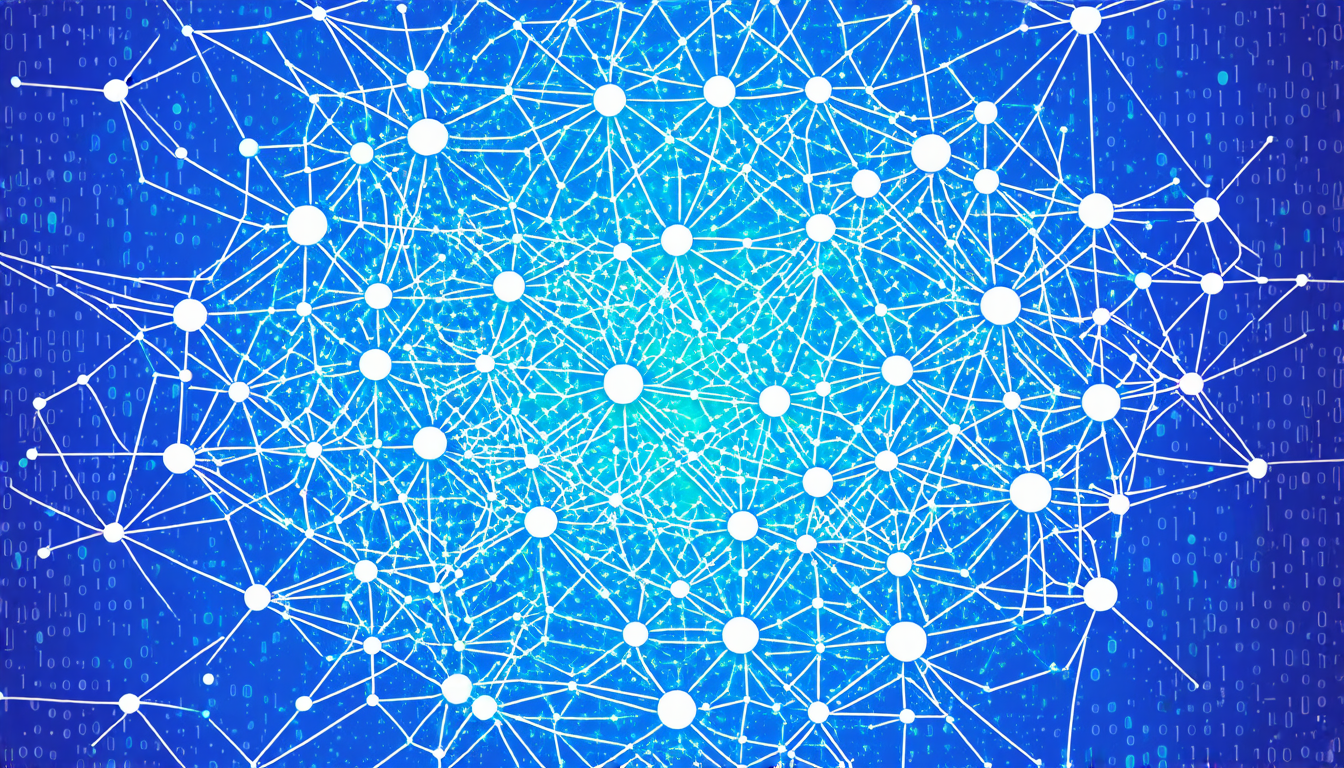
Scientists have made a significant breakthrough in understanding how complex networks can become synchronized, a phenomenon that has far-reaching implications for our understanding of the natural world and our ability to engineer complex systems.
The concept of synchronization is familiar to many – think of a group of people dancing or waving their arms in unison. But in the context of complex networks, synchronization refers to the way individual units or nodes can become coordinated with one another to produce a unified behavior.
Researchers have long studied the conditions under which complex networks can synchronize, but until now it was unclear whether all such networks shared certain fundamental properties that would allow them to do so. A new study has finally cracked this nut, revealing that certain types of expanders – special types of graphs with unique structural properties – are globally synchronizing.
Expanders are a class of graphs that have been extensively studied in mathematics and computer science. They are characterized by having a high number of edges between any two nodes, which makes them very ‘connected’. The study found that these connected networks can synchronize even when the individual units or nodes are highly irregular or random.
The implications of this discovery are vast. In the natural world, synchronization is a crucial phenomenon that underlies many complex systems, from the beating of hearts to the migration patterns of birds. Understanding how these systems work could potentially lead to new insights into human health and behavior.
In engineering, synchronizing complex networks could have significant practical applications. For example, it could enable the creation of more efficient power grids or communication networks, which would be able to adapt and respond to changing conditions in real-time.
The study’s findings also shed light on the fundamental properties of complex systems that underlie synchronization. By identifying the specific types of graphs that are globally synchronizing, researchers can develop new theories and models for understanding how these systems work.
In short, this breakthrough has opened up a whole new world of possibilities for scientists to explore and understand the intricate workings of complex networks. As our knowledge of these systems grows, so too will our ability to harness their power and create innovative solutions to real-world problems.
Cite this article: “Unlocking the Secrets of Synchronized Complex Networks”, The Science Archive, 2025.
Complex Networks, Synchronization, Expanders, Graphs, Mathematics, Computer Science, Natural World, Engineering, Power Grids, Communication Networks





