

Thursday 23 January 2025
The art of data compression has long been a crucial aspect of artificial intelligence and machine learning. As datasets grow in size and complexity, finding ways to reduce their footprint without sacrificing accuracy is essential for efficient training and deployment. In recent years, instance selection methods have emerged as a powerful tool for achieving this goal.
Instance selection involves selecting a subset of the original dataset that retains the most valuable information while discarding unnecessary data points. This approach can significantly reduce the size of the dataset, making it easier to process and analyze. However, traditional instance selection methods often rely on manual feature engineering and are limited by their inability to adapt to changing data distributions.
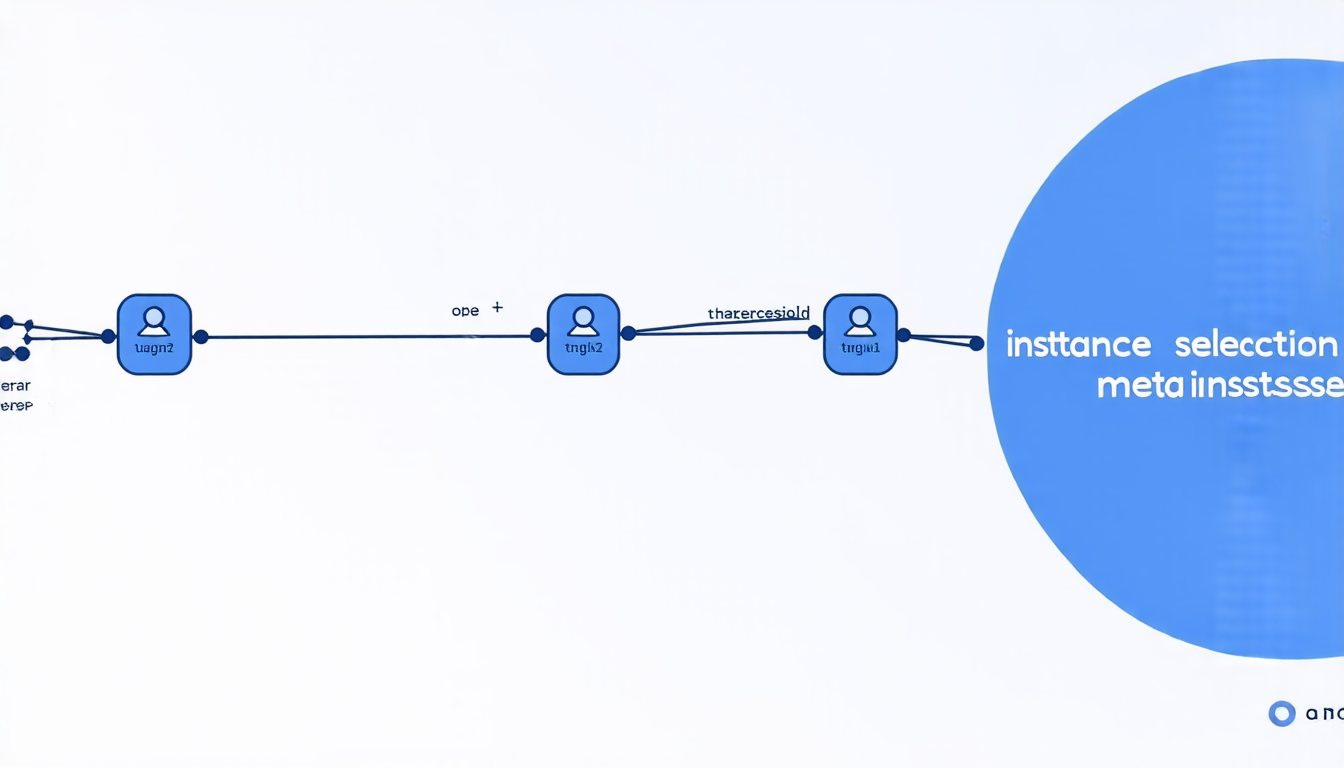
Enter meta-instance selection, a novel approach that leverages machine learning algorithms to identify and select relevant instances automatically. By transforming the instance selection problem into a binary classification task, researchers can apply powerful classifiers like random forests and neural networks to identify the most informative instances.
In a recent study, scientists explored the application of meta-instance selection using various instance selection methods, including condensed nearest neighbor (CNN), hit miss network (HMN-EI), and drop3. They found that by extracting meta-features from the nearest neighbors graph, they could train a meta-classifier to identify the most relevant instances with high accuracy.
One of the key advantages of meta-instance selection is its ability to adapt to changing data distributions and handle imbalanced datasets. By using a balanced random forest classifier, researchers can address issues like class imbalance and ensure that their model is fair and accurate.
The study also highlights the importance of feature selection in instance selection. By analyzing the importance of different features, researchers can identify the most relevant information for the task at hand and discard irrelevant data points. This approach not only reduces the size of the dataset but also improves the accuracy of the trained model.
In addition to its technical merits, meta-instance selection has significant implications for practical applications. For instance, it can be used to optimize the performance of complex machine learning models, reduce the computational cost of training, and improve the interpretability of results.
Overall, the study demonstrates the potential of meta-instance selection as a powerful tool for data compression and feature selection in machine learning. By combining the strengths of instance selection methods with the adaptability of machine learning algorithms, researchers can develop more efficient and accurate models that better serve real-world applications.
Cite this article: “Meta-Instance Selection: A Novel Approach to Efficient Data Compression in Machine Learning”, The Science Archive, 2025.
Data Compression, Instance Selection, Machine Learning, Meta-Instance Selection, Feature Engineering, Random Forests, Neural Networks, Condensed Nearest Neighbor, Hit Miss Network, Drop3.





