

Thursday 23 January 2025
A team of researchers has made a significant breakthrough in the field of automated controller tuning, a crucial step in optimizing complex systems such as robots and machines. The new approach, called Early Stopping Bayesian Optimization (ESBO), enables faster and more efficient optimization by incorporating early stopping rules into traditional Bayesian optimization methods.
In traditional Bayesian optimization, controllers are typically evaluated over a set period of time before being stopped or terminated. However, this can be inefficient, especially when dealing with complex systems that require extensive testing. ESBO addresses this issue by introducing two key heuristics: the first determines when to stop an episode and the second enables the resulting partial evaluations.
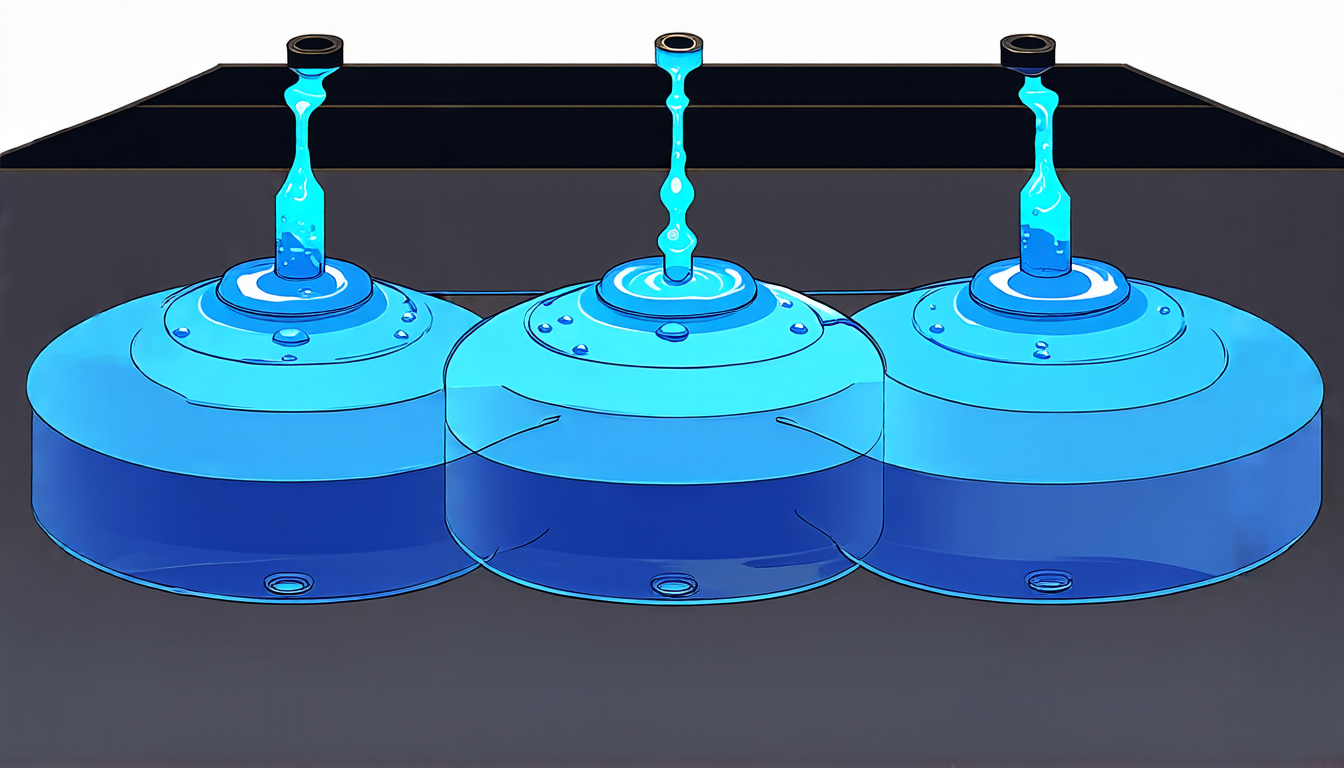
The researchers tested ESBO on five diverse simulation tasks and one hardware experiment, using a three-tank test bed. The results show that ESBO significantly reduces the interaction time needed to achieve optimal controller performance, with a median reduction of 48% in simulation experiments and 35% in the hardware experiment.
ESBO’s early stopping rule is based on the cumulative cost of parametrization, which takes into account the total cost of evaluating each parameter set. This allows the algorithm to stop episodes when the cumulative cost exceeds a certain threshold, effectively eliminating unnecessary evaluations. The second heuristic uses probabilistic estimates of the unobserved portion of partially evaluated episodes to generate virtual data points.
The researchers also compared ESBO with traditional Bayesian optimization and random search methods. ESBO outperformed both methods in terms of interaction time reduction, while achieving comparable final solution quality. Random search, which is often used as a baseline for comparison, was significantly outperformed by ESBO in all experiments.
The implications of this research are significant, as it enables faster and more efficient optimization of complex systems. This can have major benefits in fields such as robotics, manufacturing, and energy management, where optimal controller tuning is critical to achieving desired performance levels.
In summary, the researchers have developed a new approach to automated controller tuning that reduces interaction time by incorporating early stopping rules into traditional Bayesian optimization methods. ESBO has been tested on multiple simulation tasks and one hardware experiment, with promising results. This breakthrough has the potential to revolutionize the way complex systems are optimized, enabling faster and more efficient performance.
Cite this article: “Accelerating Controller Tuning with Early Stopping Bayesian Optimization”, The Science Archive, 2025.
Automated Controller Tuning, Bayesian Optimization, Early Stopping Bayesian Optimization, Esbo, Complex Systems, Optimization, Robotics, Manufacturing, Energy Management, Efficient Performance.





