

Friday 31 January 2025
In the world of quantum physics, researchers have long sought to understand the behavior of materials that don’t quite fit the mold of traditional Fermi liquids. These strange metals, known as non-Fermi liquids, exhibit properties that are both fascinating and challenging to study.
One approach to understanding these materials is through a technique called bosonization, which essentially converts the problem from fermions (particles with half-integer spin) to bosons (particles with integer spin). This allows researchers to better grasp the underlying physics of non-Fermi liquids.
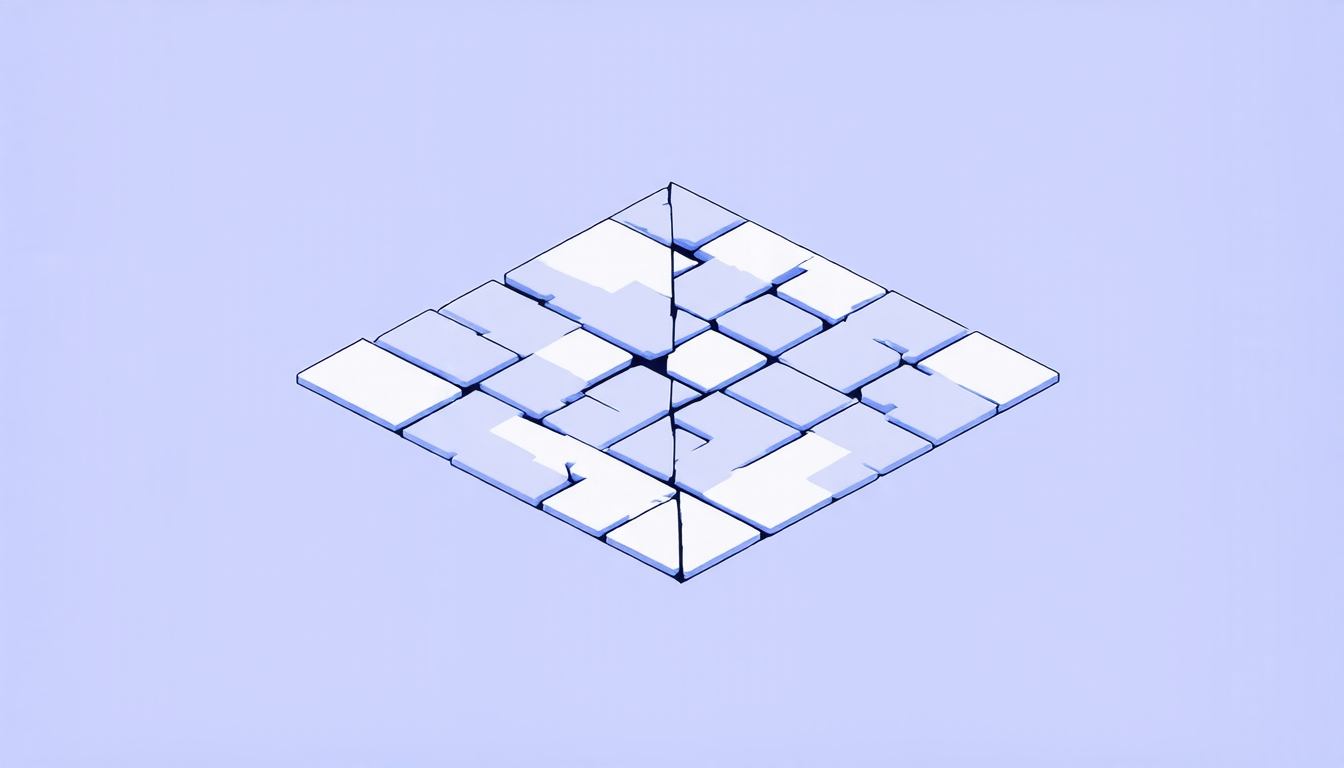
A recent article published in Physical Review B takes a closer look at a specific type of bosonization called patch bosonization. In this approach, the Fermi surface – the region of energy and momentum where electrons are most likely to be found – is broken down into smaller patches, each with its own unique properties.
The authors use this technique to study the behavior of non-Fermi liquids in two dimensions, finding that the resulting theory is surprisingly accurate. This is a significant breakthrough, as it provides new insights into the behavior of these mysterious materials.
One of the key findings of the study is that the bosonized theory accurately captures the low-energy properties of non-Fermi liquids. This means that researchers can use this approach to better understand the behavior of electrons in these materials at very low temperatures and energies, where they exhibit unusual properties such as superconductivity or unconventional magnetism.
The study also highlights the importance of including corrections to the bosonized theory that arise from the finite size of the patches. These corrections are crucial for accurately capturing the behavior of non-Fermi liquids, which can be highly sensitive to the specific details of their underlying physics.
Overall, the article provides a valuable contribution to our understanding of non-Fermi liquids and their strange properties. By using patch bosonization to study these materials, researchers may uncover new insights into the fundamental laws of quantum mechanics that govern their behavior.
Cite this article: “Unraveling the Mysteries of Non-Fermi Liquids with Patch Bosonization”, The Science Archive, 2025.
Quantum Physics, Non-Fermi Liquids, Bosonization, Patch Bosonization, Fermi Surface, Electrons, Superconductivity, Magnetism, Finite Size Corrections, Quantum Mechanics
Reference: Tomer Ravid, “Electrons Lost in Phase Space” (2024).





