

Friday 31 January 2025
The microgrid, a decentralized energy system that can provide power to remote communities, is becoming increasingly important as renewable energy sources become more prevalent. However, for this system to function efficiently, it needs to be able to accurately predict and control the output of solar inverters – devices that convert DC power from solar panels into AC power for the grid.
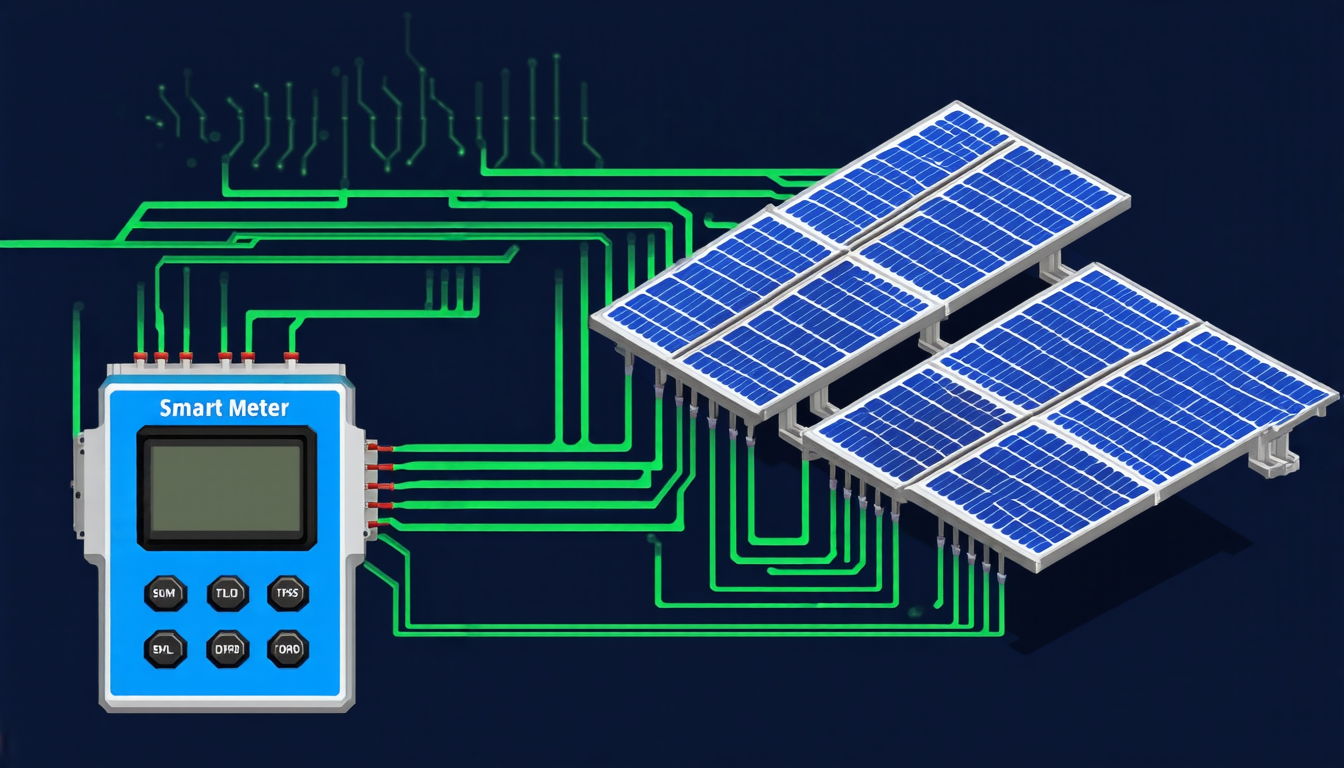
Researchers have been working on developing machine learning models to forecast the output of these solar inverters, but deploying these models on edge devices, such as smart meters, has proven to be a challenge. Edge computing refers to the processing and analysis of data closer to where it’s generated, reducing the need for data to be transmitted back to a central server.
A team of researchers has developed an innovative solution that uses MATLAB Embedded Coder to deploy machine learning models on edge devices. This code converter transforms MATLAB code into C or C++ source code, allowing the models to run directly on low-cost embedded systems like smart meters.
The researchers tested their approach by deploying two machine learning models on a smart meter board: one for predicting reactive power output and another for active power output. The results showed that the deployed models were able to produce accurate predictions, with an average inference time of just 1 millisecond.
In addition to the predictive models, the team also implemented a droop control algorithm on the edge device. This algorithm adjusts the output of the solar inverters based on changes in voltage and frequency, ensuring a stable and efficient grid operation.
The deployment of machine learning models on edge devices has significant implications for the microgrid industry. By processing data closer to where it’s generated, these devices can reduce latency and improve real-time decision-making. This can lead to more efficient energy distribution, reduced power outages, and increased reliability.
The researchers’ approach also highlights the potential of using low-cost embedded systems like smart meters as edge devices for machine learning applications. These devices are widely available and can be easily integrated into existing infrastructure, making them an attractive option for deploying AI-powered solutions in remote or hard-to-reach areas.
As the demand for renewable energy sources continues to grow, the microgrid industry will play a crucial role in ensuring a stable and efficient energy supply. By leveraging edge computing and machine learning technologies, researchers can develop innovative solutions that improve the efficiency, reliability, and sustainability of these decentralized energy systems.
Cite this article: “Deploying Machine Learning Models on Edge Devices for Efficient Microgrid Operation”, The Science Archive, 2025.
Microgrid, Edge Computing, Machine Learning, Solar Inverters, Renewable Energy, Matlab Embedded Coder, Smart Meters, Droop Control, Predictive Models, Latency.





