

Friday 31 January 2025
Deep learning models have revolutionized the field of image recognition, but they’ve also been applied to more abstract domains like ancient texts and languages. In a recent study, researchers explored the potential of large language models (LLMs) in deciphering oracle bone inscriptions (OBIs), a crucial part of understanding ancient Chinese history.
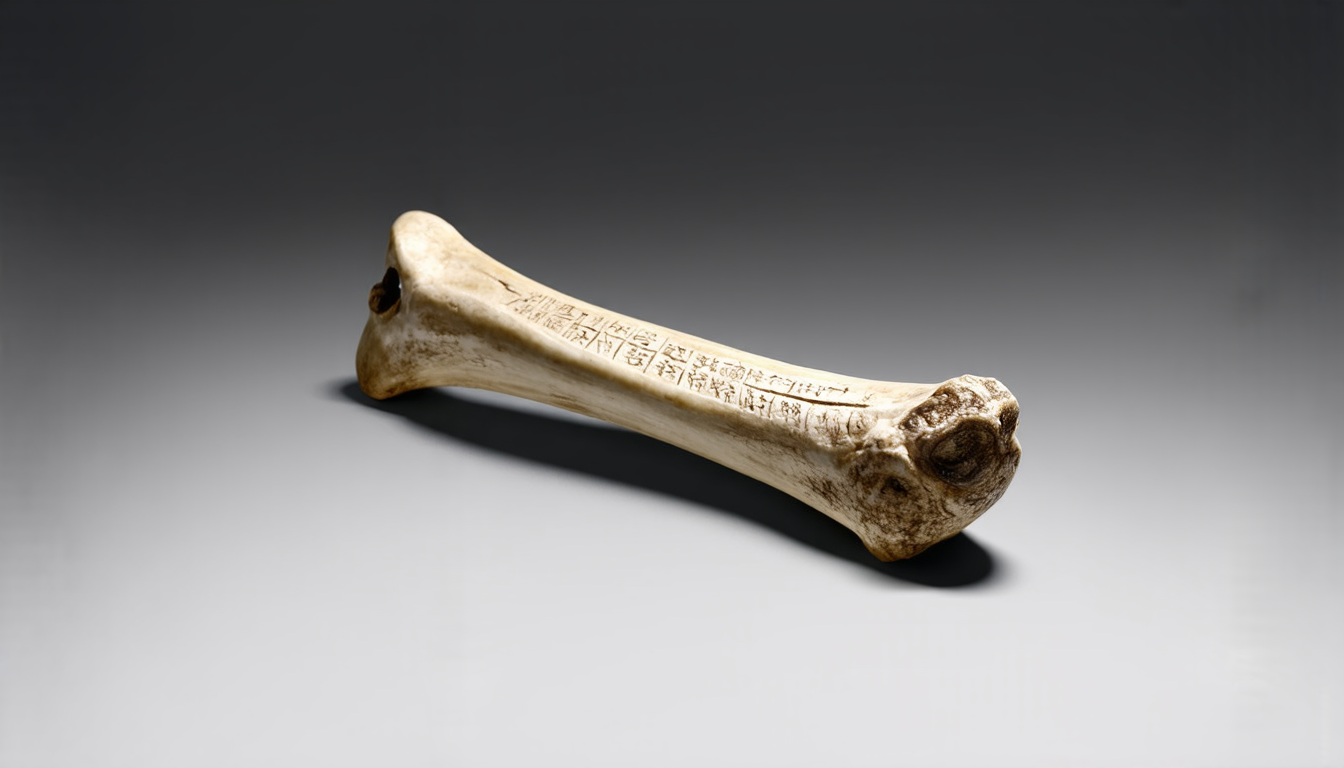
Oracle bone inscriptions are short, cryptic messages etched onto animal bones or turtle shells during the Shang Dynasty, around 3,000 years ago. Deciphering these inscriptions has long been a challenge for historians and linguists, as they’re written in an unknown script with no clear context.
The researchers used seven different LLMs to evaluate their performance on three tasks: recognition, classification, and deciphering. The models were trained on various datasets, including authentic OBI images, and tested on unseen data.
In the recognition task, the models were asked to identify what was depicted in an OBI image. Most of the LLMs performed reasonably well, with an average accuracy of around 90%. However, there was a significant gap between the best-performing model (Gemini 1.5 Pro) and the worst-performing one (GLM-4V).
In the classification task, the models were asked to categorize OBI images into different categories. The results showed that the LLMs struggled with this task, with an average accuracy of around 70%. This suggests that the models may not have fully understood the context and nuances of the OBI inscriptions.
The deciphering task was perhaps the most challenging, as it required the models to interpret the meaning behind an OBI image. The results were mixed, with some models providing accurate and relevant descriptions while others produced nonsensical or irrelevant answers.
Interestingly, the researchers found that adding role assignment and case instruction to the prompt had a positive effect on the deciphering performance of some LLMs. This suggests that providing context and guidance can help these models better understand the task at hand.
The study also explored the potential impact of cultural bias on OBI processing. By classifying the LMMs by their affiliation, the researchers found no significant difference in performance between models from different regions.
This research has implications for historians and linguists working with ancient texts. While LLMs may not be perfect, they could potentially aid in deciphering OBI inscriptions and provide new insights into ancient Chinese history.
Cite this article: “Large Language Models Unlock Secrets of Ancient Oracle Bone Inscriptions”, The Science Archive, 2025.
Large Language Models, Oracle Bone Inscriptions, Ancient Chinese History, Deciphering, Image Recognition, Deep Learning, Linguistics, Historians, Cultural Bias, Role Assignment





