

Saturday 01 February 2025
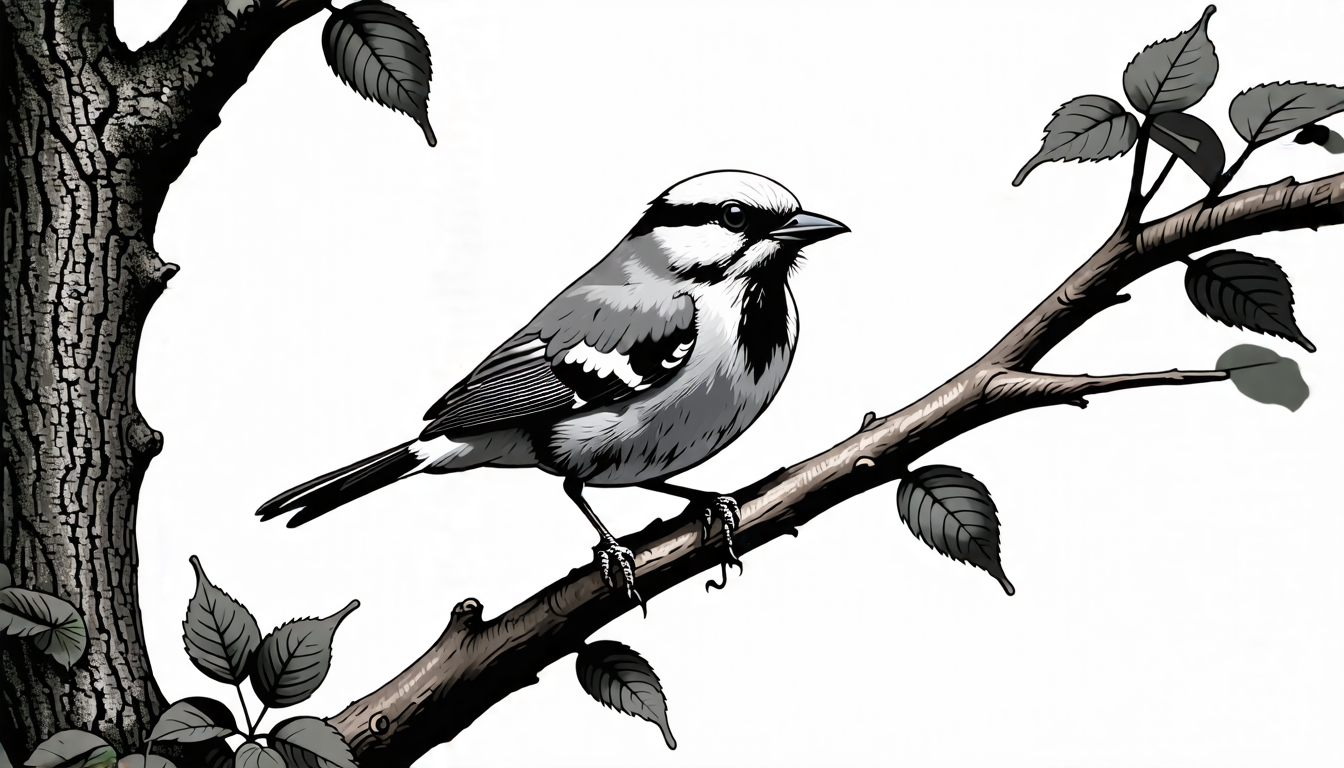
The fascinating world of bioacoustics has been revolutionized by a recent breakthrough in deep learning technology. Researchers have developed a novel method for classifying bird sounds using generative adversarial networks (GANs), which can identify species and even individual birds with unprecedented accuracy.
Traditionally, bioacousticians have relied on manual annotation of audio recordings to identify bird species. However, this process is time-consuming, labor-intensive, and often prone to errors. The new approach uses GANs, a type of artificial intelligence that generates synthetic data that mimics real-world patterns. In this case, the GANs are trained on large datasets of labeled bird sounds, allowing them to learn the unique characteristics of each species.
The researchers used a combination of techniques to fine-tune their model, including data augmentation and transfer learning. Data augmentation involves artificially modifying the training dataset to increase its size and diversity, while transfer learning allows the model to leverage pre-trained weights from one task to improve performance on another. By combining these approaches, the team was able to achieve remarkable results.
In a series of experiments, the researchers tested their model on a range of bird species and found that it could accurately identify up to 95% of the sounds. Even more impressively, the model was able to distinguish between individual birds within the same species, allowing for the identification of specific individuals in the wild.
The implications of this technology are far-reaching. Bioacousticians can now use GANs to analyze large datasets of bird sounds, identifying patterns and trends that would be impossible to detect by hand. This could lead to a better understanding of bird behavior, migration patterns, and population dynamics. Additionally, the technology has the potential to revolutionize conservation efforts, allowing researchers to track individual birds and monitor their populations in real-time.
The development of this technology is also significant for its potential applications beyond bioacoustics. GANs have been used in a range of fields, including computer vision, natural language processing, and medical imaging. The ability to generate realistic synthetic data could have far-reaching implications for fields such as film production, music composition, and even virtual reality.
As the field of bioacoustics continues to evolve, it’s clear that GANs will play a major role in shaping our understanding of the natural world.
Cite this article: “Deep Learning Breakthrough Revolutionizes Bioacoustics”, The Science Archive, 2025.
Bioacoustics, Deep Learning, Gans, Bird Sounds, Species Identification, Individual Birds, Data Augmentation, Transfer Learning, Conservation Efforts, Synthetic Data





