

Saturday 01 February 2025
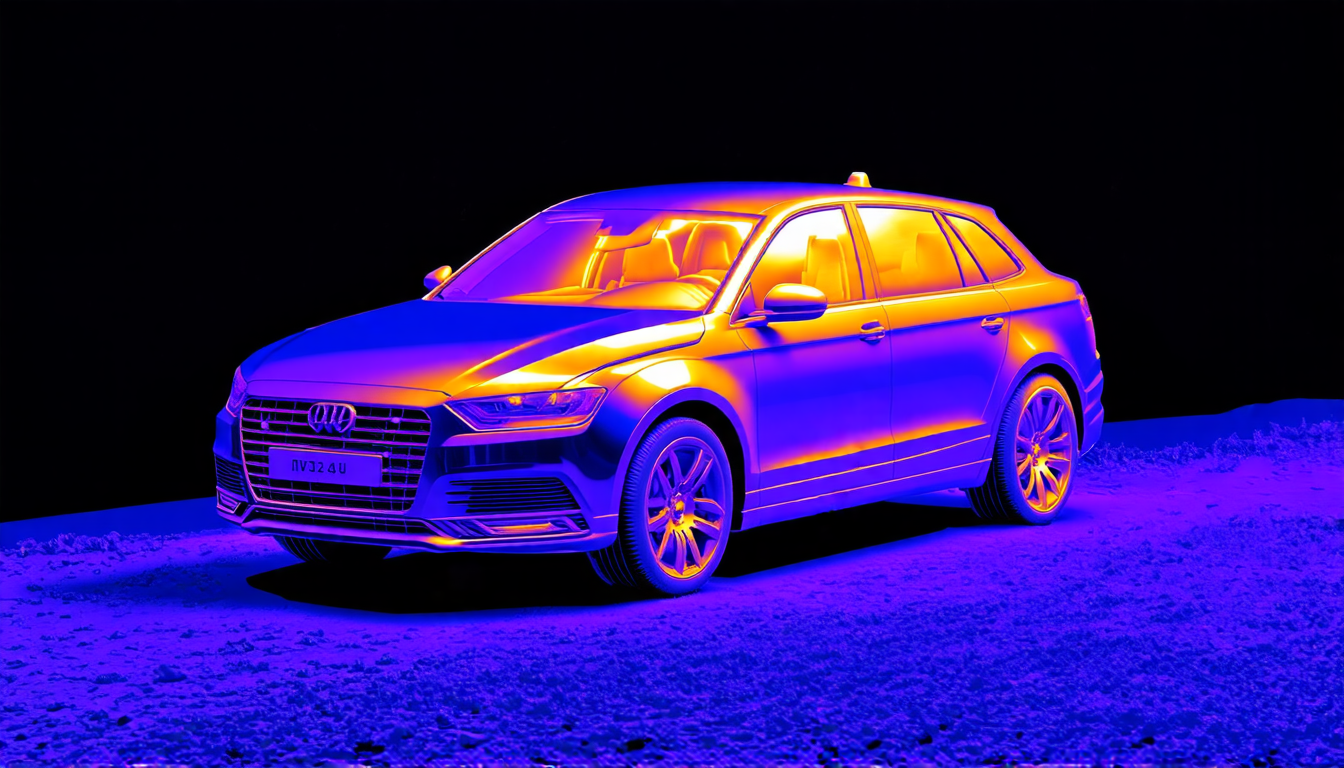
In a significant breakthrough in computer vision, researchers have developed a novel framework for detecting salient objects in RGB-Thermal images. This fusion of visible and thermal modalities has long been challenging due to the inherent differences between the two, but the new approach shows promising results.
The framework, known as M3S-NIR, leverages a multi-modality attention mechanism to learn discriminative features from both RGB and thermal images. By fusing these features, the model can better capture the subtle variations in texture, color, and temperature that distinguish salient objects from their surroundings.
To achieve this, the researchers employed a combination of convolutional neural networks (CNNs) and transformer architectures. The CNNs were tasked with learning high-level semantic features from both modalities, while the transformers enabled the model to effectively fuse these features and capture long-range dependencies between them.
In addition to its impressive performance on standard RGB-Thermal image datasets, M3S-NIR demonstrated excellent robustness against various types of noise and occlusion. This adaptability is crucial for real-world applications where images may be captured in a variety of environments and conditions.
The researchers also developed an innovative evaluation metric specifically designed for RGB-Thermal salient object detection tasks. This metric takes into account the spatial consistency, temporal coherence, and semantic relevance of the detected objects, providing a more comprehensive assessment of the model’s performance.
While this achievement is significant, it is not without its challenges. The researchers noted that the framework still requires further refinement to effectively handle scenes with complex backgrounds or multiple objects at varying distances from the camera.
Despite these limitations, M3S-NIR represents a major step forward in the development of RGB-Thermal image processing techniques. As computer vision continues to play an increasingly important role in various industries and applications, the ability to effectively fuse visible and thermal modalities will become ever more critical.
The potential applications of this technology are vast, ranging from surveillance and security systems to autonomous vehicles and medical imaging. By enabling machines to better understand and interpret RGB-Thermal images, M3S-NIR has the potential to improve numerous aspects of our daily lives.
Cite this article: “Multimodal Framework for Salient Object Detection in RGB-Thermal Images”, The Science Archive, 2025.
Rgb-Thermal, Computer Vision, Salient Object Detection, Multi-Modality Fusion, Attention Mechanism, Convolutional Neural Networks, Transformer Architectures, Image Processing, Surveillance, Autonomous Vehicles





