

Saturday 01 February 2025
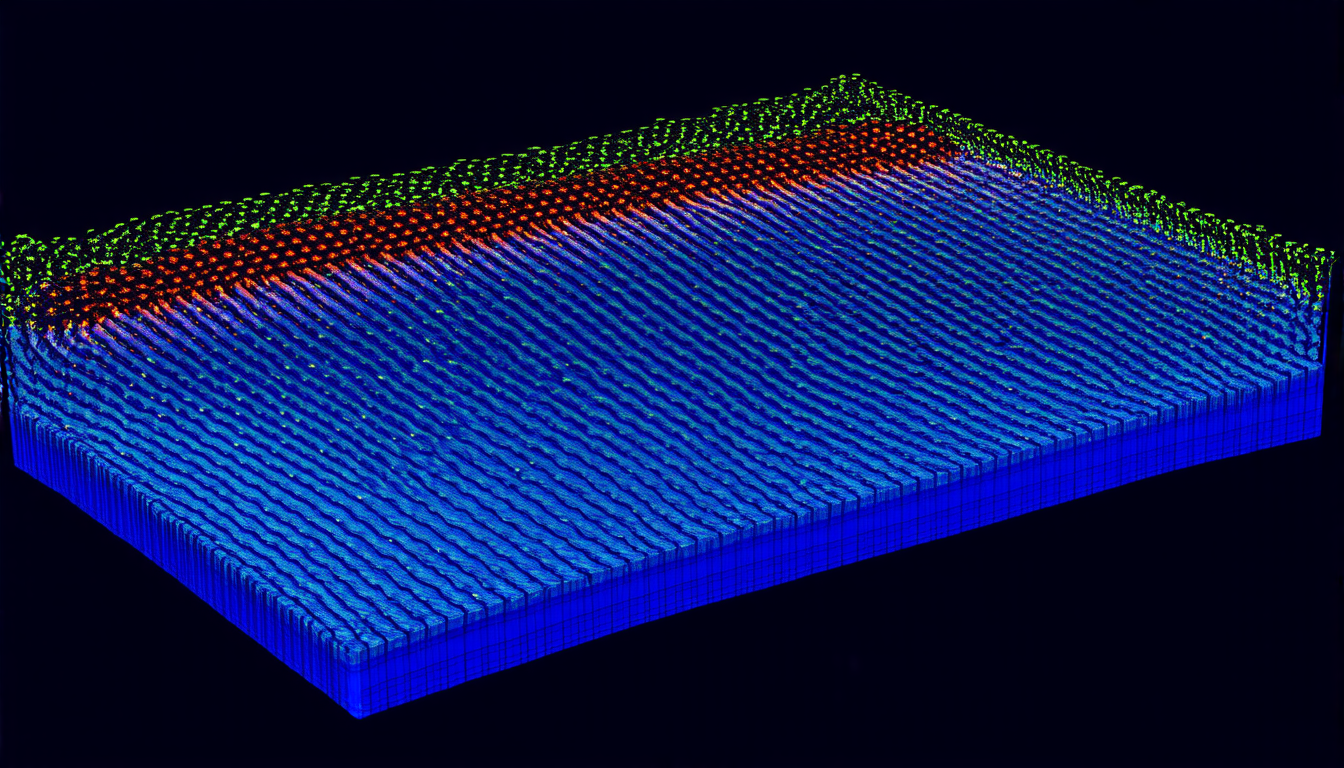
Scientists have long been fascinated by the properties of graphene, a material that is stronger and more conductive than steel. Recently, researchers have discovered a new type of graphene called twisted bilayer graphene, which exhibits even more extraordinary behavior. In this material, two layers of graphene are twisted together at a specific angle to create a unique pattern of electrons.
This unusual arrangement gives rise to a phenomenon known as superconductivity, where the material becomes capable of conducting electricity with zero resistance. But what’s remarkable about twisted bilayer graphene is that it can exhibit both superconducting and insulating behavior depending on the conditions.
In a recent study, scientists have discovered that by manipulating the dielectric constant of the substrate beneath the graphene layers, they can control the emergence of these two states. The researchers found that when the dielectric constant is high, the material becomes an insulator, but when it’s low, superconductivity kicks in.
To achieve this, the team used a special type of substrate called strontium titanate, which has a large dielectric constant that can be tuned by applying an electric field. By adjusting the strength and direction of this field, they were able to control the dielectric constant and induce either insulating or superconducting behavior in the graphene.
The team used two different devices to study these effects. The first device had a twist angle of 1.05 degrees and was placed on top of the strontium titanate substrate. They found that by increasing the dielectric constant, they could suppress the emergence of superconductivity and induce an insulating state.
In contrast, the second device had a twist angle of 1.4 degrees and was also placed on top of the same substrate. To their surprise, they found that even with a high dielectric constant, the material still exhibited superconducting behavior. This suggests that the interplay between the dielectric constant and the graphene layers is more complex than previously thought.
These findings have significant implications for the development of new electronic devices. By controlling the emergence of superconductivity or insulating behavior in twisted bilayer graphene, researchers may be able to create materials with unique properties that can be used in a wide range of applications.
For example, superconducting materials could be used to build more efficient power grids, while insulating materials could be used to develop new types of electronic devices.
Cite this article: “Tuning Electrons in Twisted Bilayer Graphene”, The Science Archive, 2025.
Graphene, Twisted Bilayer Graphene, Superconductivity, Insulating Behavior, Dielectric Constant, Strontium Titanate, Substrate, Electric Field, Twist Angle, Electronic Devices





