

Saturday 01 February 2025
The quest for new materials that can store and process information has led scientists to explore the properties of hafnium oxide (HfO2). This ceramic material is known for its high dielectric constant, making it an ideal candidate for use in electronic devices such as capacitors and memory storage devices. However, HfO2 also exhibits ferroelectric behavior, meaning that it can switch between different states of polarization.
Researchers have been working to understand the mechanisms behind this ferroelectricity, which could lead to the development of new types of memory devices with improved performance. In a recent study, scientists have discovered that the addition of oxygen vacancies to HfO2 nanoparticles can induce ferroelectric behavior in these tiny particles.
The researchers used a combination of experimental and theoretical techniques to investigate the properties of HfO2 nanoparticles with varying levels of oxygen vacancies. They found that the introduction of vacancies led to a significant increase in the material’s dielectric constant, which is a key indicator of ferroelectricity.
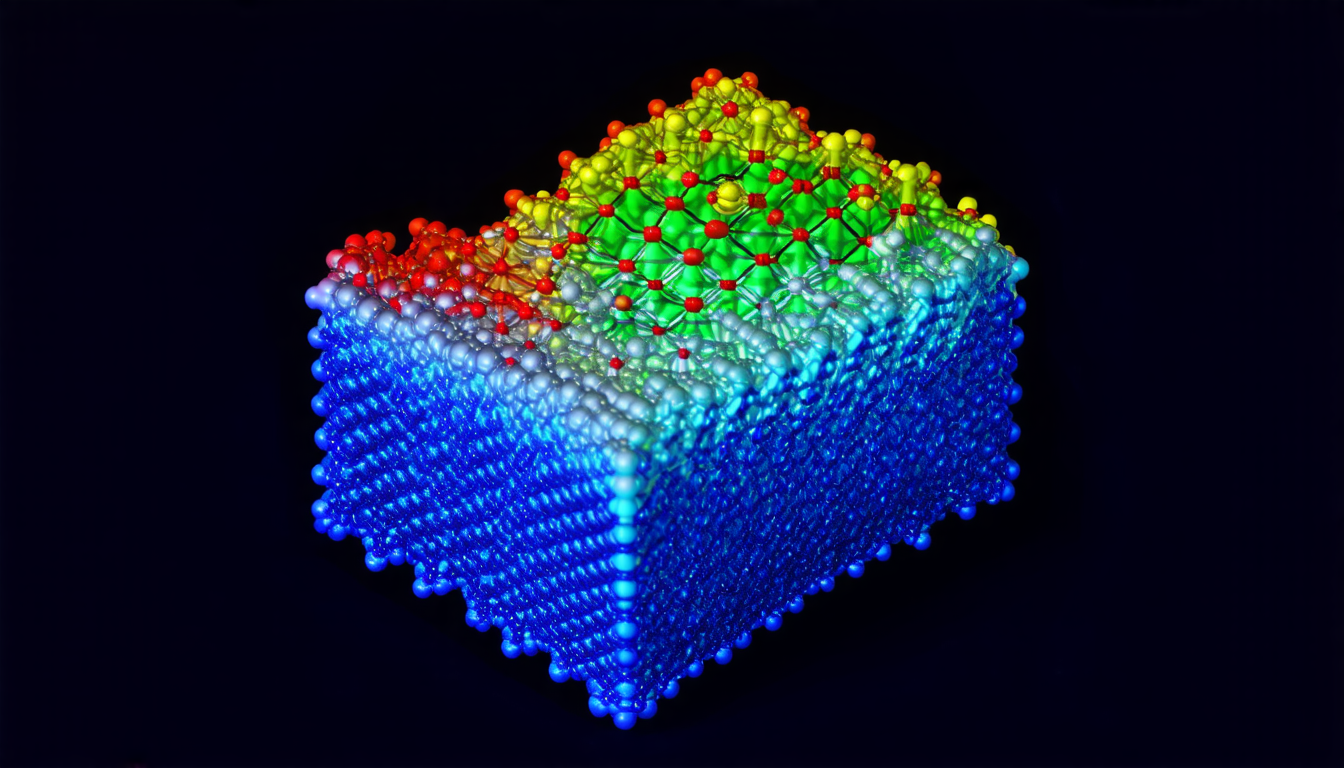
Using X-ray diffraction and electron paramagnetic resonance (EPR) spectroscopy, the scientists were able to characterize the structure and defects present in the nanoparticles. They found that the oxygen vacancies played a crucial role in inducing ferroelectric behavior by creating a gradient of electrical charges across the material’s surface.
The researchers also used theoretical models to simulate the behavior of the HfO2 nanoparticles and validate their experimental findings. Their results showed that the ferroelectricity in the nanoparticles was due to the interplay between the oxygen vacancies, surface defects, and the material’s crystal structure.
This study has important implications for the development of new memory storage devices that can store data more efficiently and reliably. By understanding how to control the ferroelectric behavior of HfO2 nanoparticles, scientists may be able to create materials with improved performance and reduced energy consumption.
The researchers’ findings also shed light on the complex interplay between defects, surface properties, and crystal structure in determining the ferroelectric behavior of materials. This knowledge can be used to design new materials with specific properties for a wide range of applications, from electronic devices to biomedical implants.
Overall, this study demonstrates the power of interdisciplinary research in advancing our understanding of the properties and behavior of complex materials. By combining experimental and theoretical techniques, scientists can gain valuable insights into the mechanisms underlying these phenomena and develop new technologies that can transform industries and improve our daily lives.
Cite this article: “Unlocking Ferroelectric Behavior in HfO2 Nanoparticles through Oxygen Vacancies”, The Science Archive, 2025.
Hafnium Oxide, Ferroelectricity, Nanoparticles, Dielectric Constant, Oxygen Vacancies, X-Ray Diffraction, Electron Paramagnetic Resonance, Epr Spectroscopy, Theoretical Models, Memory Storage Devices.





