

Saturday 01 February 2025
A recent study has shed light on the potential of large language models (LLMs) in robotic task planning and execution. Researchers have designed a novel framework that leverages LLMs to decompose complex tasks into smaller, more manageable sub-tasks, allowing robots to navigate and interact with their environment in a more human-like manner.
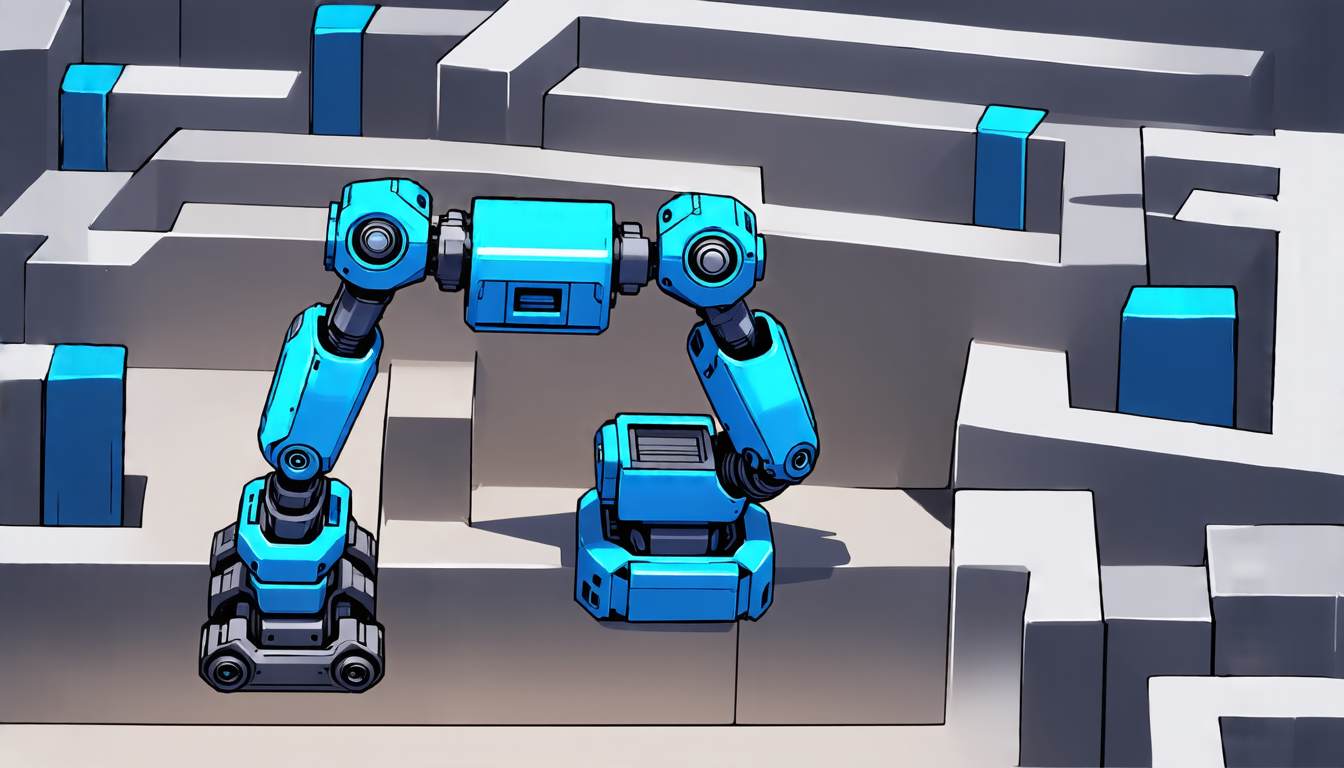
The study proposes a two-stage approach, where the first stage involves using an LLM to analyze the task requirements and generate a plan for execution. The second stage consists of executing the plan using a robotic platform. To achieve this, the researchers developed a custom-built robot arm equipped with sensors and actuators that can interact with its environment.
The LLM is trained on a dataset of text-based instructions and feedback from the environment, allowing it to learn patterns and relationships between different objects and actions. The model is then tested on a series of tasks, including grasping and placing objects, navigating through obstacles, and performing complex sequences of actions.
One of the most impressive aspects of this study is its ability to handle uncertainty and ambiguity in the environment. The LLM is designed to analyze feedback from sensors and adjust its plan accordingly, allowing it to adapt to changing circumstances and unexpected events.
The results are promising, with the LLM-based robot arm successfully completing a range of tasks that would be challenging for traditional robotic systems. The study’s findings have significant implications for the development of autonomous robots and could potentially enable them to perform complex tasks in real-world scenarios.
In addition to its technical contributions, this study highlights the potential benefits of integrating language models with robotics. By leveraging the strengths of both domains, researchers can create more sophisticated and adaptable robotic systems that are better equipped to interact with humans and their environment.
Cite this article: “Language Models Empower Robotic Task Planning and Execution”, The Science Archive, 2025.
Large Language Models, Robotic Task Planning, Execution, Novel Framework, Two-Stage Approach, Robot Arm, Sensors, Actuators, Uncertainty, Ambiguity, Autonomous Robots





