

Saturday 01 February 2025
The internet is a complex network of interconnected computers and servers that facilitate communication, information sharing, and access to various online services. One of the most critical components of this network is the Domain Name System (DNS), which translates human-readable domain names into machine-readable IP addresses. However, traditional DNS systems have several limitations, including centralization, vulnerability to attacks, and high operational costs.
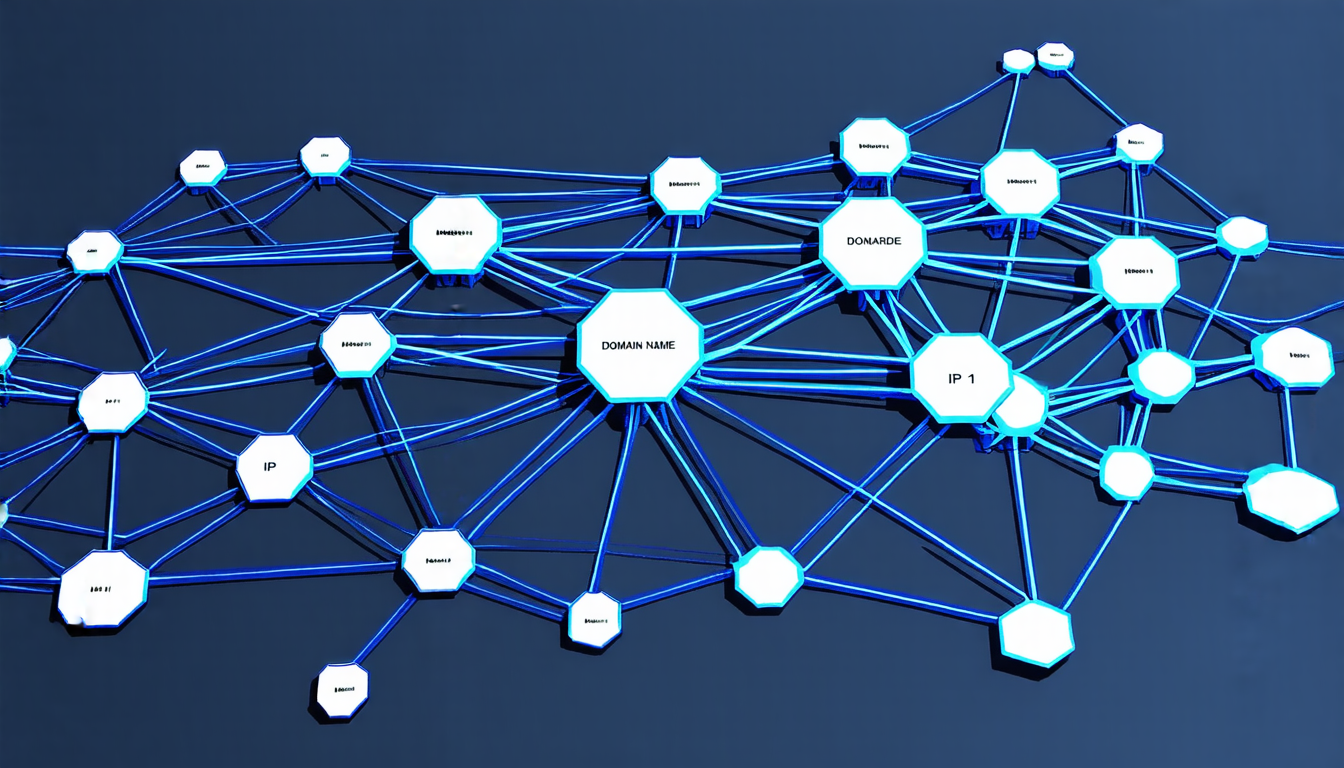
A team of researchers has proposed a decentralized alternative to the traditional DNS system, known as the Decentralized Domain Name Service (DDNS). This system utilizes blockchain technology and InterPlanetary File System (IPFS) to store and distribute domain name records. The DDNS is designed to be censorship-resistant, tamper-proof, and low-cost.
The proposed system is based on Phicoin, a proof-of-work (PoW) cryptocurrency that provides fast transaction processing and high scalability. The blockchain network uses a 15-second block time, which enables rapid broadcasting of domain name updates and improves resolution efficiency.
In the DDNS system, users can register domains and manage their records using a decentralized protocol. The system uses IPFS to store domain configuration files, while the blockchain stores immutable hashes of these files. This design ensures that data is distributed across multiple nodes, reducing single points of failure and making it more difficult for attackers to manipulate or censor domain name records.
The researchers have implemented a proof-of-concept DDNS system using Phicoin and IPFS. The system has been tested with various DNS record types, including A, AAAA, CNAME, and MX records. The results show that the system can efficiently resolve domain names and provide high performance under moderate load.
The proposed DDNS system offers several advantages over traditional DNS systems. It is decentralized, which means that no single entity controls the system. This makes it more resistant to attacks and censorship attempts. Additionally, the system uses blockchain technology to ensure data integrity and immutability, making it more secure than traditional DNS systems.
In terms of scalability, the DDNS system can handle a large number of domain name records and provide high performance under moderate load. The system’s decentralized architecture also enables it to adapt to changing network conditions and maintain high availability.
The proposed DDNS system has several potential applications in various fields, including cybersecurity, finance, and entertainment. For example, it could be used to create secure and decentralized online marketplaces for digital assets or to provide censorship-resistant communication channels for activists or journalists.
Cite this article: “Decentralized Domain Name Service (DDNS)”, The Science Archive, 2025.
Decentralized Domain Name Service, Dns, Blockchain, Ipfs, Cryptocurrency, Phicoin, Proof-Of-Work, Decentralized Protocol, Censorship-Resistant, Secure
Reference: Guang Yang, “Development and Application of a Decentralized Domain Name Service” (2024).





