

Saturday 01 February 2025
Deep in the heart of our galaxy, a hidden world of tiny galaxies awaits discovery. These dwarf galaxies are like cosmic fossils, remnants of a bygone era when the universe was still young and chaotic. Recently, astronomers have made a remarkable find: ten previously unknown dwarf galaxies orbiting the majestic spiral galaxy M104.
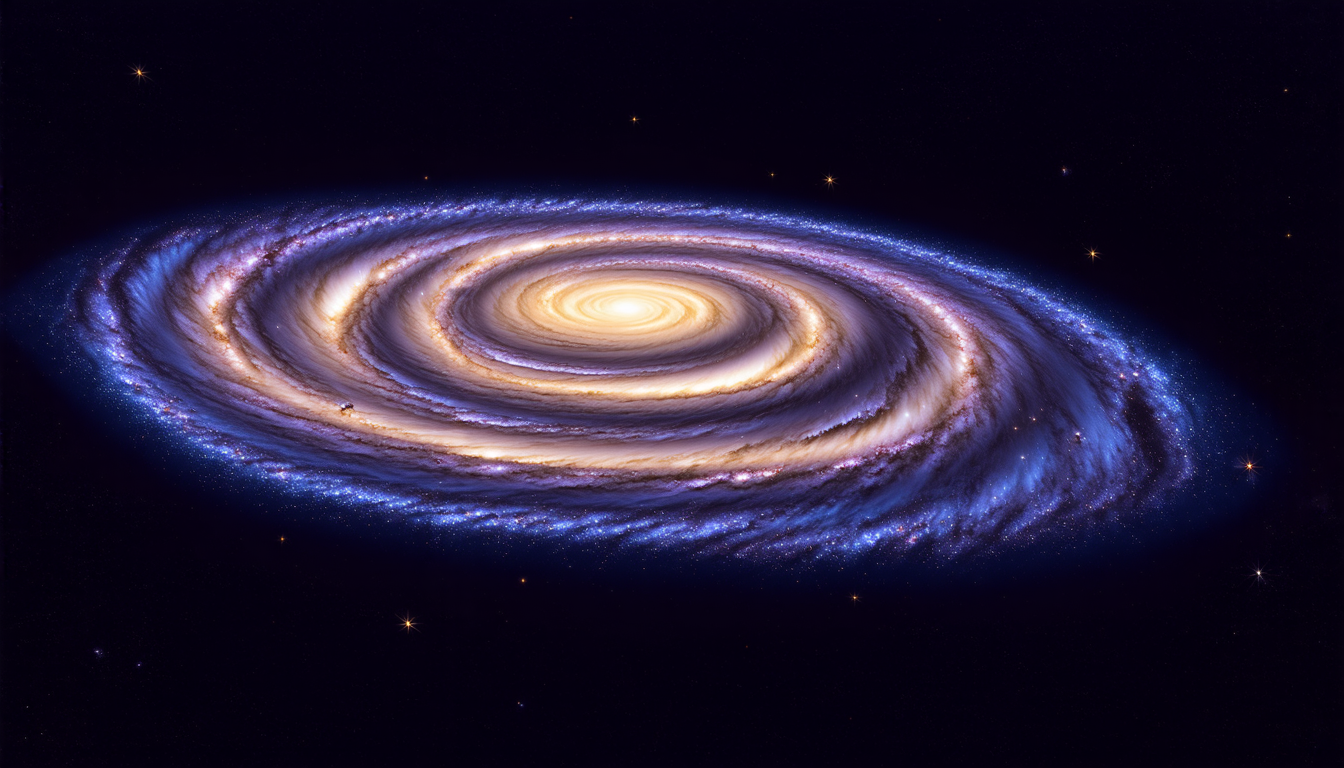
M104 is a beautiful sight in the night sky, its sweeping arms of stars and gas stretching across millions of light-years. But beneath its serene appearance lies a complex web of gravity and motion. The newly discovered dwarf galaxies are just a few of the many that dance around M104, their orbits tracing out intricate paths through space.
These tiny galaxies are not just fascinating in themselves; they also hold secrets about the early universe. By studying them, scientists can learn how galaxies formed and evolved over billions of years. It’s like finding a time capsule from the past, with clues about how our own galaxy came to be.
The dwarf galaxies orbiting M104 are incredibly diverse, ranging from tiny balls of gas and dust to larger, more mature galaxies. Some are irregularly shaped, while others have neat spiral arms or even central black holes. Each one is a unique window into the past, offering insights into the processes that shaped our universe.
One galaxy in particular caught astronomers’ attention: a small, starbursting dwarf galaxy named LVJ1235-1104. This tiny galaxy is packed with newly formed stars, its light bursting forth like fireworks in the darkness of space. It’s an extreme example of how galaxies can change and evolve over time, with matter swirling around black holes or being expelled into the cosmos.
The discovery of these dwarf galaxies also sheds light on a long-standing puzzle: what happened to all the gas and dust in the early universe? Astronomers have found that many galaxies today are ‘gas-poor,’ lacking the raw material needed to form new stars. The newly discovered dwarfs could be the key to solving this mystery, as they may represent the remnants of ancient galaxies that once filled our universe.
As scientists continue to study these tiny galaxies, they’re uncovering a rich tapestry of cosmic history. Each one is like a puzzle piece, helping us build a more complete picture of how our universe came to be. And who knows what secrets lie hidden within the swirling arms of M104 itself? The search for answers continues, as astronomers venture deeper into the unknown, seeking to unravel the mysteries of the cosmos.
Cite this article: “Unveiling the Secrets of Dwarf Galaxies”, The Science Archive, 2025.
Galaxies, Universe, Astronomy, Dwarf Galaxies, M104, Stars, Black Holes, Gas And Dust, Cosmic History, Space





