

Saturday 01 February 2025
Artificial intelligence has made tremendous progress in recent years, but one of its most challenging tasks remains solving complex planning problems. Planning is the process of finding a sequence of actions to achieve a goal, and it’s essential for many real-world applications, from self-driving cars to hospital logistics.
Researchers have been working on developing more efficient algorithms for planning, but they’ve faced significant hurdles. One major obstacle has been the sheer complexity of planning problems, which can involve billions of possible solutions. To tackle this issue, scientists have turned to a relatively new field called learning to plan (L4P).
In L4P, researchers use machine learning techniques to learn how to solve planning problems more effectively. This approach allows them to leverage the power of deep learning and graph neural networks, which are particularly well-suited for complex relational data.
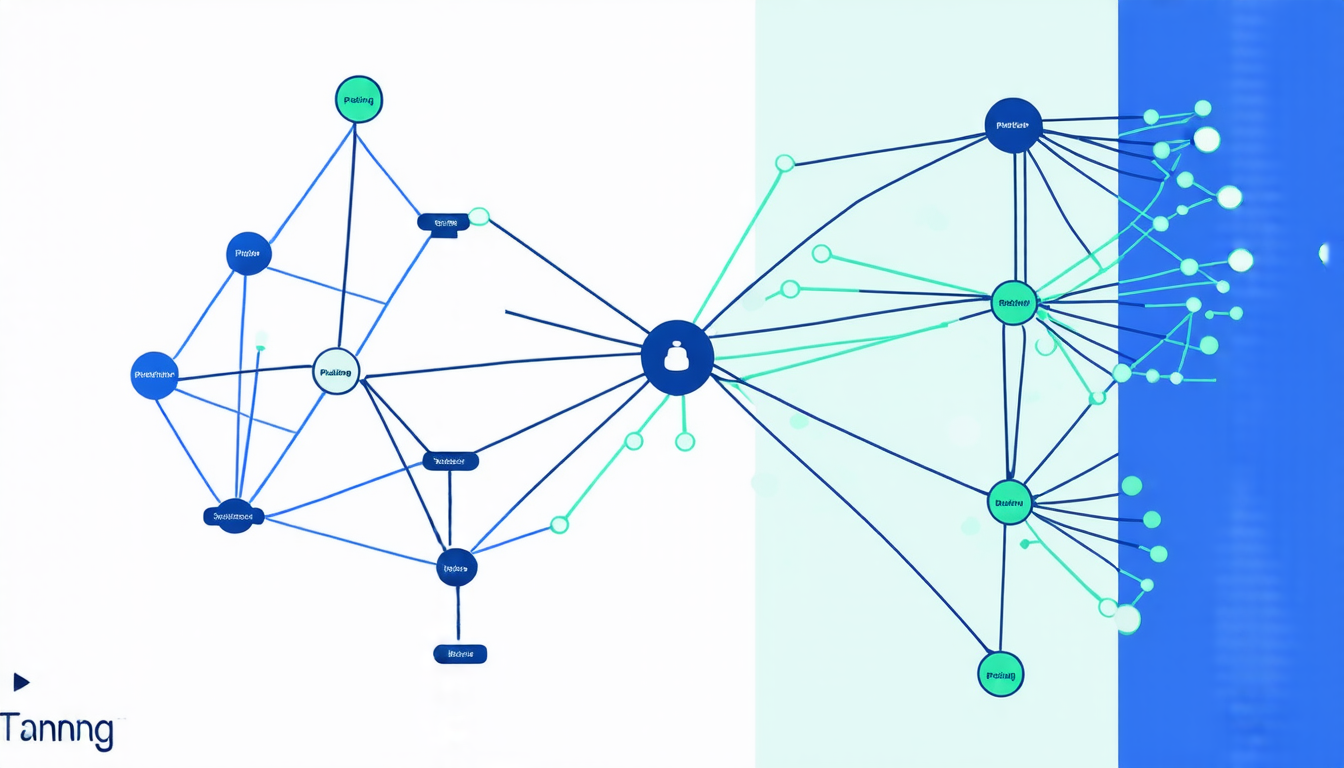
One key challenge in L4P is developing efficient algorithms that can scale up to large problem sizes. To address this issue, scientists have been exploring new graph learning approaches that can quickly identify relevant information in planning graphs. These graphs represent the relationships between objects and actions in a planning domain, and they’re essential for finding effective solutions.
Another major challenge in L4P is developing heuristics that can guide search algorithms towards better solutions. Heuristics are rules of thumb that estimate the cost or quality of a solution, and they play a crucial role in reducing the search space and improving efficiency.
Researchers have been experimenting with various graph neural network architectures to learn more effective heuristics for planning. These networks use node embeddings to represent objects and actions in a planning domain, and they can be trained on large datasets to predict the quality of potential solutions.
One promising approach is to use graph attention mechanisms, which allow the network to focus on relevant parts of the graph during training. This can help the network learn more accurate heuristics that take into account complex relationships between objects and actions.
Despite these advances, there’s still much work to be done in L4P. Future research will need to focus on developing more efficient algorithms for planning, as well as improving the scalability and expressiveness of graph neural networks.
One potential area of investigation is using novel graph learning approaches to identify subgraphs that are relevant to a particular planning problem. By focusing on these subgraphs, researchers may be able to develop more accurate heuristics that can guide search algorithms towards better solutions.
Cite this article: “Learning to Plan: Advances in Artificial Intelligence for Complex Problem-Solving”, The Science Archive, 2025.
Artificial Intelligence, Planning, Machine Learning, Deep Learning, Graph Neural Networks, Relational Data, Complex Problems, Scalability, Heuristics, Search Algorithms





