
Sunday 02 February 2025
Scientists have developed a new method for tracking the movement of large vessels underwater using nothing more than the sounds they emit. This innovative approach could revolutionize our ability to monitor and understand marine life, as well as improve safety at sea.
The technique relies on the waveguide invariant (WI), a concept that describes how sound waves interact with the water and seafloor. By analyzing these interactions, researchers can estimate the range – or distance – between a vessel and an underwater receiver. This information is crucial for understanding marine ecosystems and detecting potential threats such as oil spills or shipwrecks.
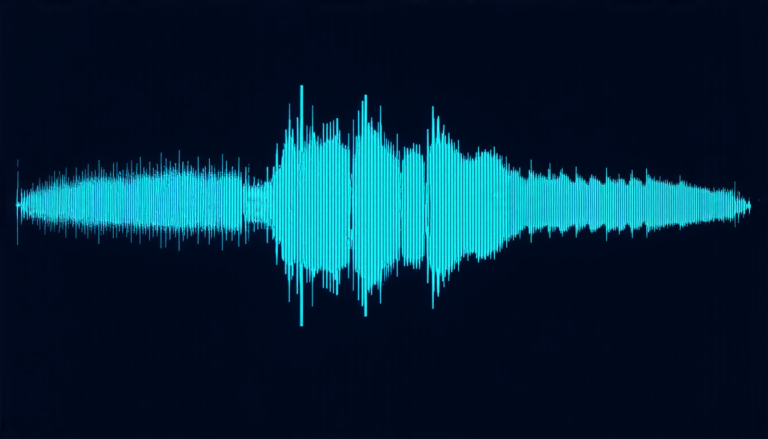
The new method processes broadband sounds emitted by vessels, which are often overlooked in favor of more intense tonal signals. However, these broadband frequencies contain valuable information about the vessel’s movement, including its speed and direction.
To test their approach, scientists analyzed data from a recent experiment in which a container ship passed near an underwater receiver in shallow water. The results showed that the new method was able to accurately estimate the range between the ship and receiver, even when using only broadband sounds.
This achievement has significant implications for marine research and conservation. By tracking vessel movements more effectively, scientists can better understand the impact of human activities on marine ecosystems and develop strategies to mitigate this impact. Additionally, the technique could be used to improve safety at sea by providing early warnings of potential collisions or other hazards.
The researchers’ approach also has broader applications beyond marine science. The same principles could be applied to other fields where tracking movement is crucial, such as air traffic control or surveillance systems.
In summary, scientists have developed a new method for tracking vessel movements underwater using broadband sounds and the waveguide invariant. This innovative approach has significant implications for marine research and conservation, and its applications extend beyond the field of oceanography.
Cite this article: “Listening to the Seas: A New Method for Tracking Vessel Movements”, The Science Archive, 2025.
Marine Life, Vessel Tracking, Underwater Sounds, Waveguide Invariant, Broadband Frequencies, Marine Ecosystems, Oil Spills, Shipwrecks, Air Traffic Control, Surveillance Systems