
Sunday 02 February 2025
A team of researchers has made a significant breakthrough in the field of quantum machine learning, developing a novel framework that combines the power of quantum computing with the flexibility of federated learning.
Federated learning is an approach to machine learning where multiple devices or nodes share their data and learn from each other, without having to transmit the data itself. This approach has several benefits, including improved privacy and reduced data transmission costs. However, traditional federated learning frameworks have limitations when it comes to handling non-identical distributed datasets.
Enter quantum machine learning (QML), which uses the principles of quantum mechanics to perform complex calculations that are difficult or impossible for classical computers to do. QML has shown great promise in solving problems such as image recognition and natural language processing, but it is still a relatively new field with many challenges to overcome.
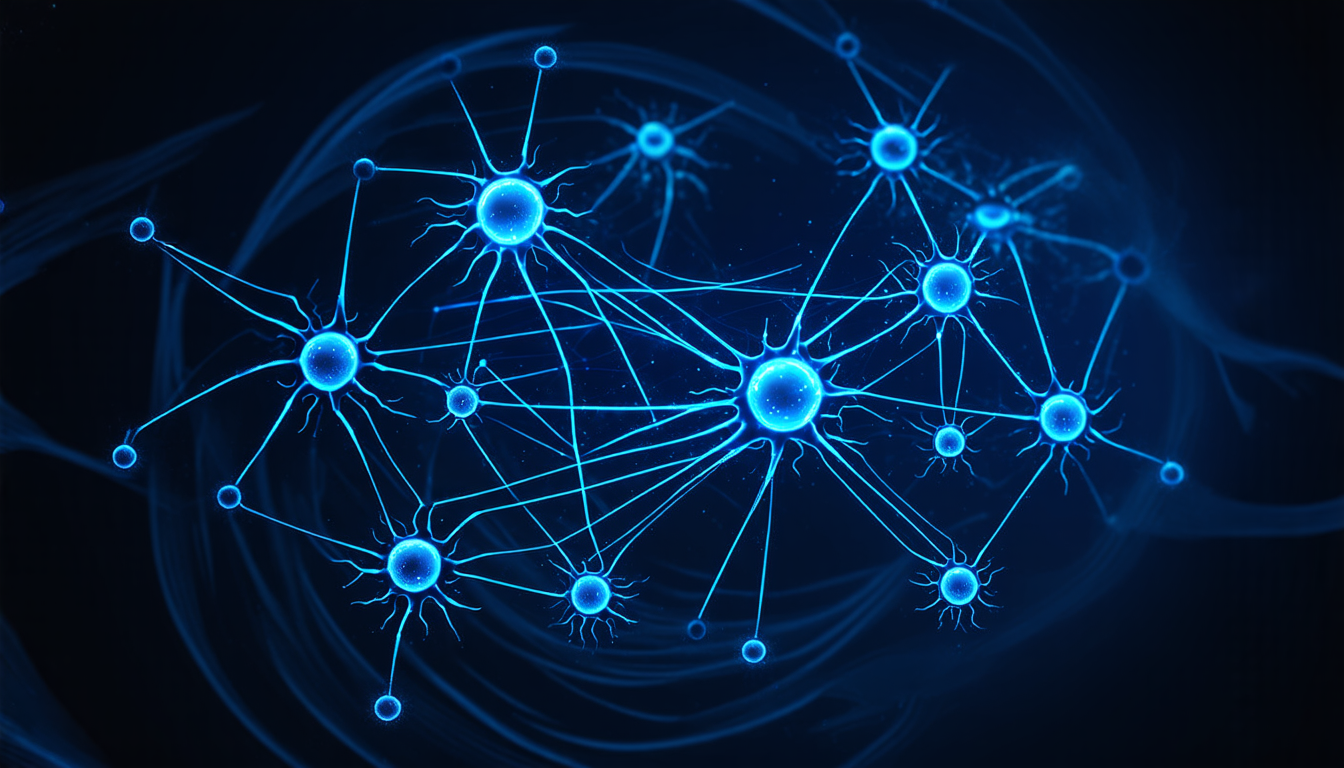
The researchers’ new framework, called FL-QDSNNs (Federated Learning using Quantum Dynamic Spiking Neural Networks), addresses these challenges by combining the strengths of quantum computing and federated learning. The framework uses a novel type of neural network called a spiking neural network, which is inspired by the way neurons in the brain communicate with each other.
In this type of network, each neuron only fires when it receives input from its neighbors, creating a dynamic pattern of spikes that can be used to recognize complex patterns. By using quantum computing to optimize these networks, the researchers were able to achieve state-of-the-art performance on several benchmark datasets.
One of the key innovations in FL-QDSNNs is the use of a quantum dynamic spiking mechanism, which allows the network to adapt to changes in the data and learn from non-identical distributed datasets. This mechanism uses quantum gates to control the flow of information between neurons, allowing the network to selectively focus on relevant features and ignore irrelevant ones.
The researchers tested their framework on several datasets, including the popular Iris dataset and two medical imaging datasets. They found that FL-QDSNNs outperformed traditional federated learning frameworks in terms of accuracy and robustness, particularly when dealing with non-identical distributed datasets.
This breakthrough has significant implications for a wide range of applications, from healthcare to finance to cybersecurity. By enabling the development of more accurate and robust machine learning models, FL-QDSNNs could help improve the efficiency and effectiveness of these systems, while also reducing the risk of data breaches and other security threats.
Cite this article: “Quantum Leap in Federated Learning: New Framework Combines Power of Quantum Computing with Flexibility of Federated Learning”, The Science Archive, 2025.
Quantum Machine Learning, Federated Learning, Quantum Computing, Spiking Neural Networks, Dynamic Spiking Mechanism, Non-Identical Distributed Datasets, Machine Learning Models, Data Transmission Costs, Improved Privacy, Cybersecurity