

Sunday 02 February 2025
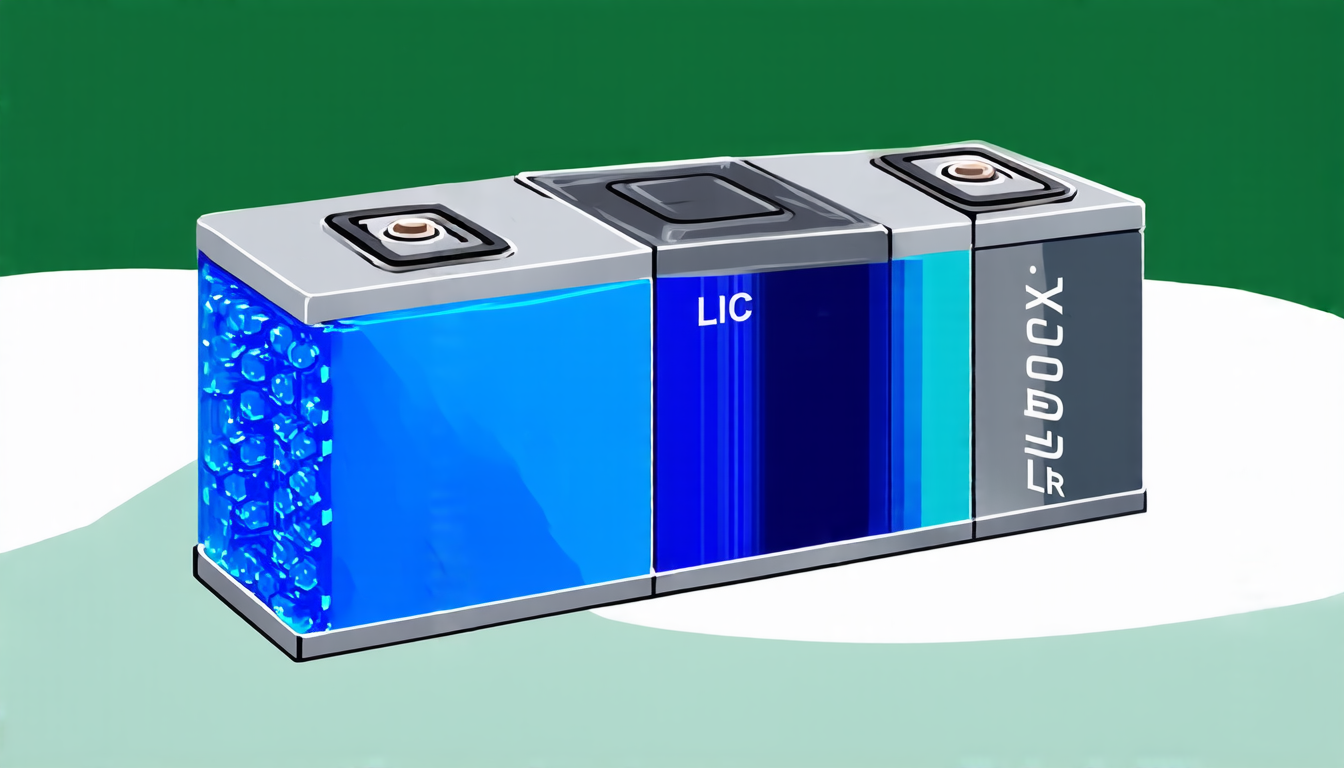
In a breakthrough discovery, scientists have made significant strides in understanding the chemistry behind lithium-ion batteries, specifically focusing on two emerging electrolyte materials: lithium iodide chloride (LIC) and argyrodite lithium phosphate sulfide chloride (LPSC). These advancements could lead to more efficient, sustainable, and environmentally friendly energy storage solutions.
Lithium-ion batteries are a crucial component of modern technology, powering everything from smartphones to electric vehicles. However, as the demand for these devices grows, so does the need for more effective and efficient battery technologies. One major hurdle is the development of stable and conductive electrolytes that can facilitate the flow of ions between the anode and cathode.
LIC and LPSC are two promising electrolyte materials that have shown great potential in this regard. LIC, in particular, has been found to exhibit excellent ionic conductivity and electrochemical stability, making it a viable candidate for future battery applications. However, its compatibility with lithium metal anodes is still a concern. The team of scientists used advanced computational methods to investigate the chemical reactions between LIC and lithium, revealing that the formation of a solid-electrolyte interphase (SEI) can actually hinder the reduction reaction.
This unexpected finding highlights the complex interplay between materials properties and electrochemical reactions. By understanding these interactions, researchers can design more effective electrolytes that mitigate SEI formation and improve overall battery performance. LPSC, on the other hand, has been found to form a stable and insulating SEI with lithium, which could provide an additional layer of protection against unwanted chemical reactions.
To further optimize these materials, scientists turned their attention to interlayer materials – thin layers inserted between the electrolyte and anode or cathode to enhance stability and conductivity. By evaluating 44 reported interlayer materials using advanced computational methods, researchers identified several promising candidates that exhibited high electrochemical stability and low electronic conductivity.
LiCl emerged as a top contender for LIC-Li interfaces, while Li2S, LiI, and LiBr showed potential for LPSC-Li interfaces. These findings could lead to the development of more efficient energy storage systems that minimize waste and environmental impact. As researchers continue to push the boundaries of battery technology, these breakthroughs will play a crucial role in shaping the future of sustainable energy solutions.
The implications of this research are far-reaching, with potential applications extending beyond batteries to other fields such as catalysis and energy conversion.
Cite this article: “Advances in Lithium-Ion Battery Chemistry: Unlocking Efficient and Sustainable Energy Storage Solutions”, The Science Archive, 2025.
Lithium-Ion Batteries, Electrolyte Materials, Ionic Conductivity, Electrochemical Stability, Solid-Electrolyte Interphase, Interlayer Materials, Energy Storage Solutions, Sustainable Energy, Environmental Impact, Battery Technology





