

Sunday 02 February 2025
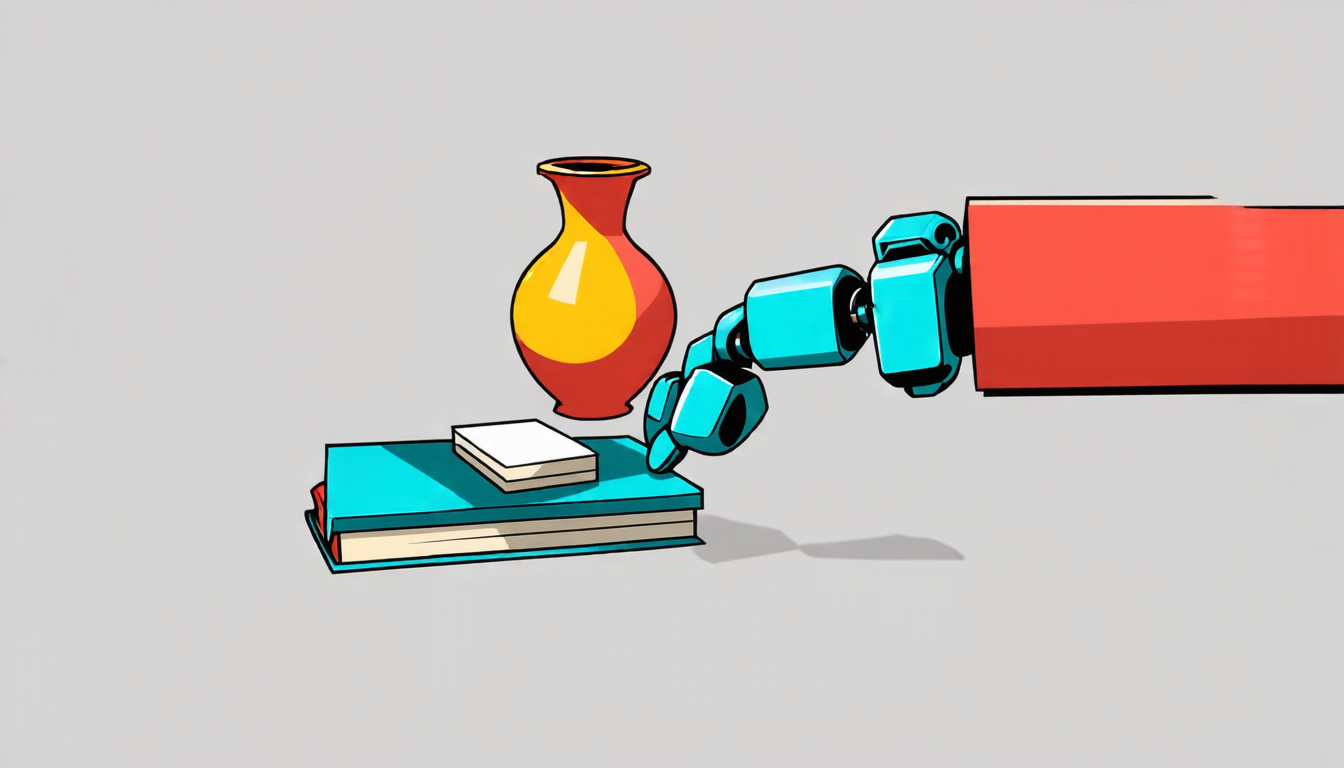
Researchers have made significant progress in developing a universal robotic grasping system that can adapt to a wide range of objects and environments. The system, known as UniGraspTransformer, uses a combination of machine learning algorithms and computer vision techniques to learn how to grasp and manipulate various objects.
The key innovation behind UniGraspTransformer is its ability to learn from a large dataset of object grasping trajectories, generated using dedicated reinforcement learning policies for each individual object. This allows the system to develop a deep understanding of the relationships between different objects, their shapes, sizes, and textures, and how to grasp them effectively.
One of the most impressive features of UniGraspTransformer is its ability to generalize to unseen objects and environments. The system can learn from a small number of examples and then adapt to new objects and situations with ease. This makes it an ideal solution for applications where the environment or objects are constantly changing, such as in manufacturing, healthcare, or search and rescue.
The system consists of two main components: a state-based transformer that uses proprioception and object state information to generate grasping actions, and a vision-based transformer that uses computer vision techniques to estimate object states and generate grasping actions. The two transformers are trained separately using different datasets and then combined to form the UniGraspTransformer.
The researchers tested UniGraspTransformer on 3,200 objects and found that it achieved an average success rate of 91.2% for seen objects and 88.3% for unseen objects from seen categories. This is a significant improvement over previous systems, which typically required extensive training data and were limited to specific object categories.
The system’s ability to generalize to new objects and environments is due in part to its use of offline distillation, a technique that allows the system to learn from a large dataset of grasping trajectories generated using dedicated reinforcement learning policies. This approach enables UniGraspTransformer to develop a deep understanding of the relationships between different objects and how to grasp them effectively.
The researchers also tested UniGraspTransformer on a real-world robotic hand, the Inspire Hand, and found that it was able to successfully grasp objects in a variety of scenarios. This demonstrates the potential for UniGraspTransformer to be used in real-world applications where adaptability and flexibility are essential.
Overall, UniGraspTransformer is an impressive achievement that has significant implications for robotics and artificial intelligence research.
Cite this article: “Adaptable Robotic Grasping System Achieves High Success Rate with Generalizability”, The Science Archive, 2025.
Robotics, Grasping System, Machine Learning, Computer Vision, Reinforcement Learning, Object Recognition, Proprioception, Offline Distillation, Transformer Model, Universal Grasp





