

Sunday 02 February 2025
For years, researchers have been working on developing more accurate and reliable methods for mapping and localizing in various environments using LiDAR (Light Detection and Ranging) technology. One of the biggest challenges in this field is dealing with point cloud degradation, which can occur due to factors such as sensor noise, occlusion, or motion blur.
To address this issue, a team of researchers has proposed a new map-based LiDAR localization method that aims to anticipate and mitigate localization failures before they happen. The approach uses a combination of techniques, including map-based prediction, observability estimation, and selective sensor fusion.
The key innovation behind the method is its ability to predict point cloud degradation and adjust the localization process accordingly. This is achieved by analyzing the structure of the point cloud data and identifying areas where errors are more likely to occur. By anticipating these errors, the system can take proactive measures to mitigate their impact on the overall accuracy of the map.
Another important aspect of the method is its observability estimation algorithm, which calculates the likelihood of observing specific points in the environment. This information is then used to selectively fuse sensor data from various sources, such as LiDAR and cameras, to improve the overall accuracy of the map.
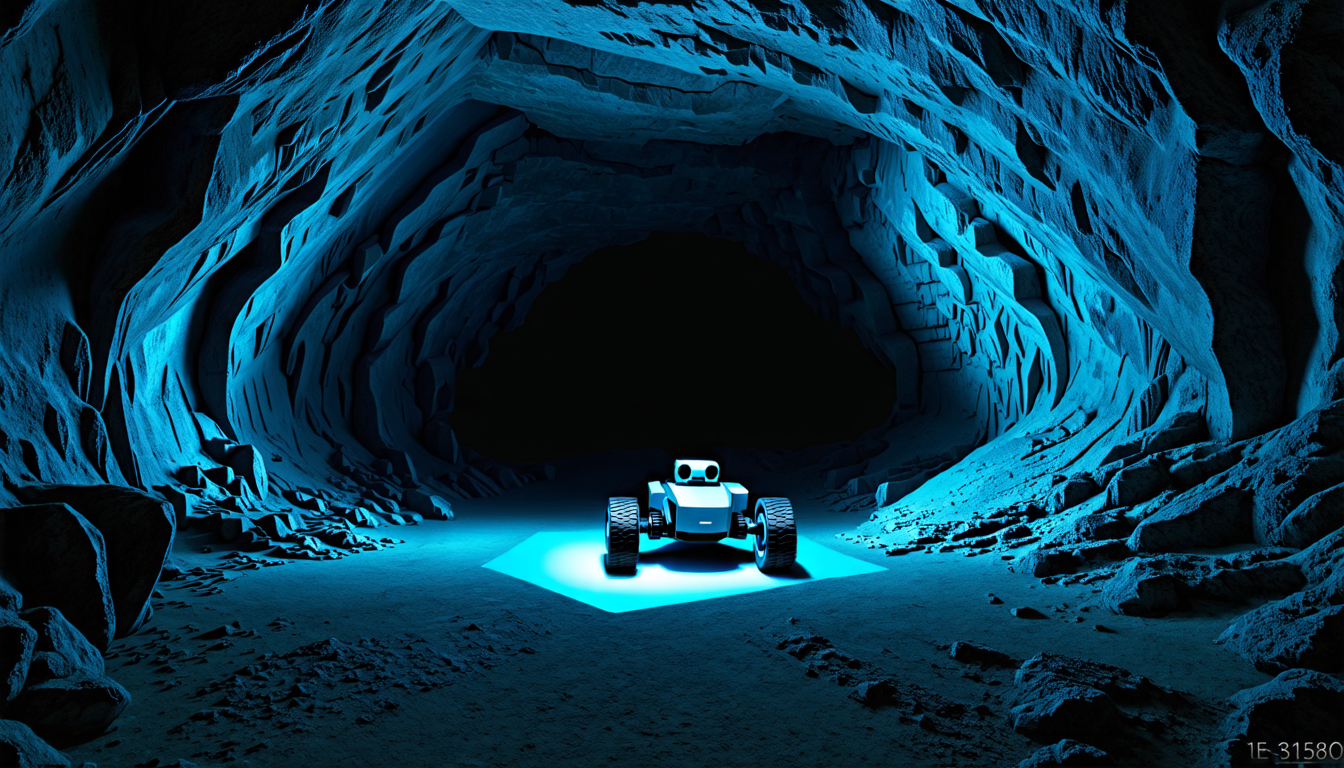
The researchers tested their method on several challenging scenarios, including cave environments with limited visibility and multi-floor buildings with staircases. In each case, their approach demonstrated significant improvements in localization accuracy compared to existing methods.
One of the most impressive results was achieved in a long corridor scenario, where the team’s method achieved an outlier rate of just 3.55%, outperforming the second-best method by a wide margin. This level of precision is critical for applications such as autonomous vehicles or search and rescue missions, where accurate mapping and localization are essential.
The authors also evaluated their method using robustness metrics, which assess both the accuracy and completeness of the map. In these tests, their approach consistently outperformed other methods, demonstrating its ability to adapt to changing environments and sensor degradation.
Overall, this new LiDAR localization method represents a significant step forward in the field, offering improved accuracy and reliability in a wide range of scenarios. Its potential applications are numerous, from autonomous vehicles to robotics and beyond.
The researchers’ approach is also noteworthy for its ability to learn from experience and adapt to changing environments. By analyzing point cloud data and identifying areas where errors are more likely to occur, the system can refine its predictions and improve its overall accuracy over time.
Cite this article: “Enhanced LiDAR Localization Method Predicts Point Cloud Degradation”, The Science Archive, 2025.
Lidar, Localization, Mapping, Point Cloud, Degradation, Sensor Noise, Occlusion, Motion Blur, Observability Estimation, Selective Sensor Fusion





